Ellora’s Builders Carve a Temple from the Rock
A monumental excavation created a freestanding temple by removing stone rather than assembling it.
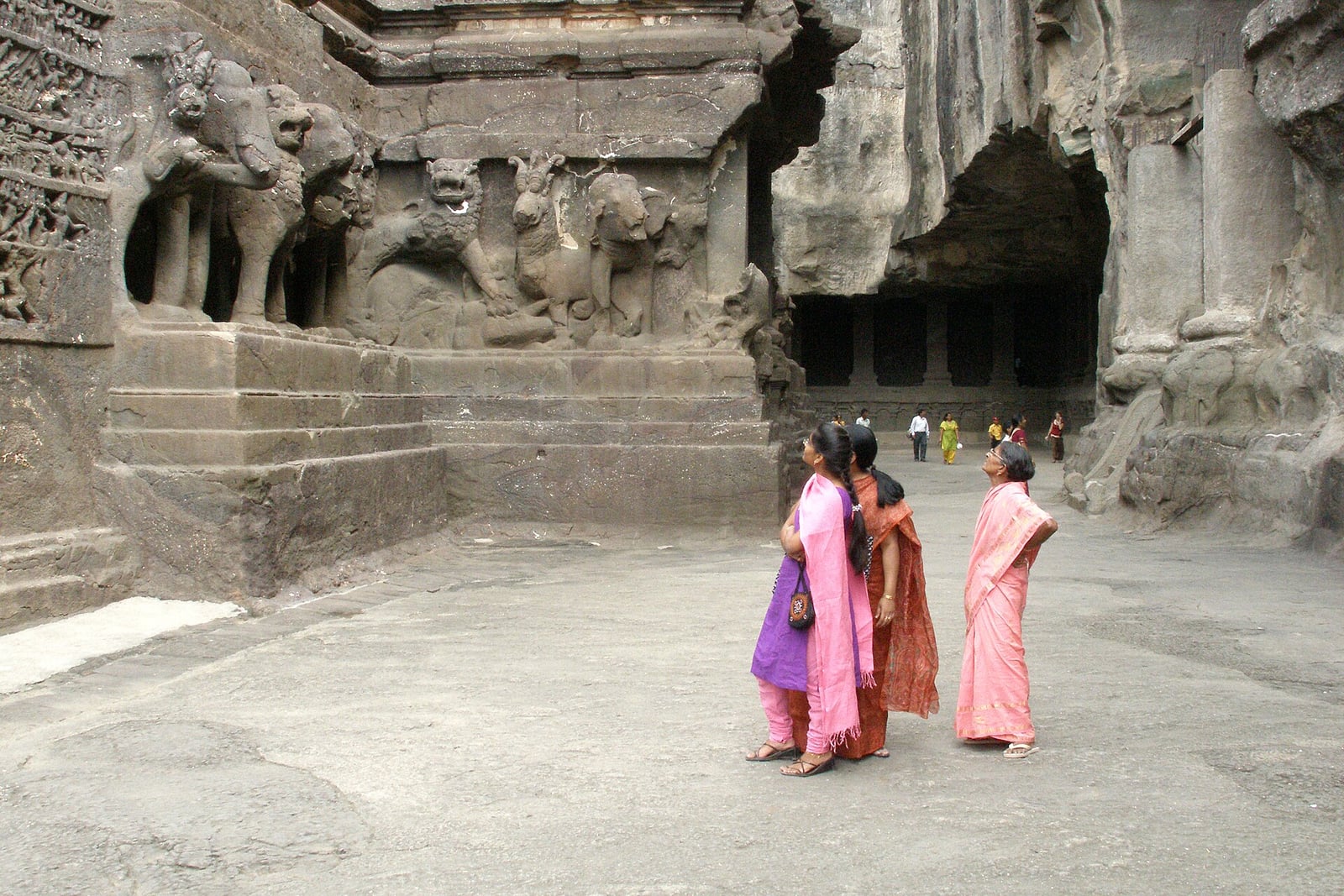
Carved directly into a basalt cliff face in the modern Chhatrapati Sambhaji Nagar district of Maharashtra, Cave 16 of the Ellora complex stands as an extraordinary departure from traditional building methods. Unlike conventional masonry where extracted blocks are assembled, this monumental freestanding temple, known as the Kailasa temple, was sculpted entirely out of a single living rock. Craftsmen undertook a vertical excavation, cutting downward from the peak of the hillside to reveal courtyard floors, pillared galleries, and a towering sanctuary rising more than thirty-two metres above the base. Ranging alongside thirty-three other rock-cut Buddhist, Hindu, and Jain sanctuaries across a two-kilometre cliff, it represents an ambitious culmination of Indian rock-cut architecture.
The Kailasa temple lacks a contemporary dedicatory inscription within its halls, leaving its historical timeline tied to external records. Modern historians generally attribute its primary construction to the eighth-century Rashtrakuta monarch Krishna I, who reigned from roughly 756 to 773 CE. Two primary epigraphs, including the Vadodara copper-plate inscription dating to around 812 or 813 CE, credit a ruler named Krishnaraja with the creation of an astonishing Shiva temple at Elapura, an old name for Ellora. However, because these copper plates postdate Krishna's reign and were discovered away from the caves, scholars remain cautious about assigning the entire monument exclusively to his rule.

Keep reading in Yester
Coming soon to the App Store
Keep following the story
Sources
Image: Vyacheslav Argenberg