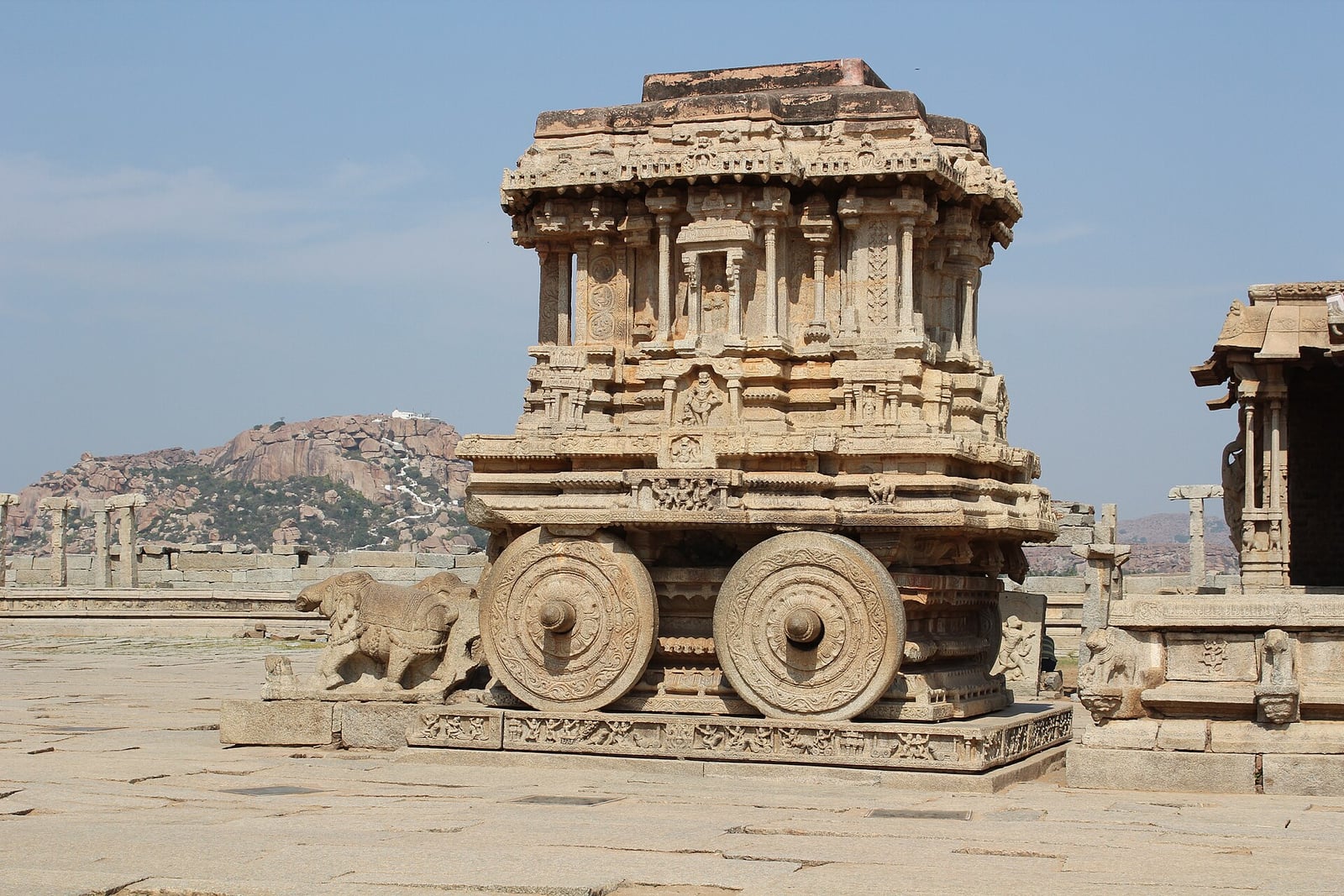
Vijayanagara Reaches Its Height Under Krishnadevaraya
A South Indian capital of temples and markets amazed foreign visitors.
Along the banks of the Tungabhadra River in what is now Karnataka, the metropolis of Vijayanagara rose to prominence following the political upheaval of the fourteenth century. The site had served as an ancient place of worship centred on Hampi, a sacred location associated with the goddess Pampa and episodes from the Ramayana. After the armies of the Delhi Sultanate invaded the Deccan and plundered established regional realms such as the Hoysala Empire, two brothers from the Sangama family, Harihara I and Bukka, established a new capital. Their foundation grew from the ruins of earlier kingdoms into the urban core of an expanding southern empire.
By the turn of the sixteenth century, the settlement had developed into what was, by some estimates, one of the most populous urban centres in the world. Modern assessments indicate that the broader metropolitan region encompassed roughly 650 square kilometres, incorporating outlying settlements such as Anegundi, Kamalapura, and Hospet. Some contemporary observers estimated the population at roughly half a million people, though historians continue to debate whether such numbers are conservative or exaggerated. The capital served as a powerful economic hub that attracted traders, envoys, and travellers from Persia, Central Asia, and Portugal.

Keep reading in Yester
Coming soon to the App Store
Keep following the story
Sources
- Group of Monuments at Hampi (UNESCO World Heritage Centre)
- Vijayanagara Research Project (Penn Museum)
- The Vijayanagara Metropolitan Survey: Volume 1, Sinopoli and Morrison (University of Michigan, LSA International Institute)
- Federici, Cesare (Dizionario Biografico degli Italiani, Treccani)
- Vijayanagara
Image: Arian Zwegers from Brussels, Belgium