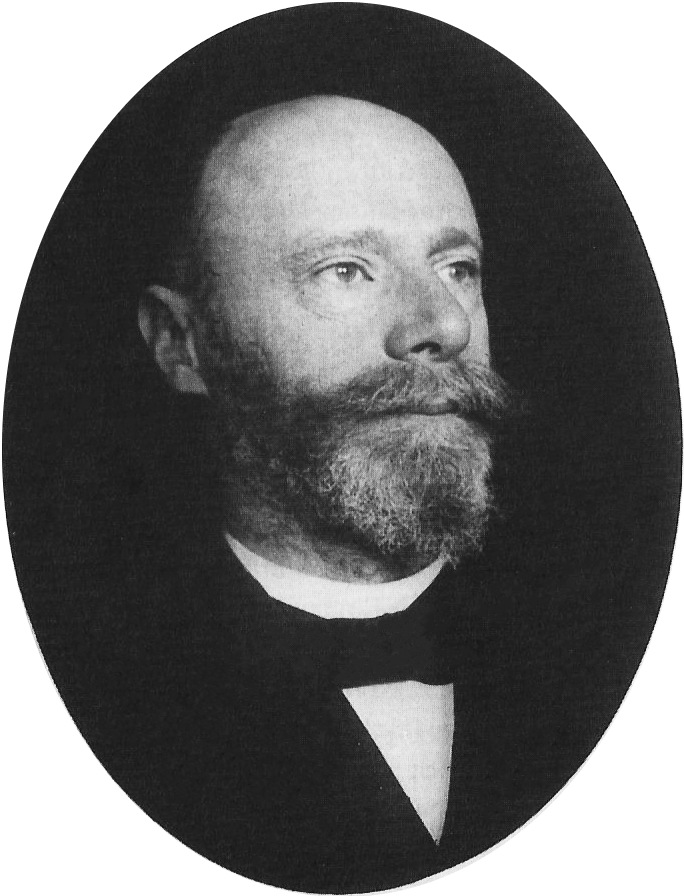
Einthoven Records the Heart’s Electrical Activity
A string galvanometer made the electrocardiogram practical.
In the late nineteenth century, physiologists recognized that the beating human heart generated electrical currents, but they possessed no reliable means of observing these signals without surgical exposure. Existing electrical instruments lacked the sensitivity needed to capture subtle impulses through the natural insulation of skin, bone, and chest tissue. Willem Einthoven, a physician and professor of physiology at the University of Leiden, set out to solve this fundamental limitation in medical instrumentation by designing a detection apparatus capable of registering faint electrical changes from the surface of the body.
Born in Semarang on Java in 1860, Einthoven moved to the Netherlands with his family during his youth and earned his doctorate at the University of Utrecht in 1885. Appointed that same year to the chair of physiology at Leiden, which he took up in 1886, he pursued experimental work on physiological measurement and bodily mechanics. He was admitted to the Royal Netherlands Academy of Arts and Sciences in 1902 as his research into electromagnetic measurement gathered momentum. His technical investigations focused on refining electrical detection tools to trace the heart's action without invasive intervention.

Keep reading in Yester
Coming soon to the App Store
Keep following the story
Sources
Image: Unknown author Unknown author