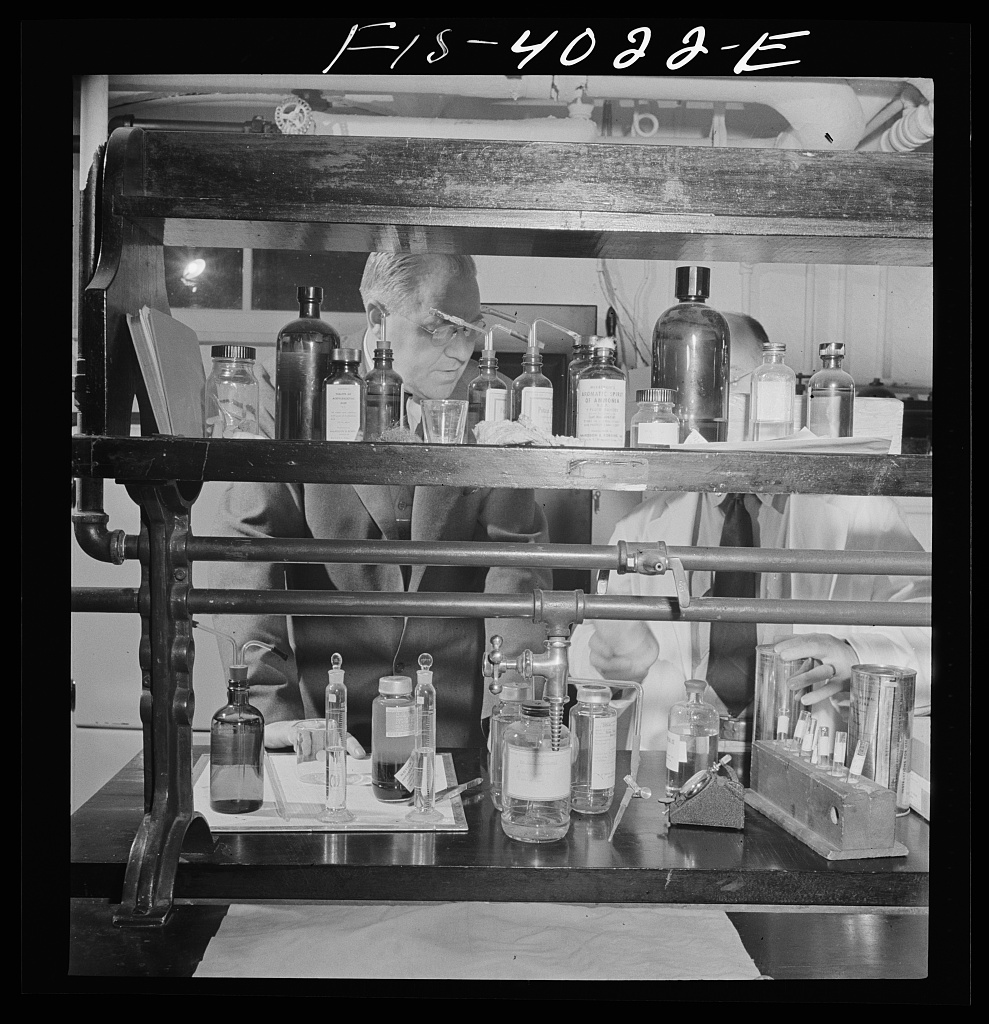
Charles Drew Directs Blood for Britain
A surgeon standardized how plasma was processed and shipped on a large scale.
In 1940, the United States was not yet at war, but the conflict in Europe created an immediate crisis for British medical services treating injured soldiers and civilians. Severe physical trauma frequently triggered shock, a condition marked by a sudden plunge in circulating fluids, body temperature, and blood pressure. Whole blood deteriorated rapidly in storage and proved difficult to ship across the Atlantic under wartime conditions. Medical organizers turned to Charles Richard Drew, an American surgeon who had recently completed groundbreaking doctoral research in New York on the long-term preservation of blood components.
Drew had earned his medical degree from McGill University in Montreal in 1933, where he collaborated with John Beattie on investigations into transfusions and physical shock. At the time, medical workers lacked reliable methods for storing or transporting blood over long distances. In 1938, Drew entered Columbia University on a fellowship, conducting experiments at Presbyterian Hospital. His doctoral dissertation systematically examined blood preservation techniques and established that separating liquid plasma from red blood cells significantly extended its usable life. Because plasma could be preserved far longer than whole blood and reconstituted when needed, it offered an ideal medium for field transfusions. When Columbia granted him the degree of doctor of medical science in June 1940, Drew became the first African American to earn that degree there.

Keep reading in Yester
Coming soon to the App Store
Keep following the story
Sources
Image: Marjory Collins