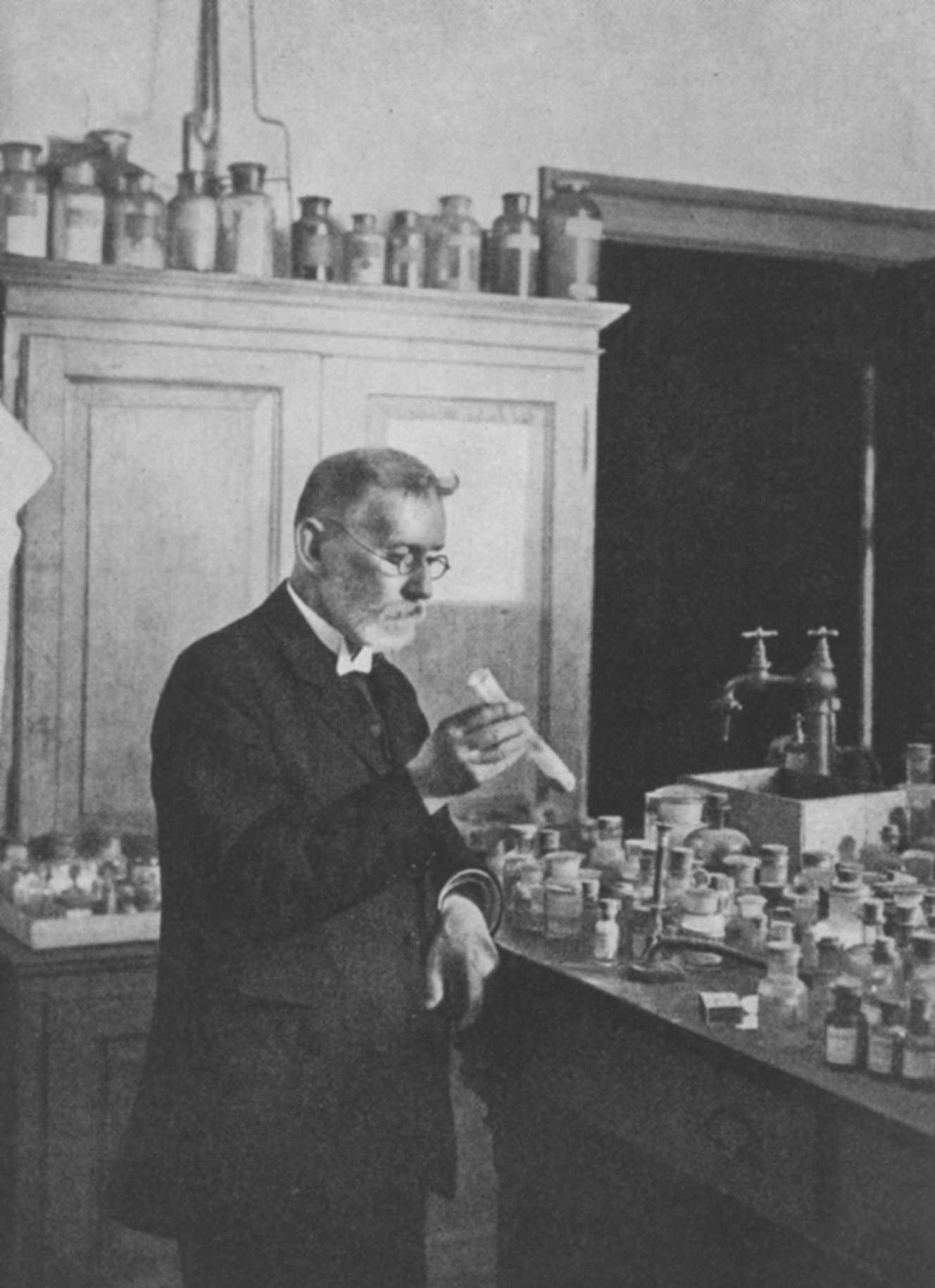
Salvarsan Becomes a Targeted Drug for Syphilis
Paul Ehrlich’s laboratory sought a magic bullet and found compound 606.
At the beginning of the twentieth century, the treatment of syphilis remained dangerous and notoriously ineffective. Physicians had long relied on inorganic mercury preparations, which produced severe toxic effects in patients while doing little to reliably cure the underlying infection. In Frankfurt, the German medical researcher Paul Ehrlich approached the problem through a systematic concept of chemical affinity. He proposed that scientists could synthesize synthetic chemicals that would selectively bind to and eliminate invading microbes without killing the infected host, an idealized therapeutic approach he famously described as a magic bullet.
Ehrlich directed his laboratory team to search for suitable candidates among chemical derivatives of atoxyl, an organic arsenical compound known to attack microorganisms but fraught with perilous toxicity. The synthesis work progressed systematically under the chemist Alfred Bertheim, who first produced arsphenamine in 1907. The substance received the laboratory designation compound 606, usually explained as the 606th preparation tested in Ehrlich's laboratory. At the time of its initial synthesis, its practical medicinal properties had not yet been identified.

Keep reading in Yester
Coming soon to the App Store
Keep following the story
Sources
- The introduction of 'chemotherapy' using arsphenamine: the first magic bullet (Journal of the Royal Society of Medicine, via PMC)
- Paul Ehrlich (Science History Institute)
- A Reinvestigation of Salvarsan and Related Arsenic Chemistry (University of Waikato Research Commons)
- Salvarsan: the first chemotherapeutic compound (Scientific Update)
- Arsphenamine
Image: Waldemar Franz Hermann Titzenthaler