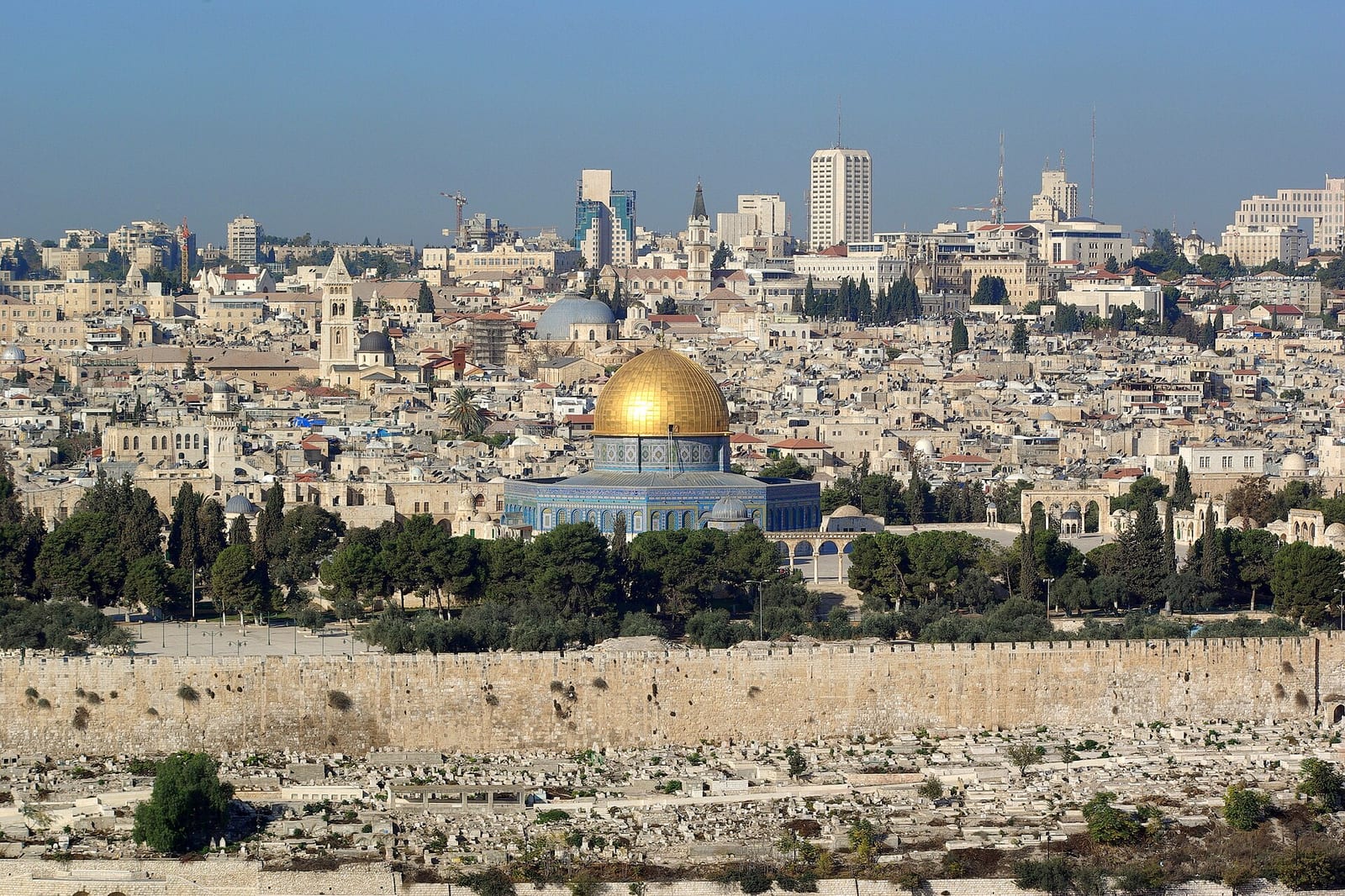
The Dome of the Rock Gives Jerusalem a New Monument
An early Islamic building joined architecture, inscriptions and sacred geography in a contested city.
In 691 or 692, the Umayyad caliph Abd al-Malik oversaw the completion of an octagonal shrine at the center of the Al-Aqsa compound on the Temple Mount in Jerusalem. Raised above the Foundation Stone, the Dome of the Rock stands as the oldest surviving work of Islamic architecture and one of the most important surviving monuments of early Muslim rule. Its creation took place during the civil conflict known as the Second Fitna, a time when Abd al-Malik faced Christian Byzantine adversaries abroad alongside domestic rivals who controlled the pilgrimage sanctuaries in the Hijaz.
The engineering of the shrine was supervised by Raja ibn Haywa, a theologian from Beisan, together with Yazid ibn Sallam and his son Baha, both local non-Arab converts. Drawing on the established architectural traditions of the late antique Mediterranean, they fashioned an octagonal exterior enclosing two concentric ambulatories around a central elevated drum and dome. The dimensions closely echoed nearby monumental Christian precedents; the diameter and height of the dome mirrored the central rotunda of the Church of the Holy Sepulchre. In addition, the octagonal arrangement may have drawn upon earlier Byzantine structures such as the fifth-century Church of the Seat of Mary.

Keep reading in Yester
Coming soon to the App Store
Keep following the story
Sources
Image: Berthold Werner