Djenné Builds a Mosque That a Community Keeps Rebuilding
The Great Mosque’s earthen walls depend on recurring care. Its story joins architecture, collective labor and a city’s continuing religious life.
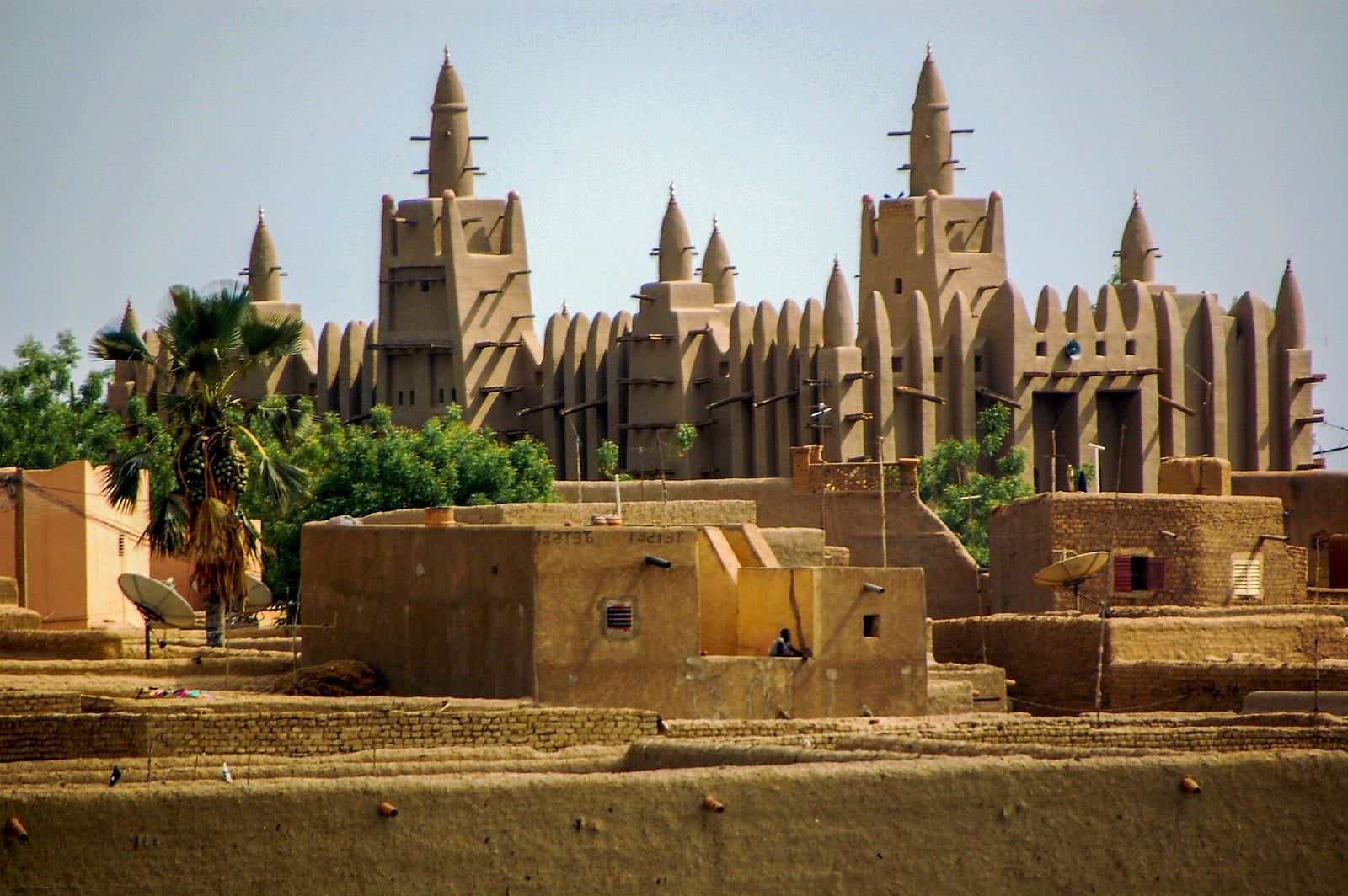
On the floodplain of the Bani River in Mali, the Great Mosque of Djenne rises from an elevated earth platform designed to resist seasonal high water. Its prominent eastern wall features three massive rectangular towers, crowned with cone-shaped pinnacles carrying ostrich eggs, which overlook the central marketplace. The prayer hall behind this facade shelters beneath a flat roof supported by ninety thick earthen pillars arranged in parallel aisles. Thick external walls, sculpted mud plaster, and protruding bundles of rodier palm wood define the Sudano-Sahelian monument, recognized as the largest adobe brick building in the world.
The timeline of the earliest religious structure on the site remains uncertain, though scholars estimate its origins between 1200 and 1330. According to seventeenth-century oral traditions preserved in the Tarikh al-Sudan, Sultan Kunburu converted to Islam, pulled down his royal palace, and established the first mosque in its place. Architectural historian Labelle Prussin presented a more complex sequence involving successive demolitions and reconstructions under Songhay rule and subsequent Moroccan control. By the early nineteenth century, the Fulani leader Seku Amadu conquered Djenne and allowed the old building to fall into disrepair, erecting an austere, unadorned replacement nearby.

Keep reading in Yester
Coming soon to the App Store
Keep following the story
Sources
Image: Ralf Steinberger from Northern Italy and Berlin