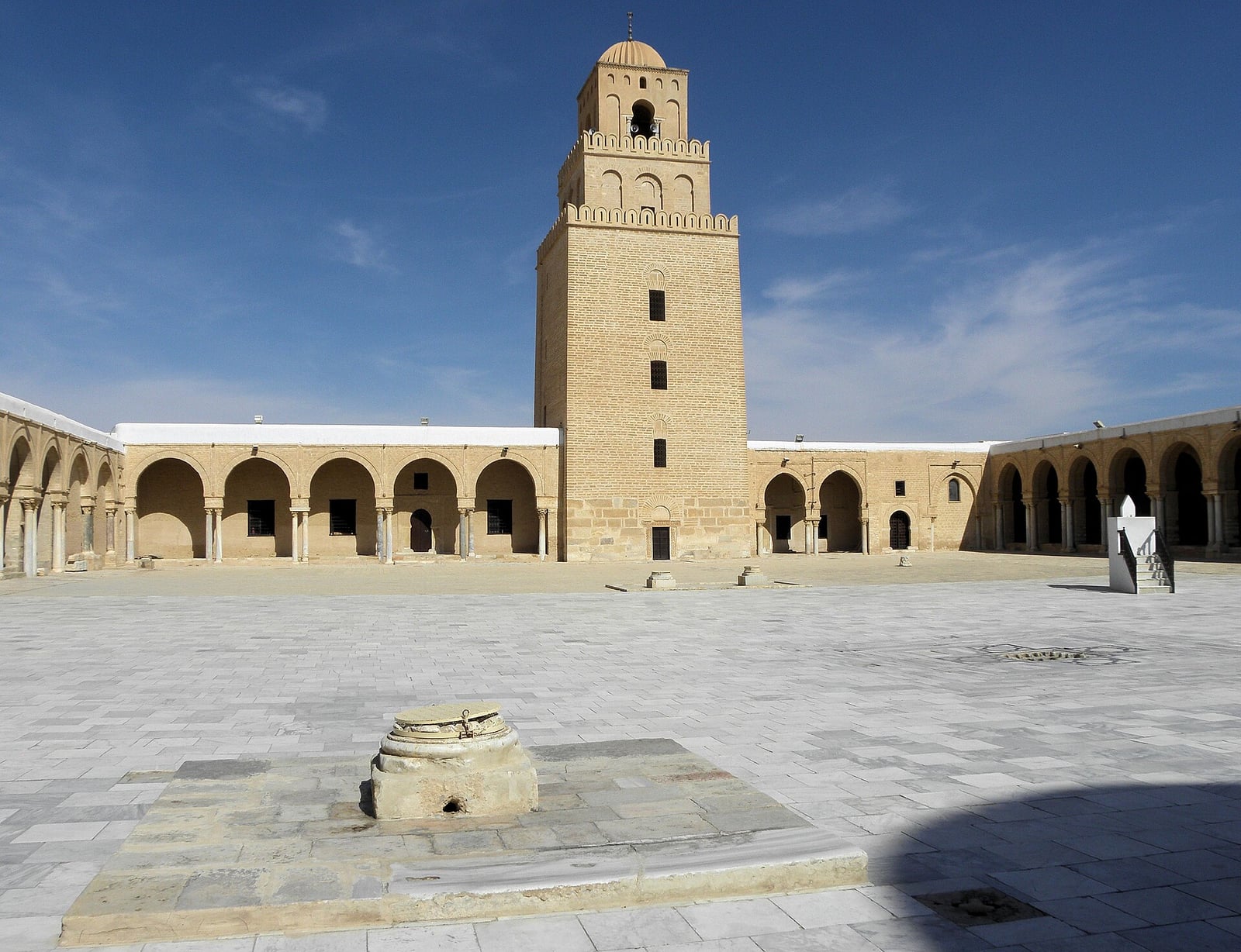
The Great Mosque of Kairouan Is Founded in North Africa
One of the oldest mosques in North Africa became a model for the region.
In 670, the Arab commander Uqba ibn Nafi established the city of Kairouan in central Tunisia and laid out a congregational mosque at the core of the new settlement. The initial sanctuary stood alongside the administrative headquarters, marking an early focal point of Arab authority in North Africa. This earliest structure did not endure in its original form. After the turbulent years of Berber resistance to the Arab conquest, the general Hasan ibn al-Nu'man renovated it in 703. Later expansions under the Umayyad governor Bishr ibn Safwan during the 720s and the governor Yazid ibn Hatim in the early 770s successively rebuilt the complex to accommodate a growing local population.
The monument took its definitive structural form during the ninth century under the Aghlabid dynasty. In 836, Emir Ziyadat Allah I directed an extensive rebuilding that established the building's current footprint and overall appearance. Subsequent Aghlabid rulers continued to embellish it: around 862, under Emir Abu Ibrahim Ahmad, the mihrab was refitted and a fluted dome was added at the courtyard end of the central nave. Most of what visitors see today dates from these ninth-century Aghlabid works.

Keep reading in Yester
Coming soon to the App Store
Keep following the story
Sources
Image: Keith Roper