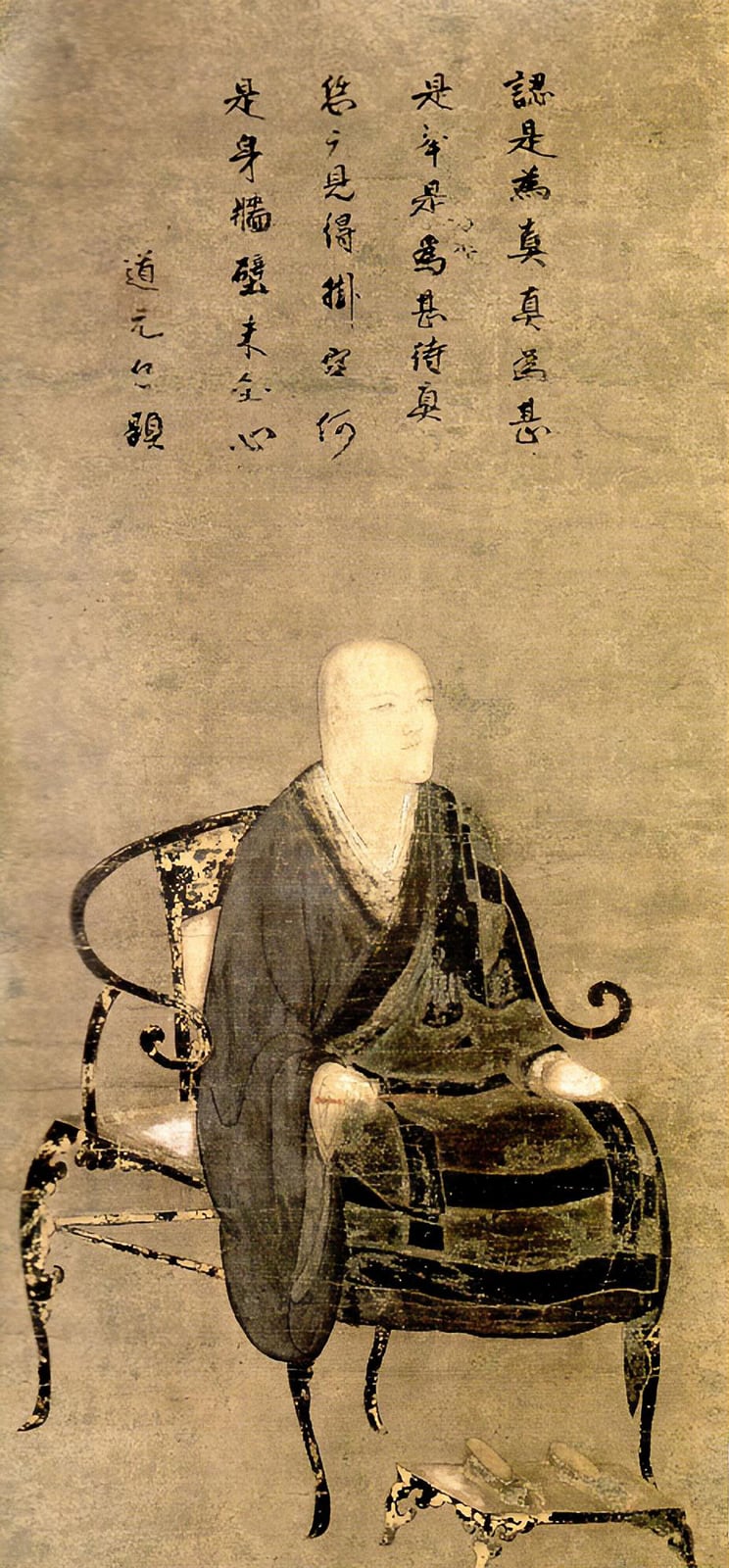
Dōgen Founds Eihei-ji
A monk who studied in China built a temple devoted to seated meditation.
Around 1212 and 1213, a Japanese boy of about thirteen named Dogen entered monastic life on Mount Hiei, the administrative and spiritual center of Tendai Buddhism. According to the traditional account preserved in the Kenzeiki, the young monk soon struggled with an apparent doctrinal contradiction. Tendai teachings asserted the doctrine of original enlightenment, holding that all people are naturally endowed with Buddha-nature from birth. Dogen questioned why, if humans already possessed enlightenment, historical Buddhas and living monks needed to undergo rigorous spiritual practice to awaken. Finding no satisfying resolution among the scholars of Mount Hiei, he departed to consult other masters.
His search led him first to Onjo-ji and later to Kennin-ji, a Kyoto temple associated with the early transmission of Zen teachings by Myoan Eisai. In 1223, Dogen crossed the East China Sea with the monk Myozen to observe Chinese Chan firsthand during the Song dynasty. Traveling through Zhejiang province, he visited prominent Chan monasteries but grew disillusioned with an overwhelming reliance on koan contemplation to the exclusion of scriptural study. His perspective shifted in 1225 upon meeting Tiantong Rujing, a master of the Caodong lineage at Mount Tiantong. Under Rujing's guidance, Dogen embraced the concept of casting off body and mind, ultimately receiving formal Dharma transmission before sailing back to Japan in 1227 or 1228.

Keep reading in Yester
Coming soon to the App Store
Keep following the story
Sources
Image: Unknown author Unknown author