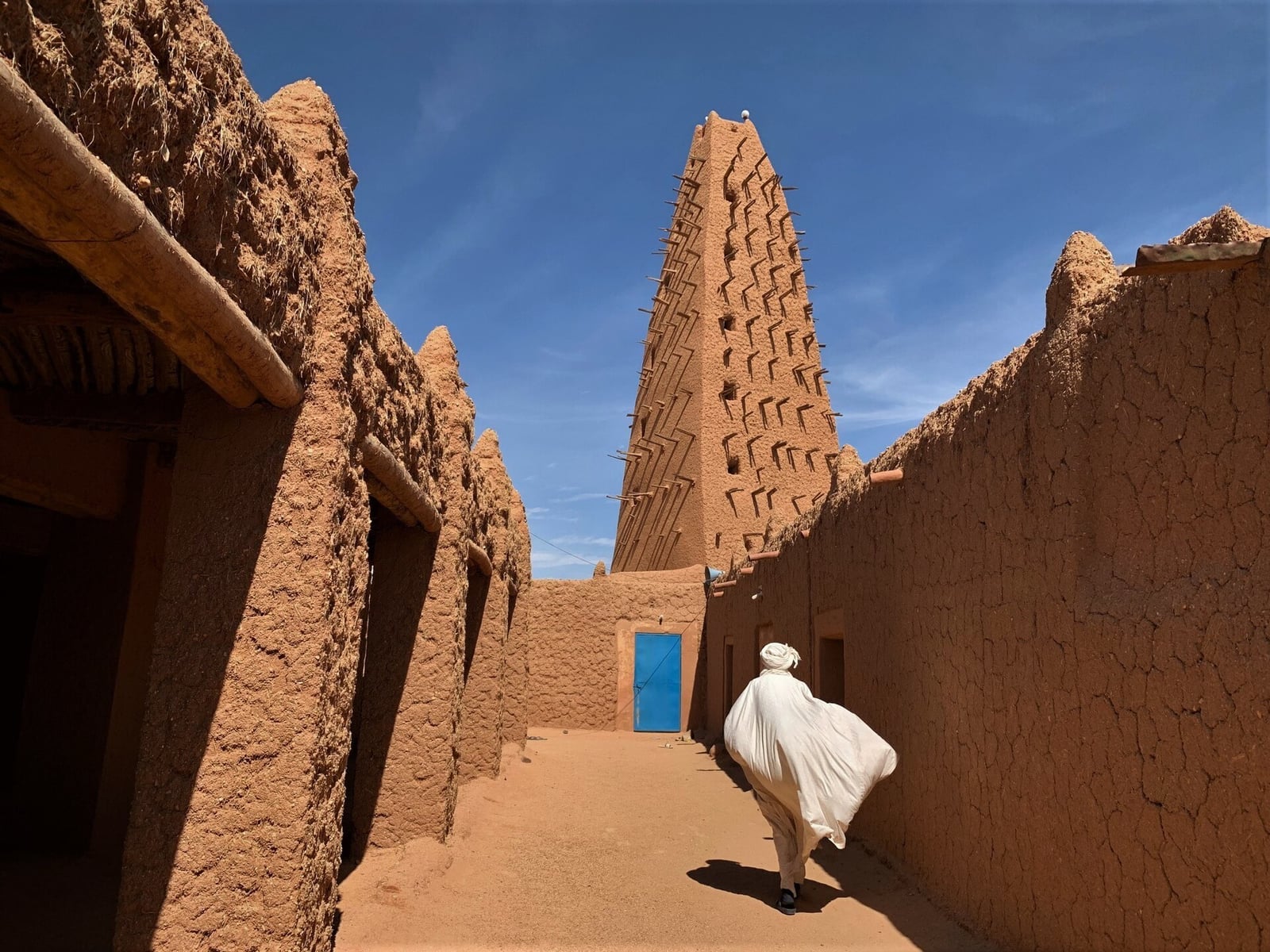
Agadez Raises a Mud-Brick Minaret on the Sahara’s Edge
A desert trading town built one of the tallest earthen minarets.
In the early sixteenth century, traditionally around 1515, the desert settlement of Agadez gave its Grand Mosque the form it largely keeps today, at a time when the city's Tuareg sultanate was growing in power and contending with the expanding Songhai Empire. Located on the southern fringes of the Sahara Desert in what is today northern Niger, the settlement developed into a major urban center for regional commerce and religious scholarship. The mosque marked a defining point in the architectural history of the central Sahel, introducing an imposing religious complex made primarily from sun-dried clay into a strategic trading crossroads.
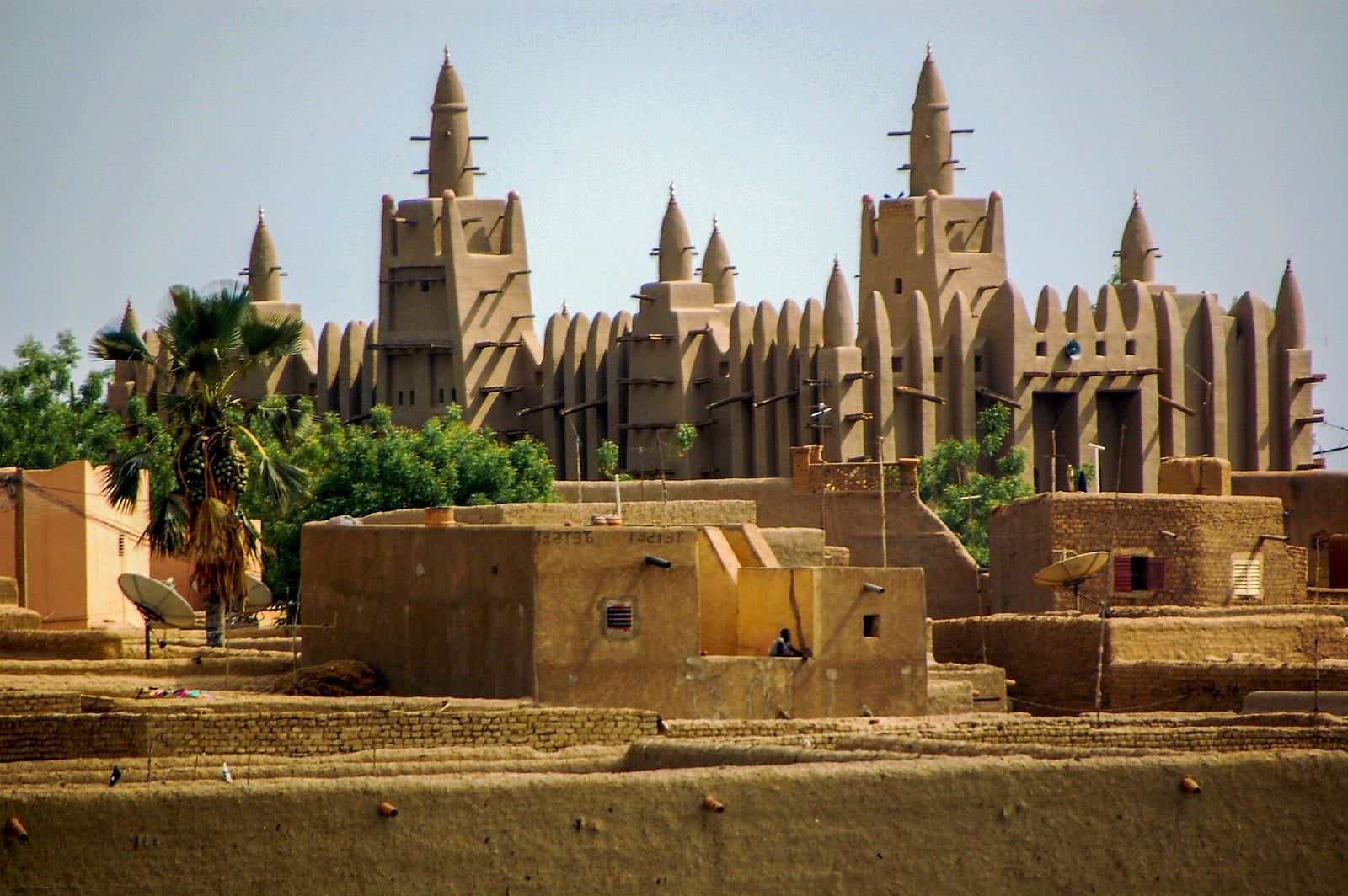
Local tradition credits the minaret to Zakaria, a sheikh still revered for his building prowess, who is said to have given the mosque its outstanding tower after several earlier attempts. The design of the mosque draws on a mudbrick building tradition shared across the wider Sahelian zone, which in Agadez reaches back to the Hausa settlers who first occupied the site and was continued by their Berber and Tuareg successors. UNESCO's advisers compare Agadez with the earthen towns of Timbuktu and Djenné, while noting that the Agadez minaret stands out for its distinctive shape, a tapering truncated pyramid, and its original decorative motifs.

Keep reading in Yester
Coming soon to the App Store
Keep following the story
Sources
Image: USAFRICOM