Djenné-Djenno Grows into a City Without a Palace
An early West African town thrived on trade and crafts with no sign of a ruling elite.
Permanent settlement at Djenné-Djenno began around 250 BCE in the Inland Niger Delta of modern-day Mali. Prior to this period, the surrounding area was predominantly swamp, utilized only periodically by mobile groups or left uninhabited. Sustained human occupation emerged after an arid climatic interval caused seasonal floodwaters to recede, exposing habitable land. The earliest occupants, who may have descended from ancestral Mande populations related to the Bozo, supported themselves through pastoralism and fishing. Radiocarbon dates indicate that domesticated African rice appeared alongside domestic cattle and early ironworking technology from the very start of the community.
Over successive centuries, the settlement expanded rapidly. While earlier scholarly models assumed that urban density and interregional commerce in West Africa only developed following contacts with Arab merchants from the north, excavations led by Roderick McIntosh and Susan McIntosh proved that indigenous trade networks flourished centuries earlier. Early ceramic patterns resembled styles from the Sahara, while imported glass beads originating from the Mediterranean or Asian exchange networks were recovered from the site, most likely brought by long-distance traders. By serving as an intermediary between northern exchange channels and southern riverine systems, the settlement grew from an initial agricultural outpost into a major regional center.

Keep reading in Yester
Coming soon to the App Store
Keep following the story
Sources
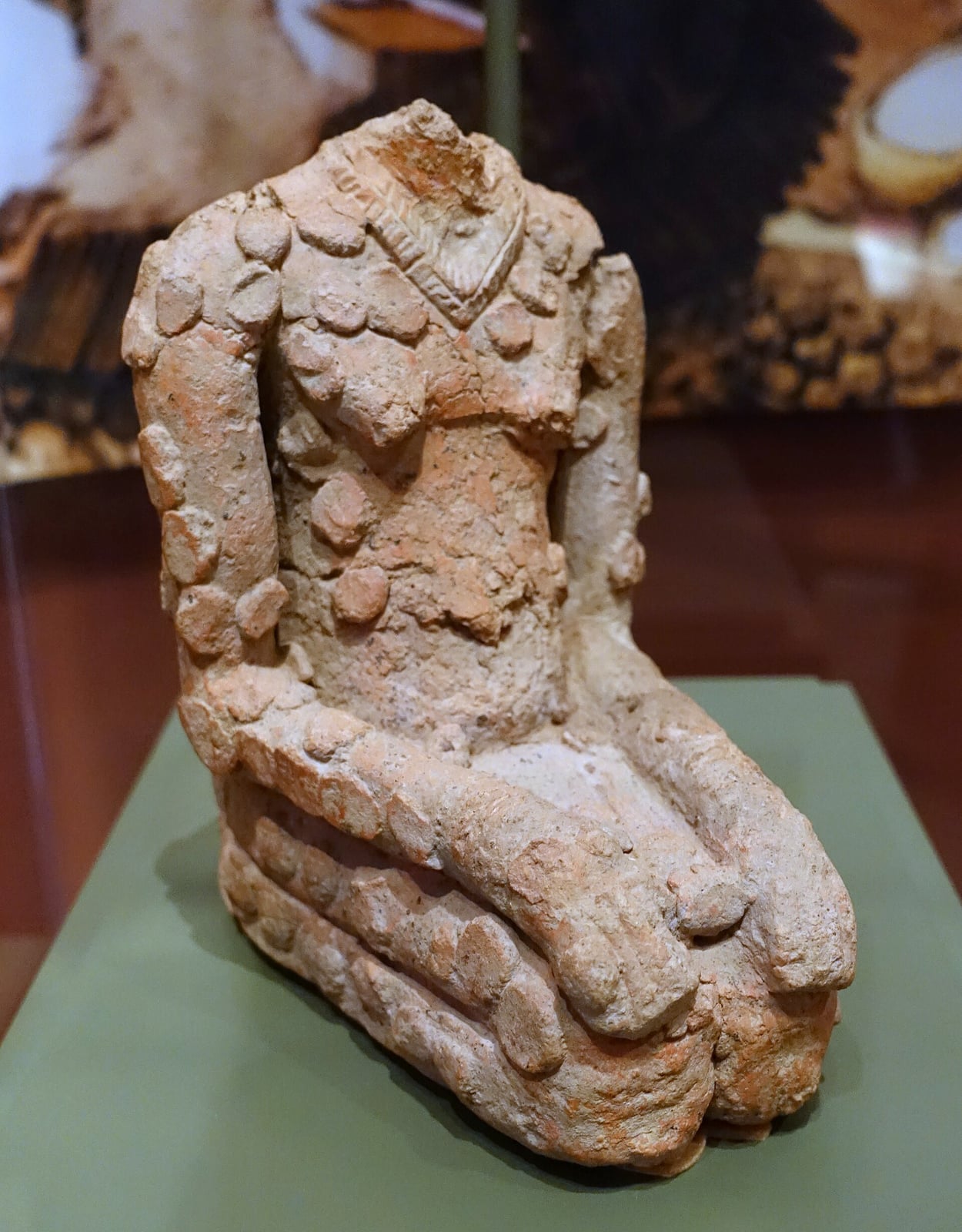
Image: Daderot