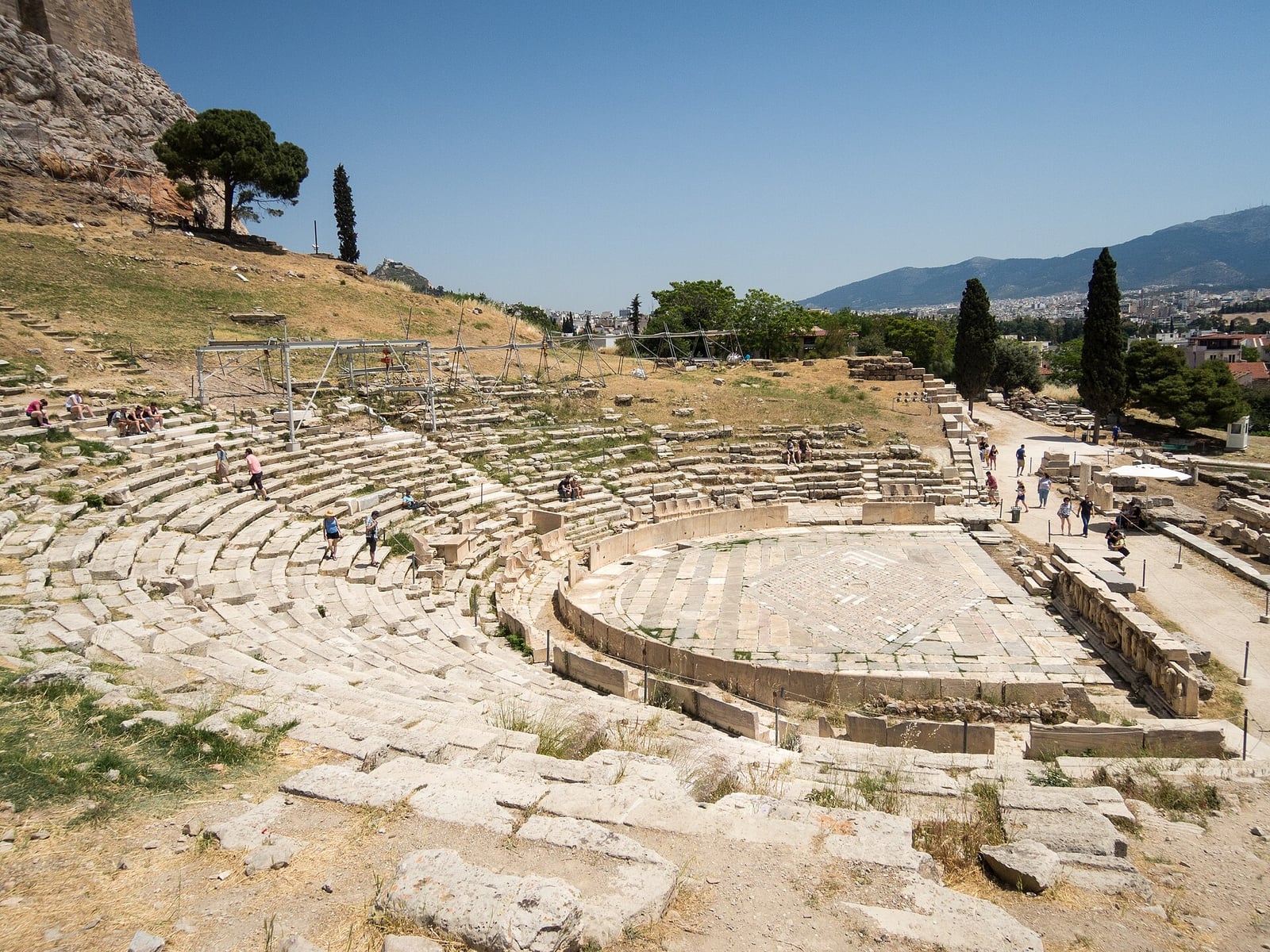
Thespis Steps Out of the Chorus in Athens
Tradition credits him as the first actor at the festival of Dionysus.
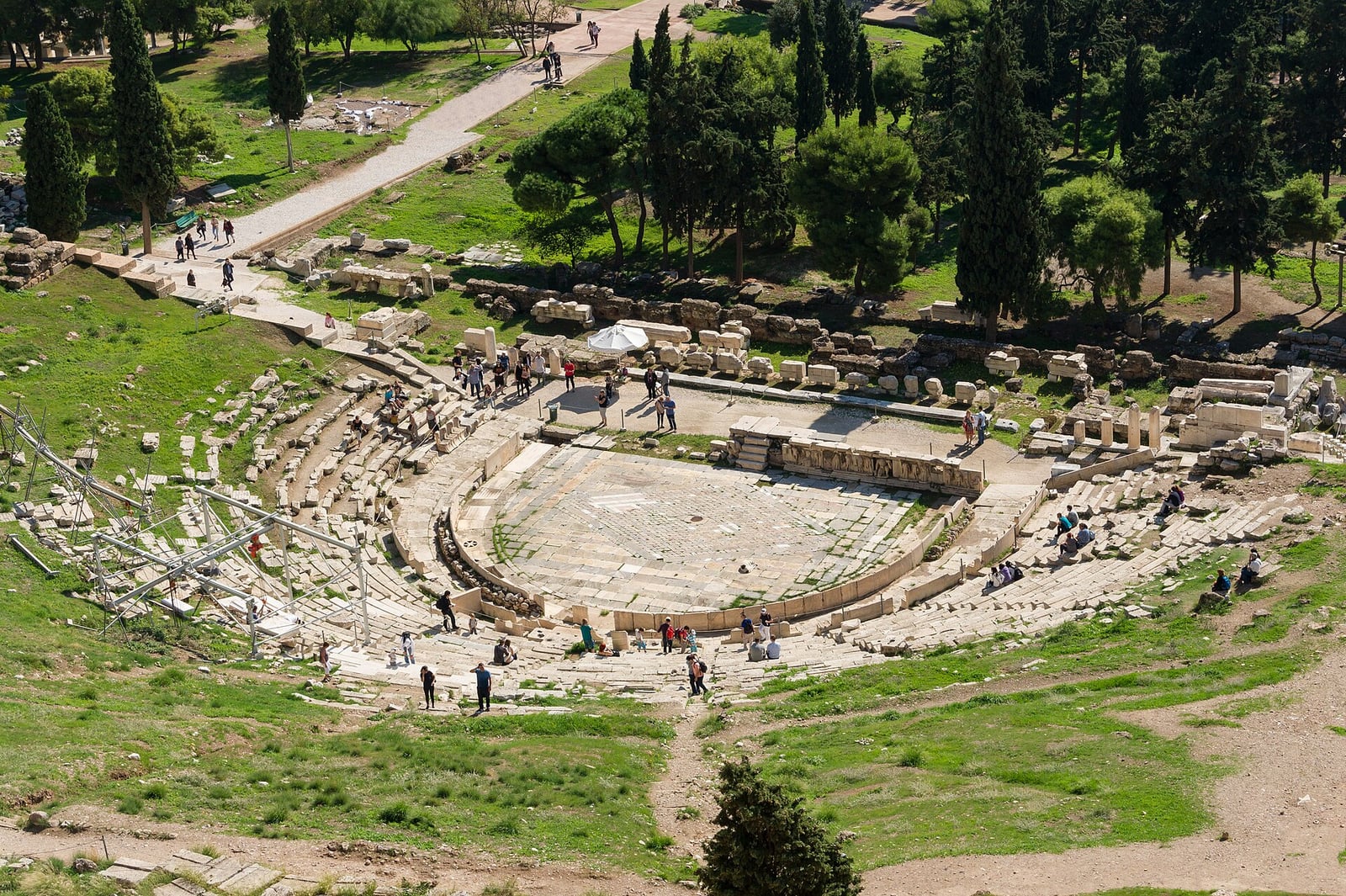
The Theatre of Dionysus was established on the southern slope of the Acropolis in Athens as part of the sanctuary of Dionysus Eleuthereus. The cult of the deity had entered Attica during the Archaic era, with the earliest known image of the god dating to around 580 BC. Dramatic stagings initially occurred in the Athenian Agora, where temporary wooden bleachers known as ikria were erected for audiences. Following the collapse of these wooden stands, theatrical performances were transferred to the Acropolis sanctuary, an event associated with the period between 499 and 496 BC.
Long before the stone theatre existed, Athenian tradition traced the birth of drama to a single performer. Ancient sources credit Thespis, a poet from the Attic village of Ikarion, with stepping out from the chorus to speak as an individual actor, which is why actors are still called thespians. According to the Byzantine Suda lexicon, he first performed with his face whitened with white lead, later covered it with purslane, and finally introduced plain linen masks, and he produced his plays in the 61st Olympiad, between 536 and 533 BC. That reckoning lies behind the traditional date of about 534 BC, though some modern accounts place his work around 520 BC, and the details remain legendary.

Keep reading in Yester
Coming soon to the App Store
Keep following the story
Sources
Image: dronepicr