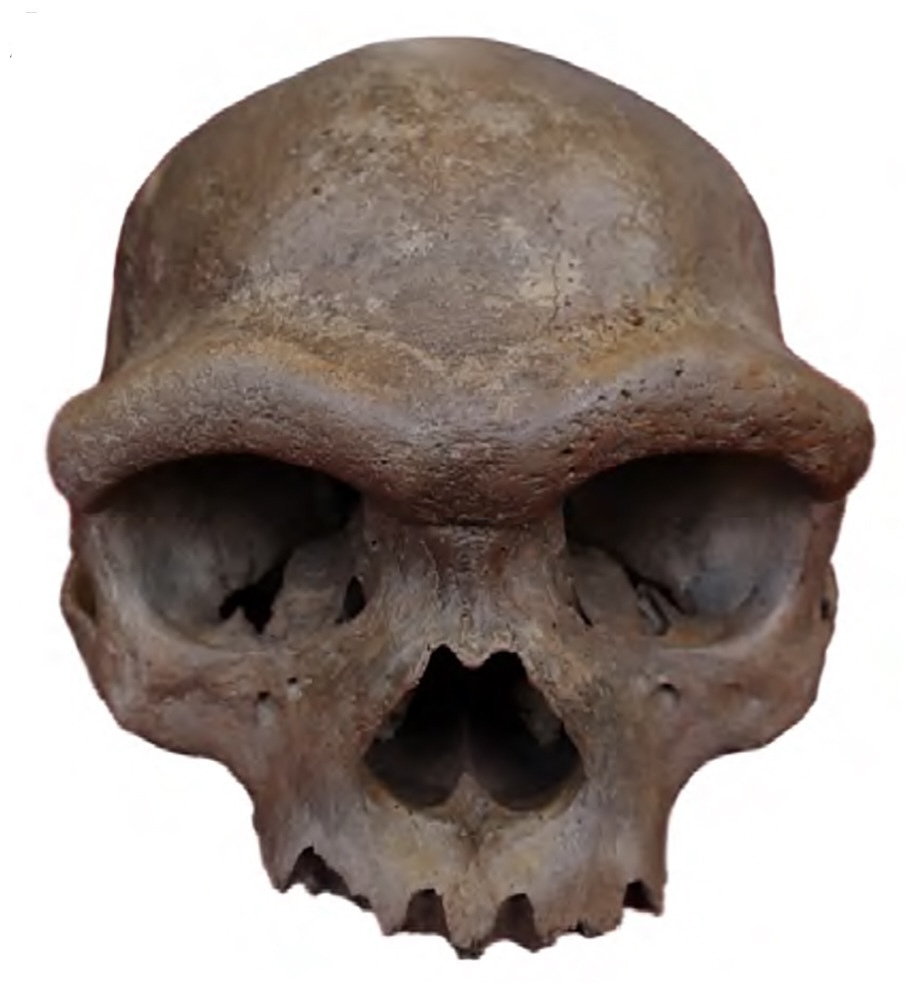
DNA from a Finger Bone Reveals the Denisovans
Genetic analysis identified an extinct group of humans from a tiny fossil.
In 2008, archaeologists excavated an unremarkable piece of bone from Denisova Cave in the Altai Mountains of southern Siberia. The specimen, a fragment of a juvenile female finger bone designated Denisova 3, appeared physically modest compared to the extensive mammalian and cultural record recovered from the site. Despite its small size, the bone preserved ancient DNA well enough for detailed genetic analysis.
Geneticists led by Johannes Krause and Svante Pääbo at the Max Planck Institute for Evolutionary Anthropology extracted and sequenced mitochondrial DNA from the finger bone, publishing their initial results in 2010. Rather than aligning with contemporary modern humans or Neanderthals, the matrilineal sequence diverged significantly from both groups. Comparing the mitochondrial sequence revealed roughly 385 nucleotide differences between the fossil and modern humans, whereas Neanderthals differed from modern humans by approximately 202 bases. The genetic data indicated that the fossil belonged to a previously unknown population of archaic humans, now known as the Denisovans.

Keep reading in Yester
Coming soon to the App Store
Keep following the story

Sources
- The complete mitochondrial DNA genome of an unknown hominin from southern Siberia (Nature)
- Genetic history of an archaic hominin group from Denisova Cave in Siberia (Nature)
- The genome of the offspring of a Neanderthal mother and a Denisovan father (Nature)
- A late Middle Pleistocene Denisovan mandible from the Tibetan Plateau (Nature)
- Altitude adaptation in Tibetans caused by introgression of Denisovan-like DNA (Nature)
- The proteome of the late Middle Pleistocene Harbin individual (Science, abstract via Europe PMC)
- Denisovan mitochondrial DNA from dental calculus of the >146,000-year-old Harbin cranium (Cell, abstract via Europe PMC)
- Denisovan
Image: Fu et al. (2025)