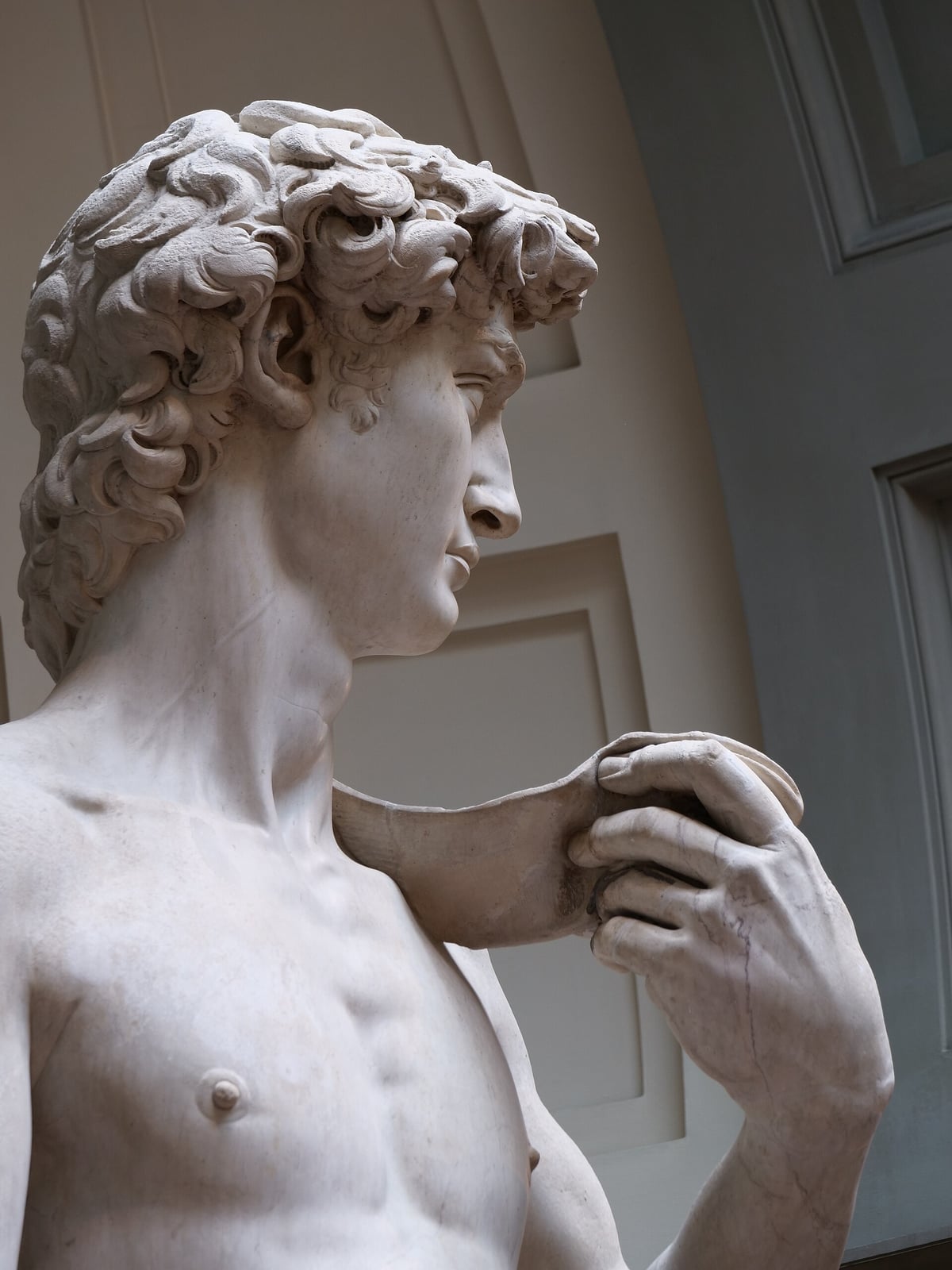
Michelangelo’s David Is Unveiled in Florence
A shepherd carved from a flawed block of marble became a symbol of the republic.
On September 8, 1504, a colossal marble statue of David was formally unveiled before the Palazzo della Signoria in Florence. Standing 5.17 metres high, the figure depicted the Old Testament hero poised in contrapposto on the verge of combat. The unveiling marked the conclusion of three years of intense carving by Michelangelo Buonarroti, then still in his twenties, who had transformed a massive, long-abandoned block of Carrara marble into the definitive civic monument of the Florentine Republic.
The stone had lingered in the workshop yards of the Florence Cathedral for decades. Quarried in Carrara and dragged by oxen and barges to the city, the block had been roughly carved in the 1460s by Agostino di Duccio for a planned series of prophet statues intended for the cathedral roofline. After Agostino abandoned the commission and a subsequent attempt by Antonio Rossellino stalled, the stone lay exposed to the elements for twenty-five years. Described in an official inventory as poorly blocked out and supine, it was deemed nearly unusable until the cathedral overseers decided in 1501 to find a sculptor capable of rescuing it. Michelangelo secured the contract in August of that year, beginning his cuts only weeks later.

Keep reading in Yester
Coming soon to the App Store
Keep following the story
Sources
Image: Jörg Bittner Unna