Botticelli Gives an Ancient Goddess a Renaissance Setting
A celebrated painting brings classical mythology into the artistic and intellectual world of Florence.
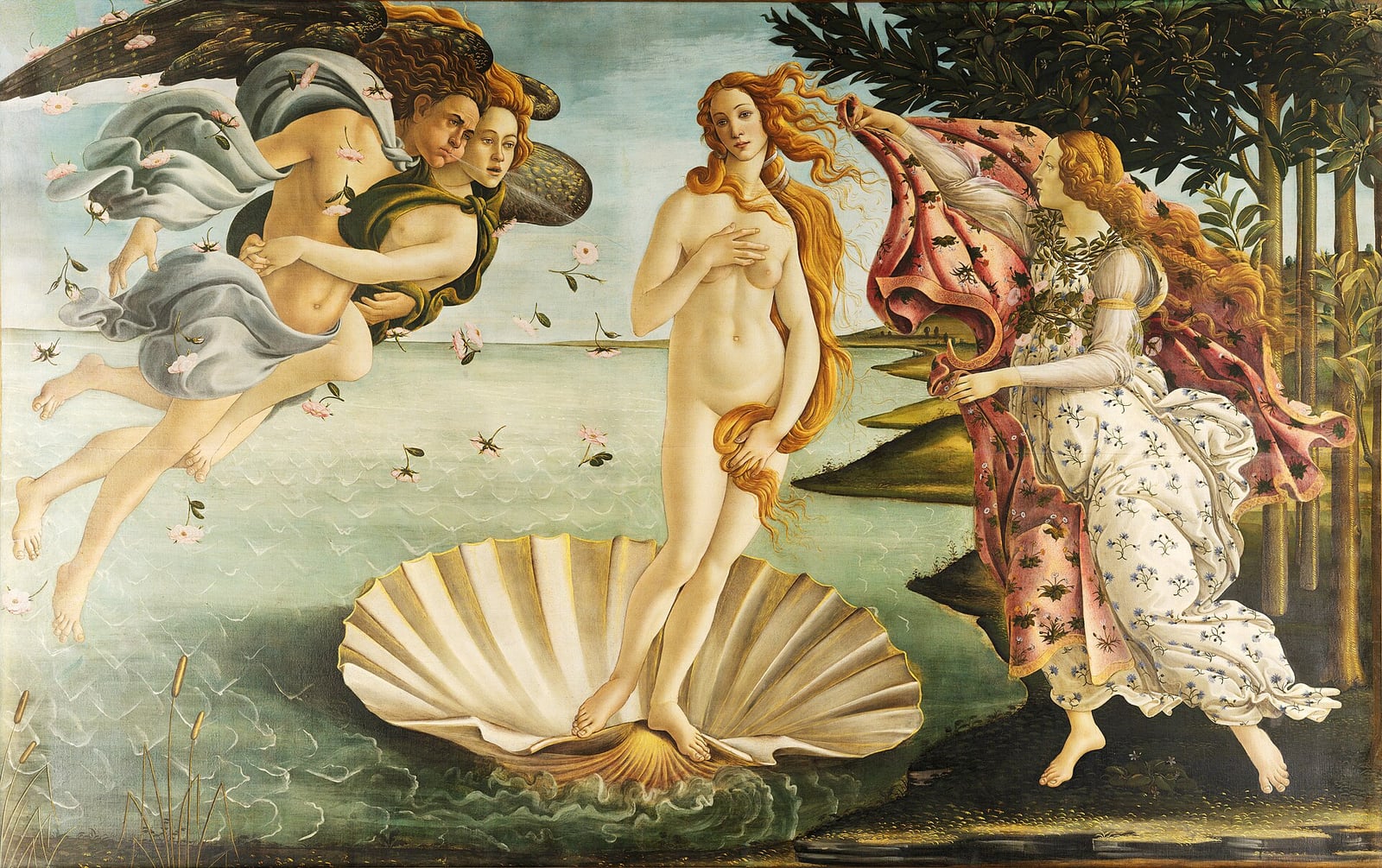
Painted in Florence probably during the mid-1480s, Sandro Botticelli's large mythological composition known as The Birth of Venus presents a monumental reimagining of classical lore. Standing nude atop a giant scallop shell, the central goddess drifts toward an island shore, propelled by the breath of the winged wind god Zephyrus and an accompanying airborne female figure, often identified as Aura or Chloris. Waiting on the land, an attendant Hora, decorated in floral patterns, prepares to wrap the arriving divinity in an ornate mantle. The subject depicts the moment after her emergence from the sea, rather than her actual emergence, drawing heavily on ancient traditions associated with the arrival of Venus Anadyomene.
The scale and subject matter represented an extraordinary departure for Western art of its era. Large depictions of pagan mythology had been virtually absent since classical antiquity, and displaying an expansive, prominent female nude at this scale was equally unprecedented in post-classical easel painting. Botticelli executed the work on two pieces of sewn canvas prepared with a blue-tinted gesso ground, deviating from the wooden panel supports and green underpainting typical of his workshop. Canvas was then gaining popularity as an economical support, suitable for large secular decorative paintings. The artist finished the composition with extensive gold highlights on the hair, wings, shell, and foliage, sealing the surface with a cool varnish.

Keep reading in Yester
Coming soon to the App Store
Keep following the story
Sources
Image: Sandro Botticelli