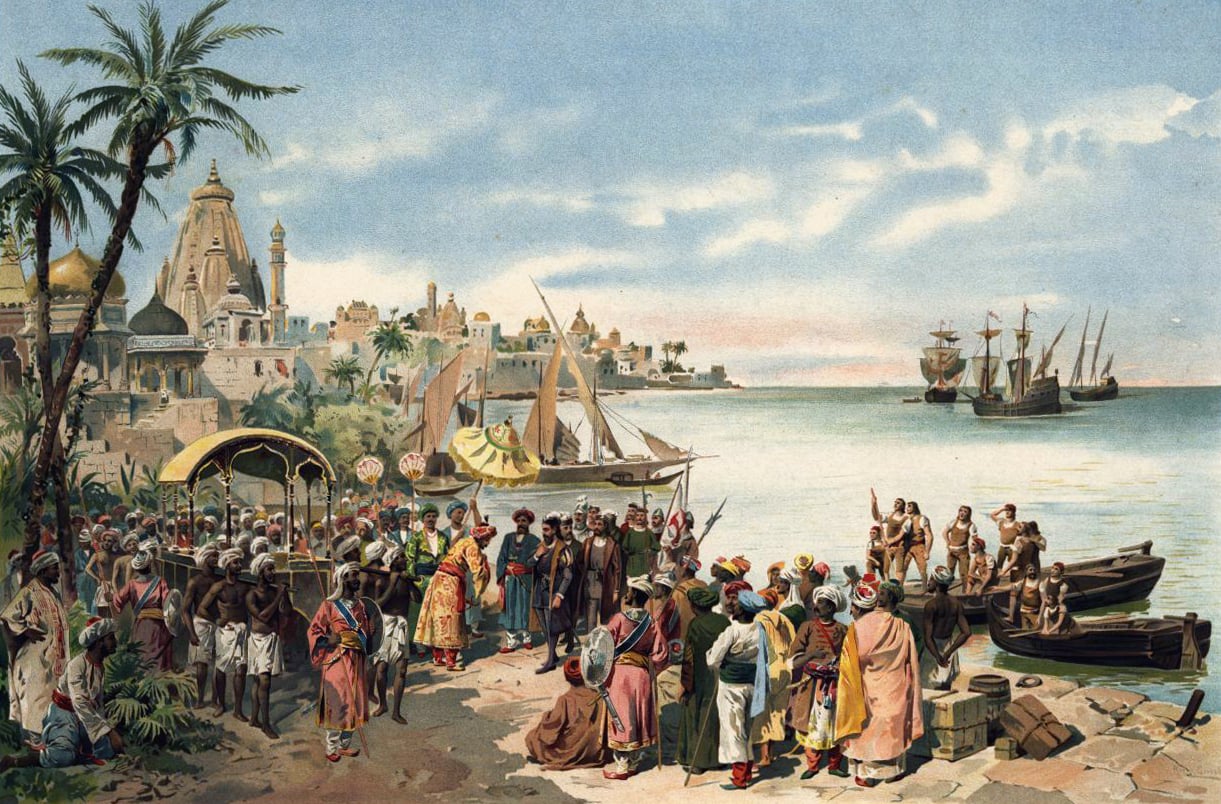
Vasco da Gama Reaches India by Sea
A Portuguese fleet linked Europe to the Indian Ocean trade by sailing around Africa.
On 8 July 1497, Vasco da Gama led an expedition of four vessels and approximately 170 men away from Lisbon. Supported by the crown under King Manuel I, the mission sought to establish a direct maritime connection between Portugal and the valuable spice markets of India, circumventing Mediterranean ports and dangerous overland routes. The fleet's pilots included the experienced mariner Pero de Alenquer. Sailing far into the South Atlantic to harness prevailing westerly winds previously observed by Bartolomeu Dias, da Gama spent over three months navigating open water without landfall before rounding the southern tip of Africa.
Entering the Indian Ocean, the fleet advanced into established maritime trading zones along the East African coast. In March 1498, the Portuguese arrived at Mozambique Island, an integral hub in the regional network. Relations soured when the town's Muslim inhabitants realized the visitors were Christians, and da Gama bombarded the town before sailing on. Further north, the mariners met hostility at Mombasa and soon departed before finding a cooperative reception in Malindi. There, the expedition enlisted an experienced local pilot whose familiarity with regional monsoon patterns guided the ships across the Arabian Sea toward the subcontinent.

Keep reading in Yester
Coming soon to the App Store
Keep following the story
Sources
- Vasco da Gama: Round Africa to India, 1497-1498 CE (Internet Modern History Sourcebook, Fordham University)
- Vasco da Gama (The Mariners' Museum and Park, Ages of Exploration)
- Vasco da Gama's Voyage of 'Discovery' 1497 (South African History Online)
- Sunken Pirate Ship from Explorer Vasco da Gama's Fleet Discovered (Live Science)
- Vasco da Gama
Image: Roque Gameiro