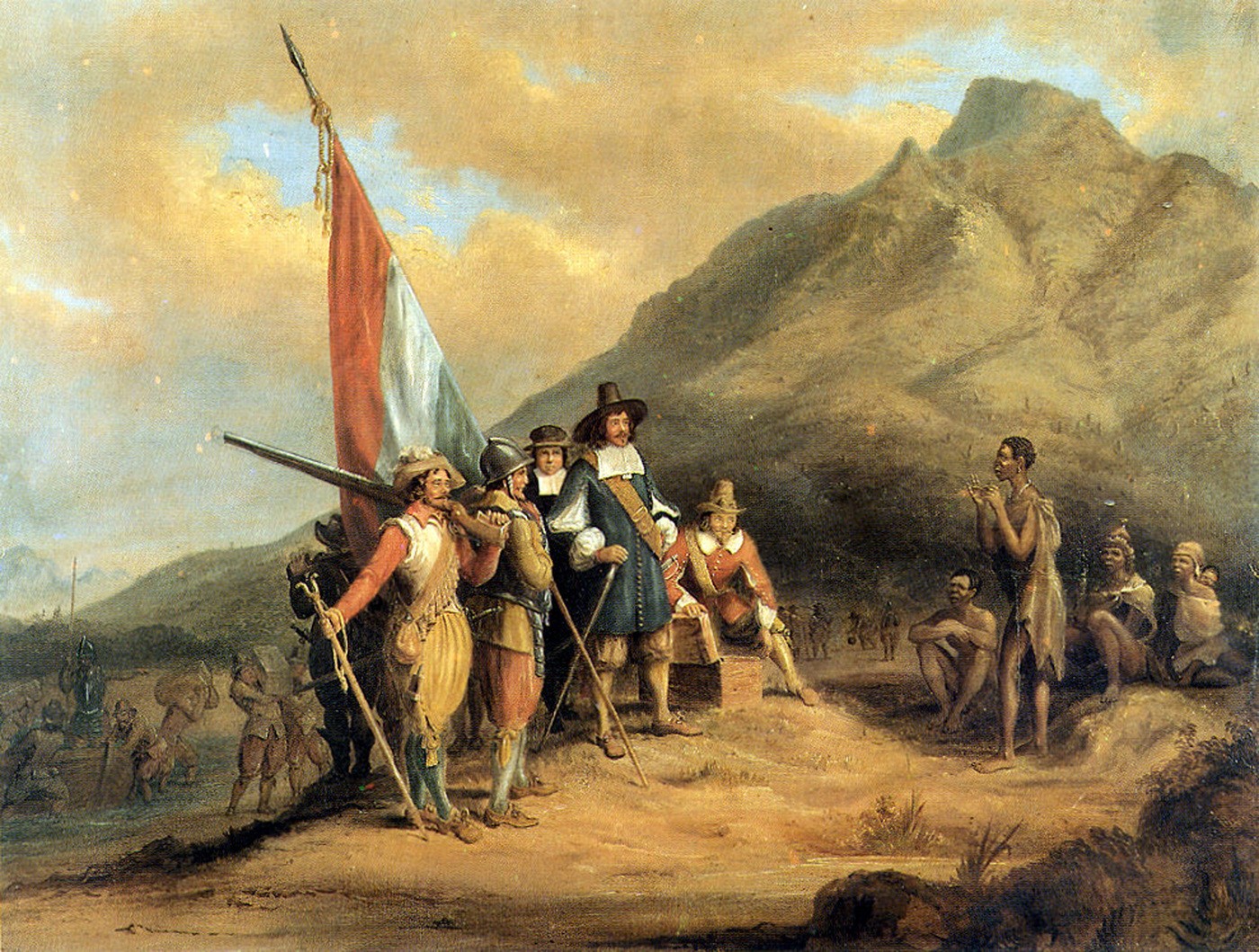
The Dutch East India Company Founds a Station at the Cape
A garden and fort built to resupply passing ships grew into Cape Town.
In 1652, an expedition led by Jan van Riebeeck arrived at the Cape of Good Hope to establish a permanent presence for the United East India Company, commonly known as the VOC. The enterprise was not initially conceived as an expansive settlement. Instead, the company sought an intermediate provisioning station where ships traveling between the Netherlands and the trade hubs of the East Indies, notably Batavia, could procure fresh water, vegetables, and meat to combat illness among crews. Van Riebeeck held the title of Commander of the Cape, overseeing the construction of basic fortifications and agricultural plots at the base of Table Mountain.
The land selected for cultivation lay within the traditional grazing ranges of indigenous Khoikhoi pastoralists and hunters. Disruption to the seasonal grazing patterns of the Khoikhoi soon produced armed friction, sparking the first of several Khoikhoi-Dutch conflicts. Following warfare, indigenous leaders ceded land to the company in 1660, an arrangement reinforced in 1672 when a visiting commissioner conducted a formal purchase intended to avert further legal disputes. The shift toward sedentary agriculture undermined traditional nomadic lifestyles. Furthermore, catastrophic smallpox epidemics in 1713 and 1755, alongside ongoing military pressures, severely decimated the indigenous population, driving many survivors beyond colonial borders or into servile roles as herders.

Keep reading in Yester
Coming soon to the App Store
Keep following the story
Sources
Image: Charles Davidson Bell