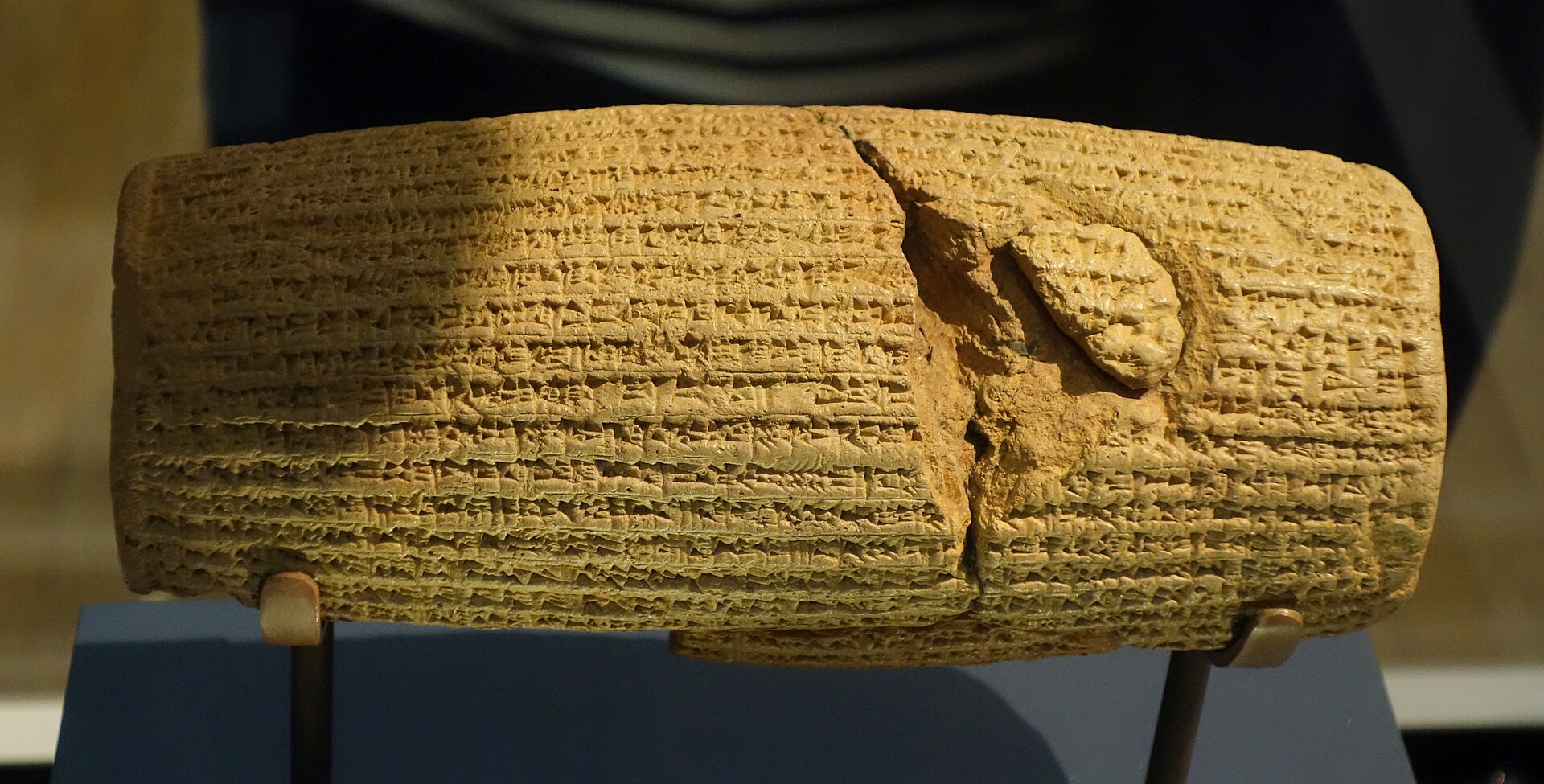
The Cyrus Cylinder Records a Conqueror’s Claim to Rule
A Babylonian inscription reveals how a new ruler presented conquest as restoration, and how later audiences reinterpreted it.
In March 1879, archaeologists working for the British Museum excavated a barrel-shaped clay cylinder from the ruins of ancient Babylon in Ottoman-governed Mesopotamia. Broken into pieces and inscribed with forty-five lines of Akkadian cuneiform, the artifact was placed as a foundation deposit during the sixth century BCE, following the capture of Babylon by the Persian king Cyrus the Great. Such deposits were intended to remain buried within structural masonry, sanctifying sacred architecture and dedicating building projects to the gods rather than serving as public monuments for contemporary eyes.
The text on the cylinder served an explicit political function, framing foreign conquest as an act of pious liberation. It attacked the deposed Babylonian monarch, Nabonidus, portraying him as an impious oppressor whose neglect of local rites caused the chief god Marduk to seek a worthy sovereign elsewhere. Cyrus presented himself as Marduk's chosen ruler, asserting an established royal lineage, claiming to have entered Babylon peacefully, and cataloguing benefactions that included repairing temples, enhancing offerings, and restoring displaced populations alongside their religious statues across Mesopotamia.

Keep reading in Yester
Coming soon to the App Store
Keep following the story
Sources
Image: Daderot