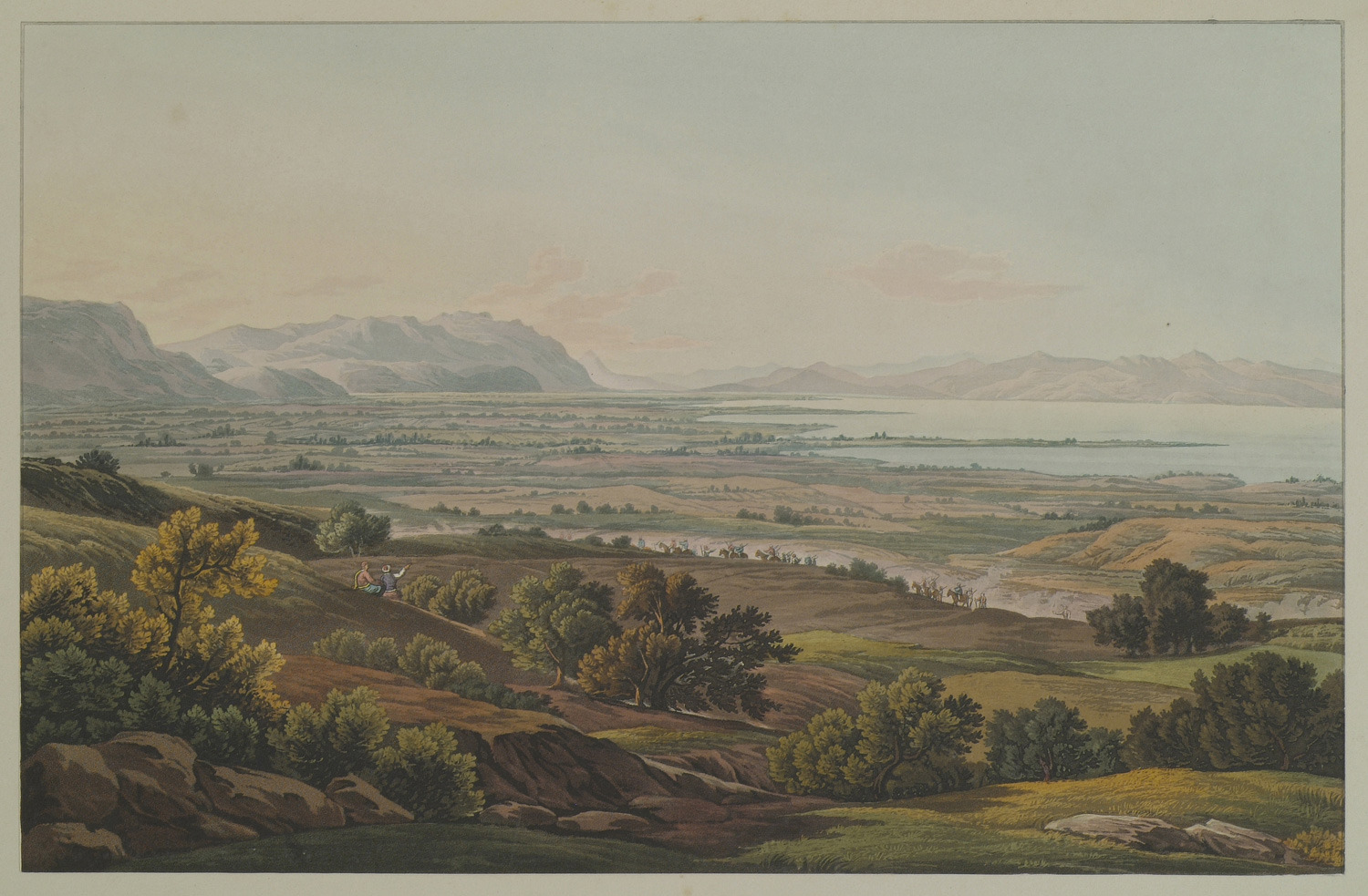
A Small Force Holds the Pass at Thermopylae
A battle against the Persian army became one of antiquity’s most retold stories.
In 480 BCE, an allied coalition of Greek city-states positioned an army at the narrow defile of Thermopylae to confront an invading force led by the Persian king Xerxes. The campaign formed the centerpiece of the second Persian invasion of Greece, launched a decade after Persian troops had suffered defeat at Marathon. Led by Athens and Sparta, the resisting Greek states adopted a combined strategy: Greek naval squadrons would contest the straits off Artemisium, while a land detachment would plug the principal route into central Greece.
The allied Greek contingent at the pass numbered approximately 7,000 men under the overall command of the Spartan king Leonidas I. This force included an elite royal bodyguard of 300 Spartiates, supplemented by contingents from Arcadia, Corinth, Phocis, Thespiae, and other regional polities. The size of the opposing imperial army remains heavily debated among historians. Herodotus put the whole host that Xerxes led to Thermopylae at more than five million people, an impossible figure, whereas modern estimates cited by Britannica range from about 70,000 to 300,000 troops.

Keep reading in Yester
Coming soon to the App Store
Keep following the story
Sources
- Battle of Thermopylae (Encyclopaedia Britannica)
- Herodotus, The Histories 7.176, trans. A. D. Godley (Perseus Digital Library, Tufts University)
- Herodotus, The Histories 7.186 (Perseus Digital Library, Tufts University)
- Herodotus, The Histories 7.202 (Perseus Digital Library, Tufts University)
- Herodotus, The Histories 7.217 (Perseus Digital Library, Tufts University)
- Herodotus, The Histories 7.233 (Perseus Digital Library, Tufts University)
- Battle of Thermopylae
Image: Edward Dodwell