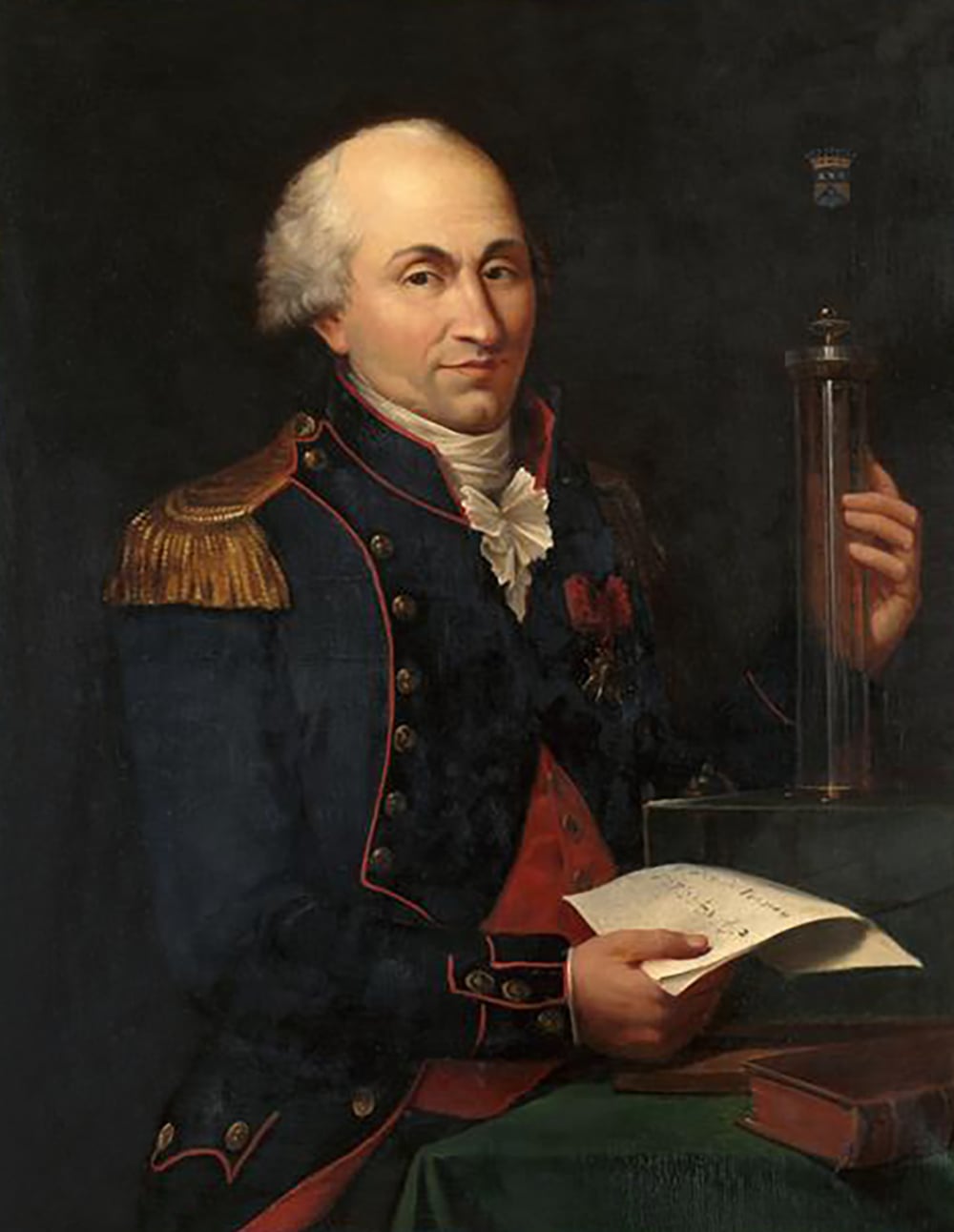
Coulomb Measures the Force Between Electric Charges
A torsion balance made electrical attraction and repulsion measurable.
Before Charles-Augustin de Coulomb turned his attention to electrostatics, he established a substantial career in practical engineering and classical mechanics. Educated at the École royale du génie de Mézières, he joined the French royal corps of engineers as a lieutenant in 1761. His early assignments demanded rigorous material problem-solving, most notably during eight years supervising the construction of Fort Bourbon in Martinique. That posting severely damaged his health, but it also grounded his scientific investigations in applied statics, masonry stability, and the mechanical properties of earthworks. Upon returning to France, he produced foundational memoirs on structural engineering, friction, and the elasticity of metal cables.
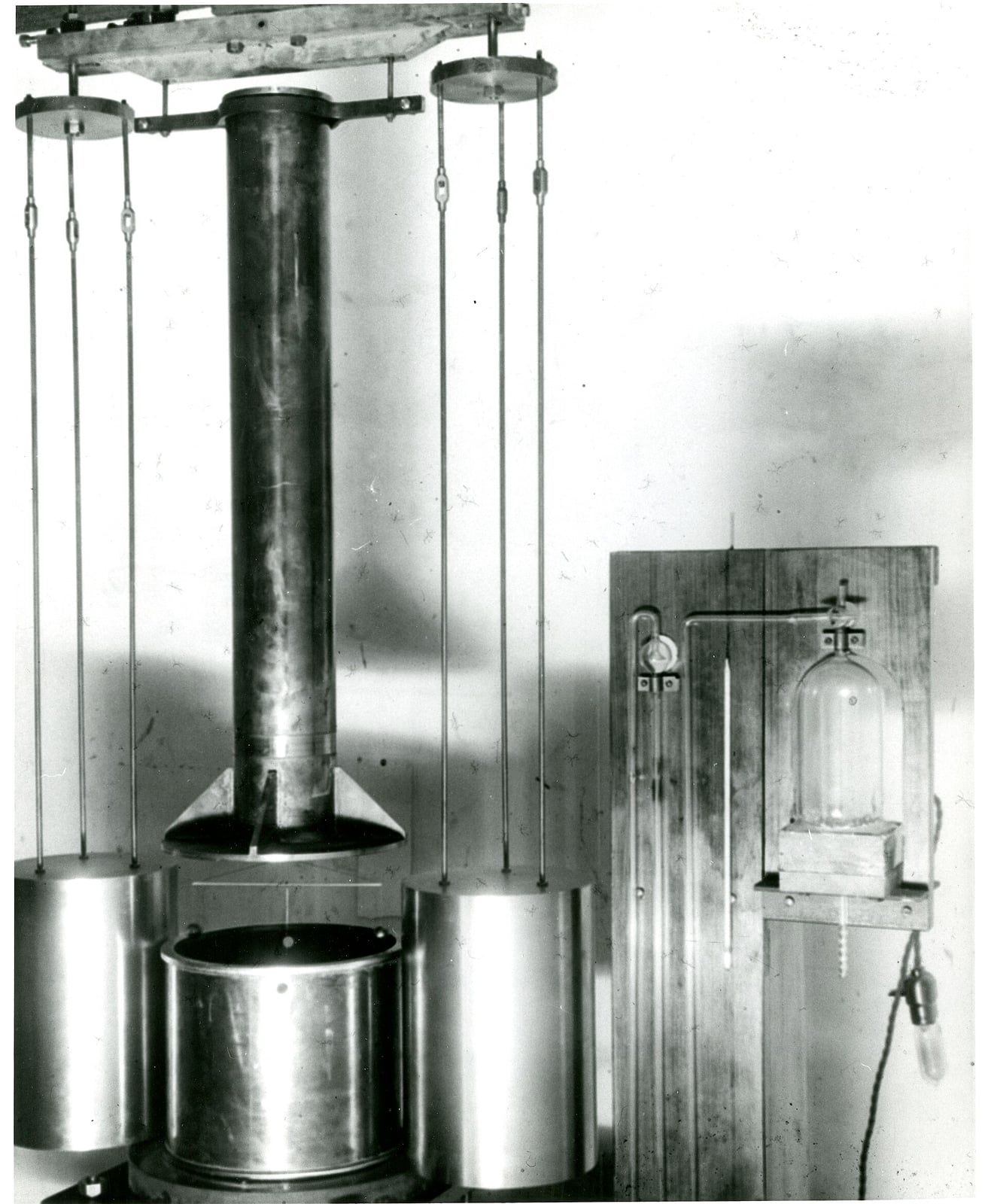
A crucial breakthrough occurred when Coulomb investigated the torsional behavior of metallic threads. In a memoir published in 1784, he showed that the restoring torque of a twisted metal wire is directly proportional to its angle of deflection. He also established that this restoring force varies inversely with the wire length and increases with the fourth power of its diameter. By demonstrating that extremely thin filaments reacted predictably to the slightest rotational forces, Coulomb realised that a suspended wire could serve as an instrument of extraordinary precision. This device, known as the torsion balance, provided eighteenth-century physics with a reliable tool for measuring forces that had previously been far too tiny to isolate.

Keep reading in Yester
Coming soon to the App Store
Keep following the story
Sources
Image: Louis Hierle