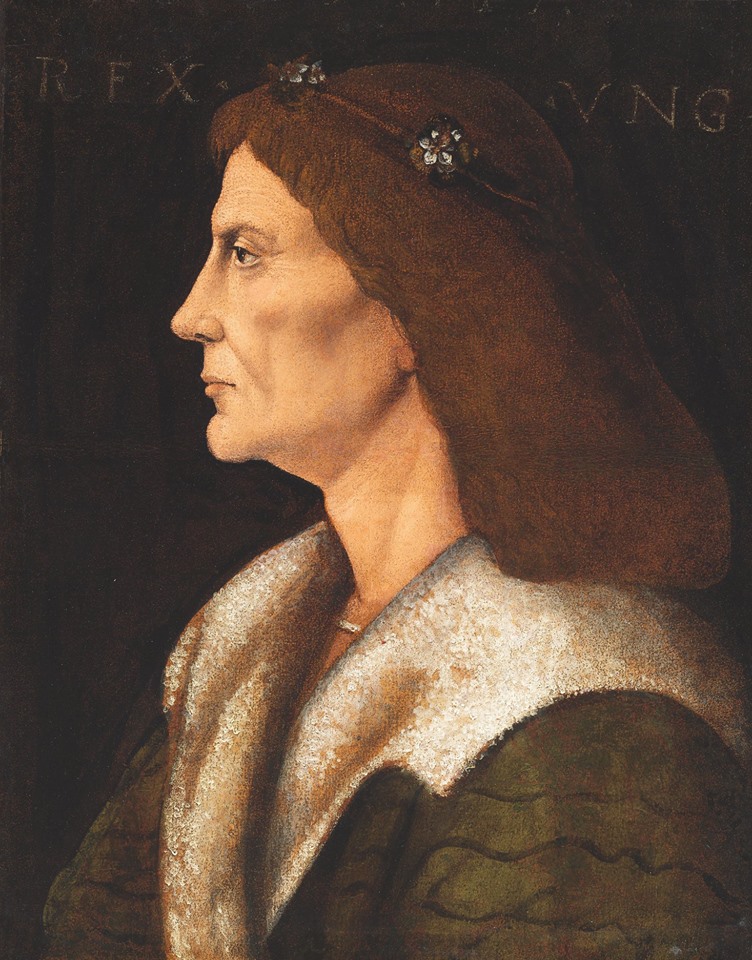
Matthias Corvinus Builds a Renaissance Library
A Hungarian king’s collection of illuminated books rivaled the Vatican’s.
Matthias Corvinus ascended the Hungarian throne in early 1458 at the age of fourteen, following a volatile period of aristocratic factionalism and captivity. Lacking royal lineage, the young monarch took direct control of governance and rapidly reformed state institutions. To secure funding for continuous warfare and state administration, Matthias centralized the royal revenues, removed traditional exemptions, and routinely imposed extraordinary taxes across the realm. These resources sustained the Black Army, one of Europe's earliest professional standing forces, allowing Matthias to hold off Ottoman advances, occupy Moravia, Silesia, and Lusatia, and eventually capture Vienna.
Beyond his military ambitions, Matthias pursued an energetic cultural programme that established Hungary as the first European kingdom outside Italy to adopt the Renaissance. Having received an extensive humanist education in his youth, he invited Italian architects, sculptors, and scholars to his royal court at Buda and his palace at Visegrád. Italian builders like Chimenti Camicia and Giovanni Dalmata oversaw extensive palace renovations in the Renaissance manner, while philosophers and chroniclers such as Antonio Bonfini, Marsilio Ficino, and Bartolomeo Fonzio found generous patronage under the crown.

Keep reading in Yester
Coming soon to the App Store
Keep following the story
Sources
Image: Andrea Mantegna