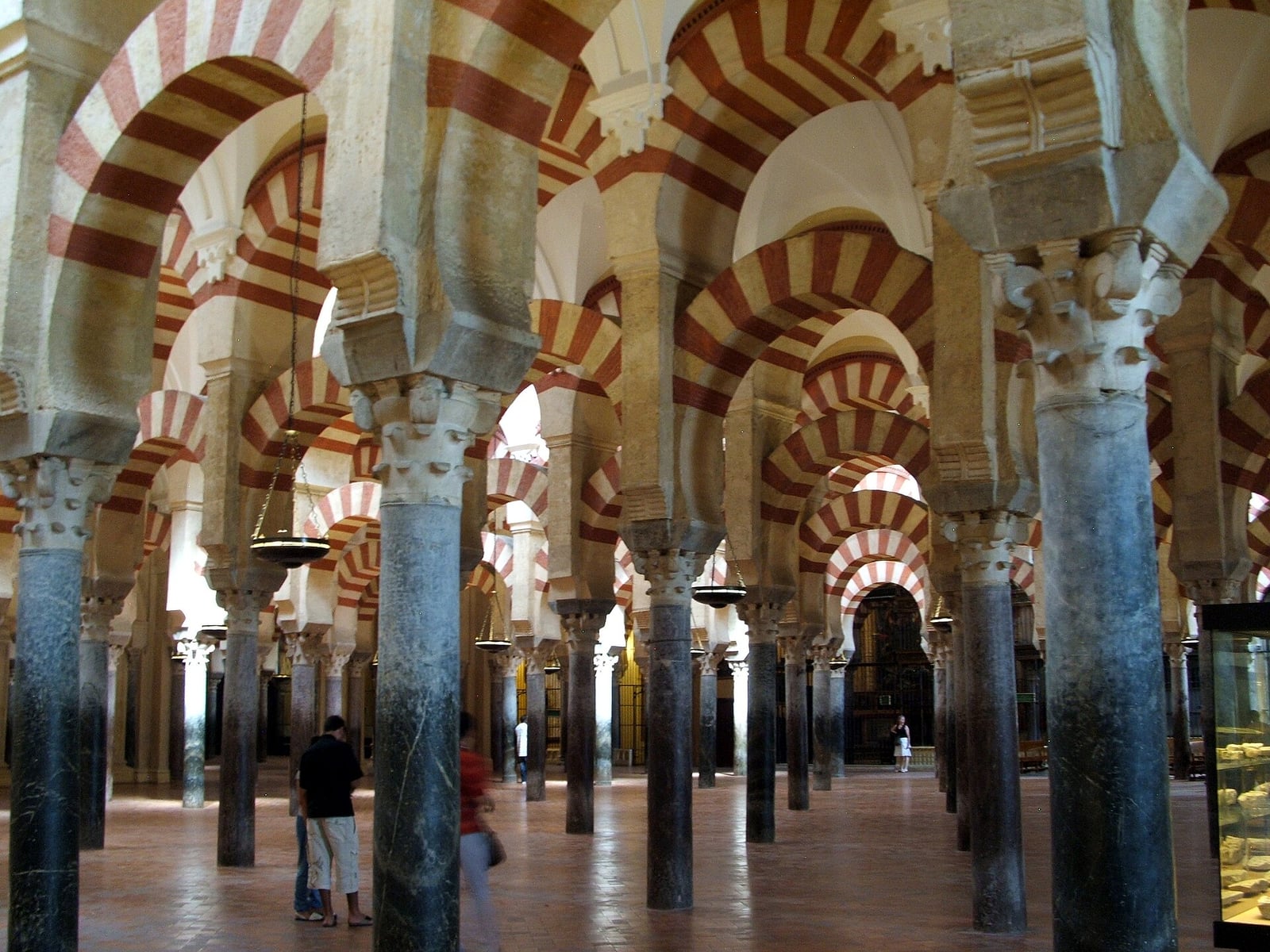
Córdoba’s Great Mosque Begins to Take Shape
A new congregational mosque grew through successive rulers and transformations.
Around 785, the founder of the Umayyad Emirate of Córdoba, Abd al-Rahman I, initiated the construction of a grand congregational mosque on a sloping site near the Guadalquivir River. Later medieval chronicles claimed that the property was acquired from the city's Christian community after sharing the site of a Visigothic basilica dedicated to Vincent of Saragossa. However, modern archaeological investigations have cast doubt on this traditional narrative. Excavations have revealed Late Roman and early medieval fragments, but researchers disagree on whether an actual basilica stood on the exact plot or if the area belonged to an administrative episcopal complex.
The initial structure took form rapidly in the late 780s, aided by the incorporation of repurposed Roman and Visigothic materials, especially marble columns and capitals. Abd al-Rahman's builders divided the layout evenly between an open courtyard and a hypostyle prayer hall. The interior introduced a defining visual element: superimposed tiers of arches composed of alternating voussoirs, which elevated the ceiling and created open, rhythmic vistas. The mosque was aligned toward the south rather than toward Mecca, an orientation that aligned with the pre-existing Roman street grid and respected a regional tradition for western Islamic sanctuaries.

Keep reading in Yester
Coming soon to the App Store
Keep following the story

Sources
Image: PerryPlanet