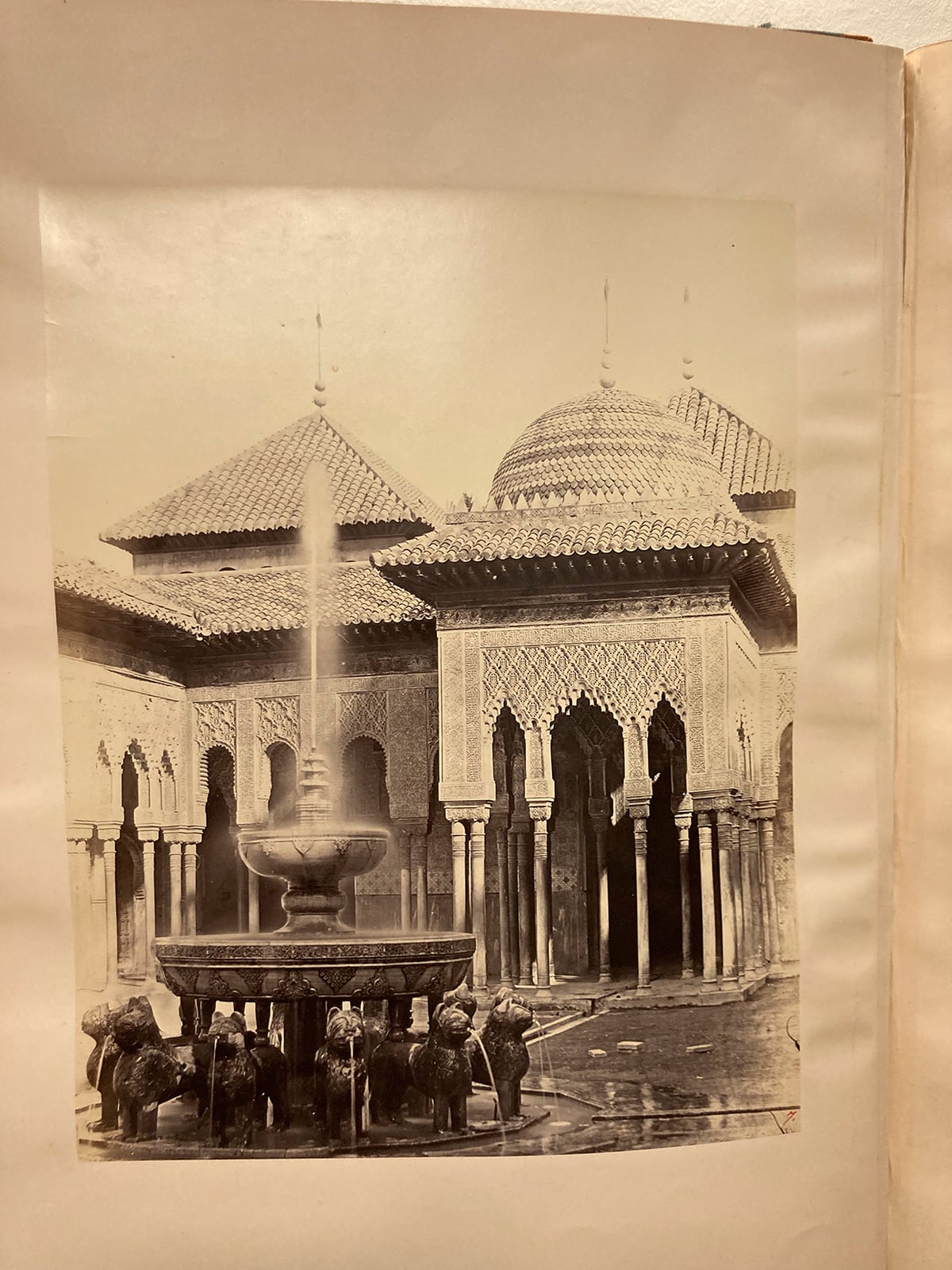
The Alhambra Gives Nasrid Power an Architectural Form
Palaces, gardens and inscriptions connected courtly life with political authority.
In 1238, Muhammad I Ibn al-Ahmar took control of Granada, establishing the Nasrid dynasty as Christian kingdoms advanced across southern Iberia. Seeking a secure administrative seat, he relocated from the Albaicin hill to the Sabika hill, an elevated outcrop overlooking the city. There he began erecting the fortified perimeter that would grow into the Alhambra. Previous fortifications on the hill had relied on stored rainwater, but the new rulers transformed the defensive redoubt into a permanent royal citadel by constructing the Sultan Canal, an engineering work that diverted water directly from the Darro River.
This dependable water infrastructure permitted the Alhambra to develop into a self-contained administrative and residential city. Enclosed behind ramparts built of iron-rich rammed earth, the settlement accommodated public baths, residential streets, craft workshops, and a great congregational mosque, on whose site the Church of Santa María was later built. Successive emirs added palaces along the complex's northern edge, positioning reception halls to face outward over the valley while orienting private living chambers inward around enclosed courtyards.

Keep reading in Yester
Coming soon to the App Store
Keep following the story
Sources
- Alhambra, Generalife and Albayzín, Granada (UNESCO World Heritage Centre)
- History (Patronato de la Alhambra y Generalife)
- ¿Sabías que la Acequia Real debía recorrer más de seis kilómetros para llevar el agua a la Alhambra? (Patronato de la Alhambra y Generalife)
- The court of the lions (Patronato de la Alhambra y Generalife)
- The Rauda at the Alhambra. Royal Cemetery (Patronato de la Alhambra y Generalife)
- Boabdil, Research Starters (EBSCO)
- Alhambra
Image: Charles Cliffor