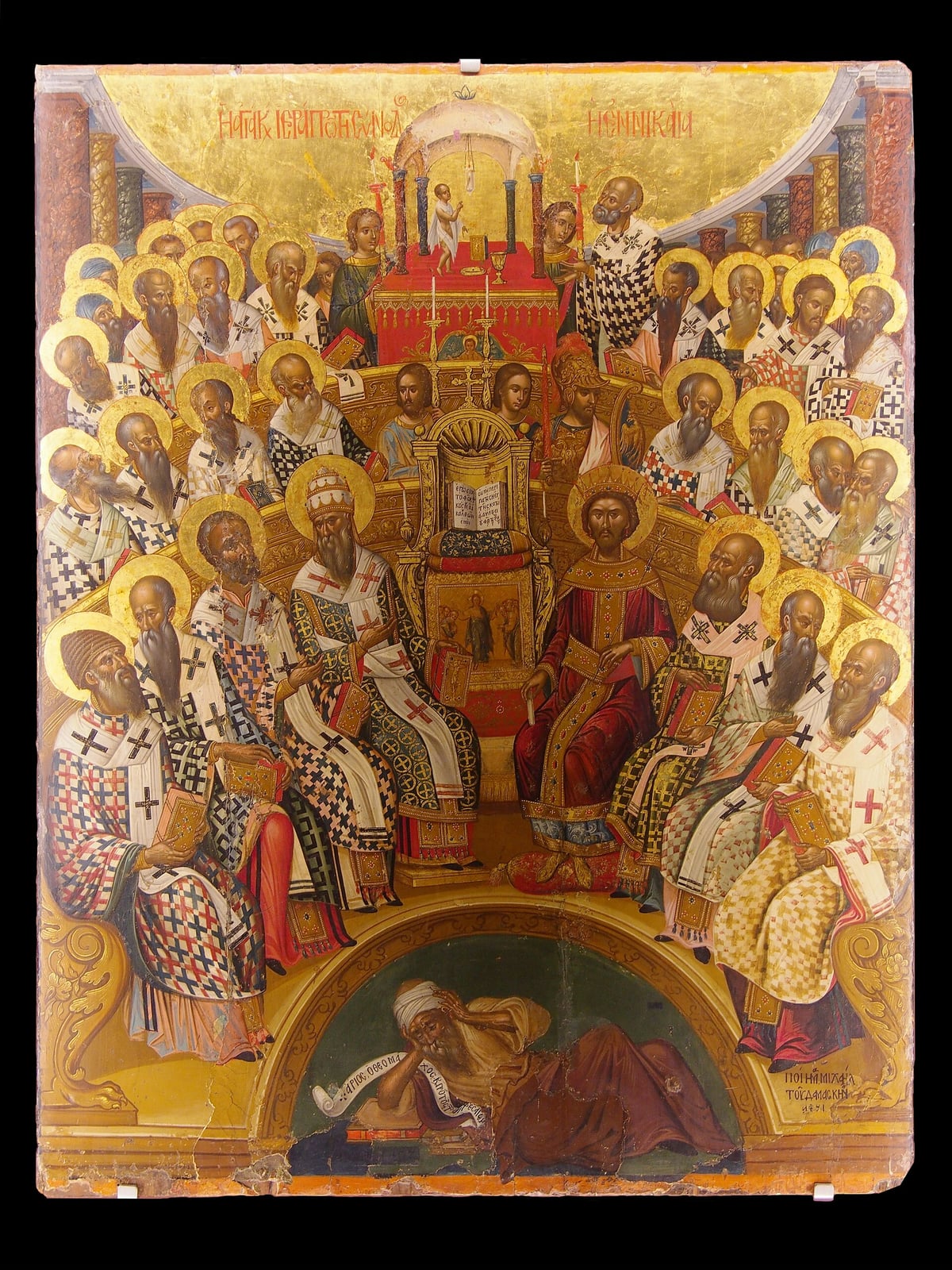
Bishops Gather at the Council of Nicaea
An emperor summoned church leaders to settle disputes over Christian belief.
In the late spring of 325, Christian bishops from across the Roman world travelled to the Bithynian city of Nicaea, situated near the imperial administrative centre of Nicomedia. The gathering, financed by the imperial treasury, was convened by Emperor Constantine I shortly after he defeated Licinius in 324 and unified the empire under his sole authority. Although Constantine had recently legalized Christian worship, theological divisions threatened the internal cohesion of the church. In response, he gathered the episcopate to establish consensus and resolve bitter doctrinal disputes.
The primary doctrinal challenge originated in Alexandria, where an intense conflict arose between Archbishop Alexander and the presbyter Arius. Arius argued that God the Father alone was eternal, meaning God the Son had a defined point of creation and was subordinate to the Father. Alexander and his allies countered that the Son was eternally begotten and divine. Constantine initially attempted to mediate the dispute by dispatching Bishop Hosius of Corduba to Alexandria with letters urging reconciliation. When local diplomacy failed to end the schism, the emperor moved the planned council from Ancyra to Nicaea so that he could personally attend the assembly.

Keep reading in Yester
Coming soon to the App Store
Keep following the story
Sources
Image: C messier