Olympia Makes Athletic Competition a Shared Tradition
A Greek religious festival became a major setting for competition, prestige and rules about who could participate.
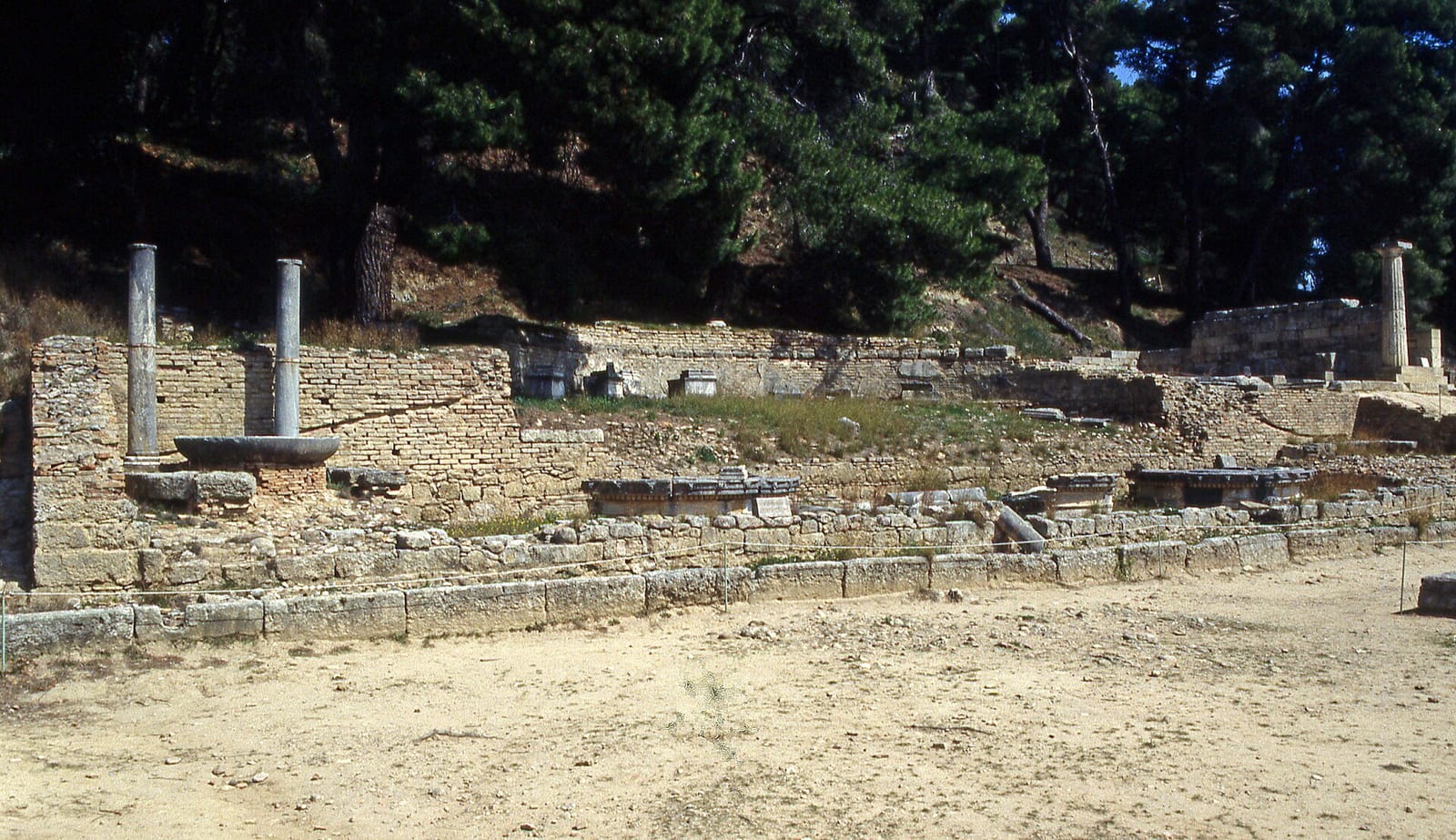
In the rural sanctuary of Olympia, nestled in the Peloponnese along the Alpheios River, the ancient Greeks developed a quadrennial festival that combined religious devotion with athletic competition. Ancient writers conventionally dated the founding of the games to 776 BC, an epoch championed by Aristotle and later adopted by chroniclers who counted time across four-year intervals known as Olympiads. While modern archaeological research indicates that substantial athletic fixtures probably developed around 700 BC, the sanctuary evolved into the most prestigious venue among the Panhellenic circuit, existing alongside gatherings at Nemea, Delphi, and the Isthmus of Corinth.
The games were conducted in honor of Zeus, the supreme deity of the Greek pantheon, whose temple inside the sacred enclosure known as the Altis held a colossal gold and ivory statue sculpted by Pheidias. A central religious ritual occurred midway through the festival, when one hundred oxen were sacrificed at the great altar of Zeus. To facilitate the event, the neighboring state of Elis sent heralds to announce a sacred truce, the ekecheiria. This armistice did not eliminate warfare across Greece, but it legally shielded participants and pilgrims traveling through various territories to attend the rites.

Keep reading in Yester
Coming soon to the App Store
Keep following the story
Sources
Image: Mark Landon