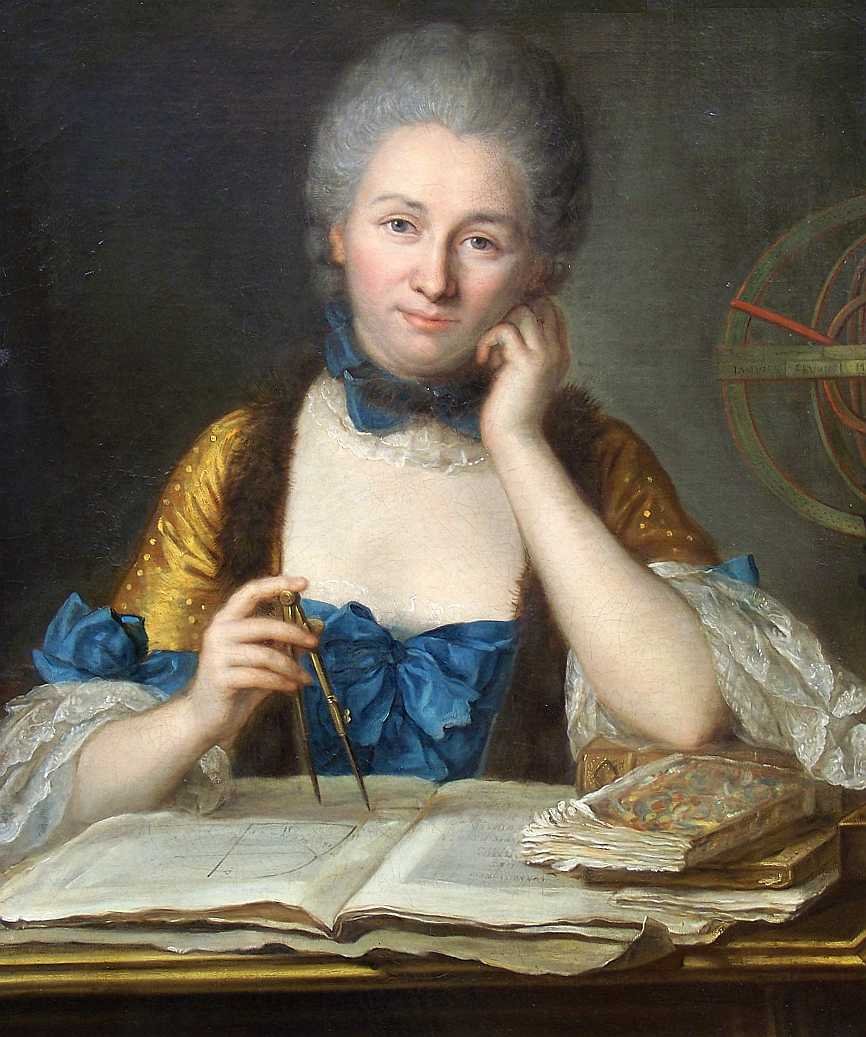
Émilie du Châtelet Translates Newton’s Principia
Her French translation and commentary is still the standard one in France.
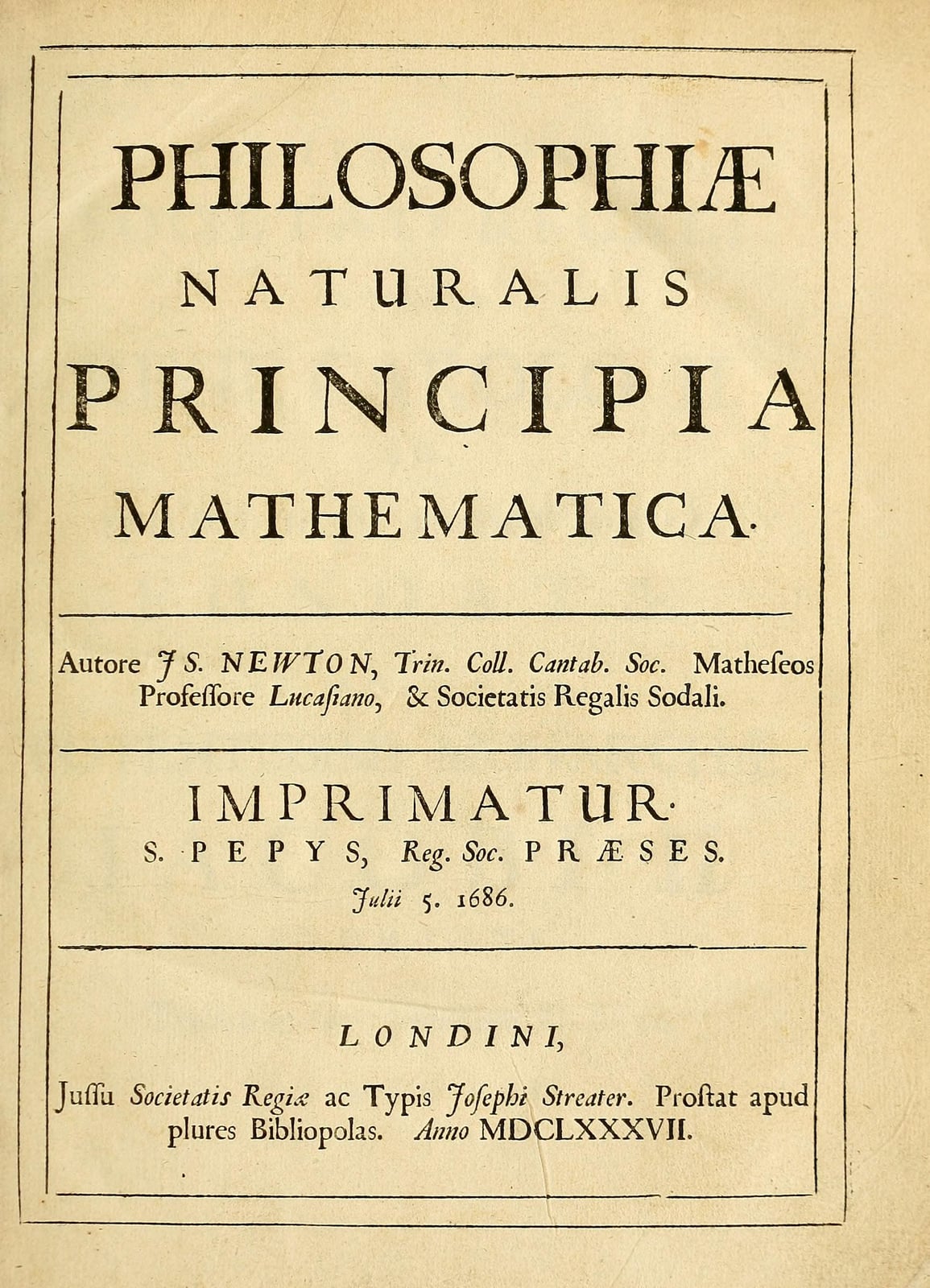
During the final months of her life at Lunéville in 1749, Gabrielle Émilie Le Tonnelier de Breteuil, Marquise du Châtelet, raced to complete an ambitious intellectual project. Pregnant at the age of forty-two, she expressed deep fears in her letters that she might not survive the impending birth. Despite these forebodings, she worked tirelessly alongside the mathematician Alexis Clairaut to finalize her French translation and commentary on Isaac Newton's monumental treatise, Philosophiæ Naturalis Principia Mathematica. Six days after giving birth to a daughter, du Châtelet died on 10 September 1749, leaving behind a finished manuscript that would transform European science.
Born into the French lesser nobility in 1706, du Châtelet had cultivated an exceptional education in languages, natural philosophy, and mathematics. In 1733, she resumed advanced studies under Pierre Louis Moreau de Maupertuis and later Clairaut, gaining fluency in algebra, calculus, and Newtonian mechanics. Her intellectual journey took institutional shape through a long partnership with Voltaire, with whom she lived and studied at the Château de Cirey starting in 1734. There, they constructed a private laboratory to test scientific hypotheses and examine the physical principles then sweeping across England.

Keep reading in Yester
Coming soon to the App Store
Keep following the story
Sources
Image: Maurice Quentin de La Tour