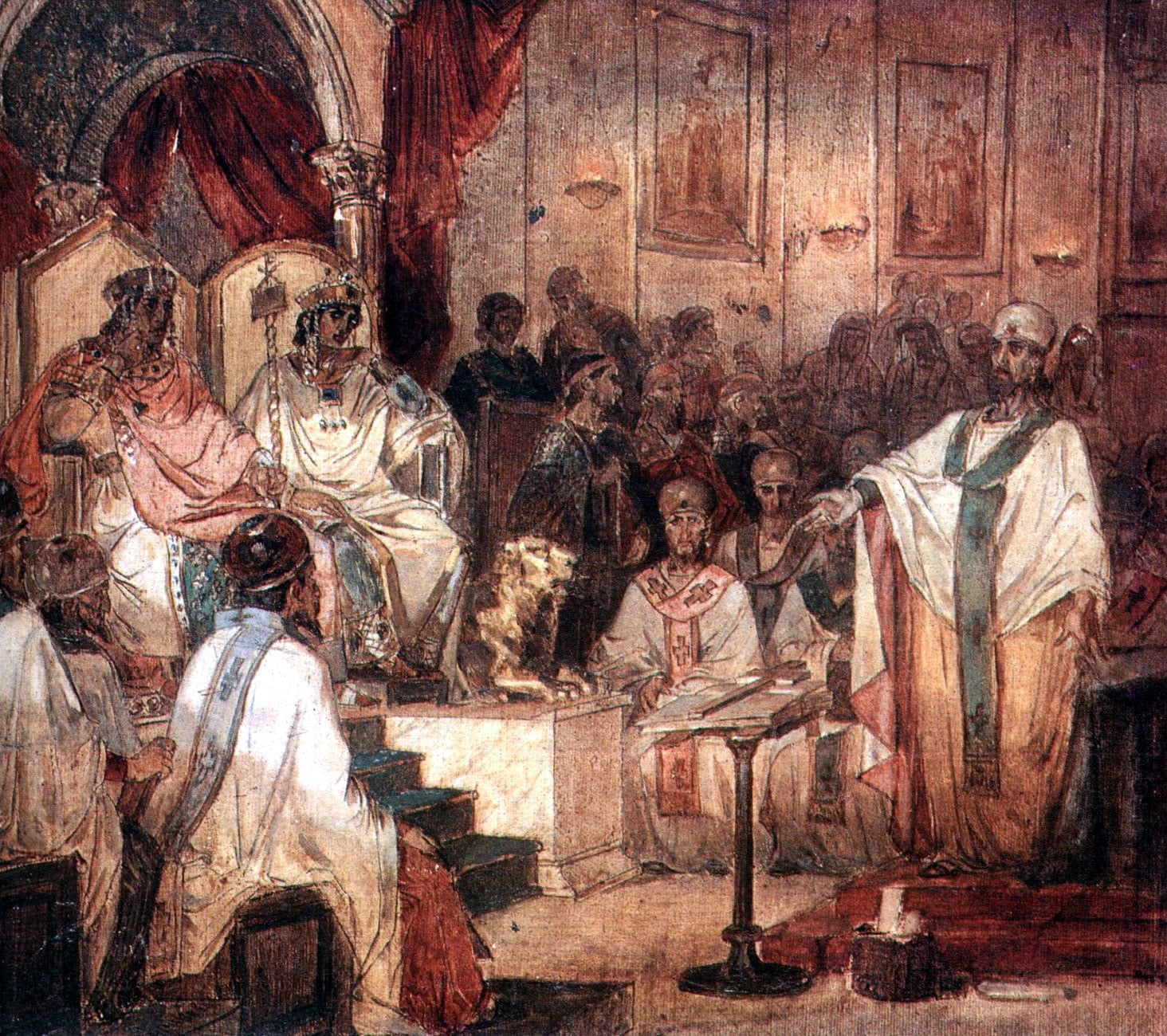
The Council of Chalcedon Defines Christ’s Two Natures
A church council produced a definition that also divided Christians.
In October 451, more than five hundred Christian bishops and their representatives gathered at the church of Saint Euphemia in Chalcedon, situated across the Bosporus from Constantinople. Convoked by the Roman emperor Marcian, this gathering became the fourth ecumenical council of the Christian church. Marcian summoned the assembly to resolve bitter theological disputes that had disrupted church unity following the death of Emperor Theodosius II. The debates centered on how to articulate the relationship between the divine and human aspects of Jesus Christ, addressing concerns over monophysitism and competing Christological teachings.
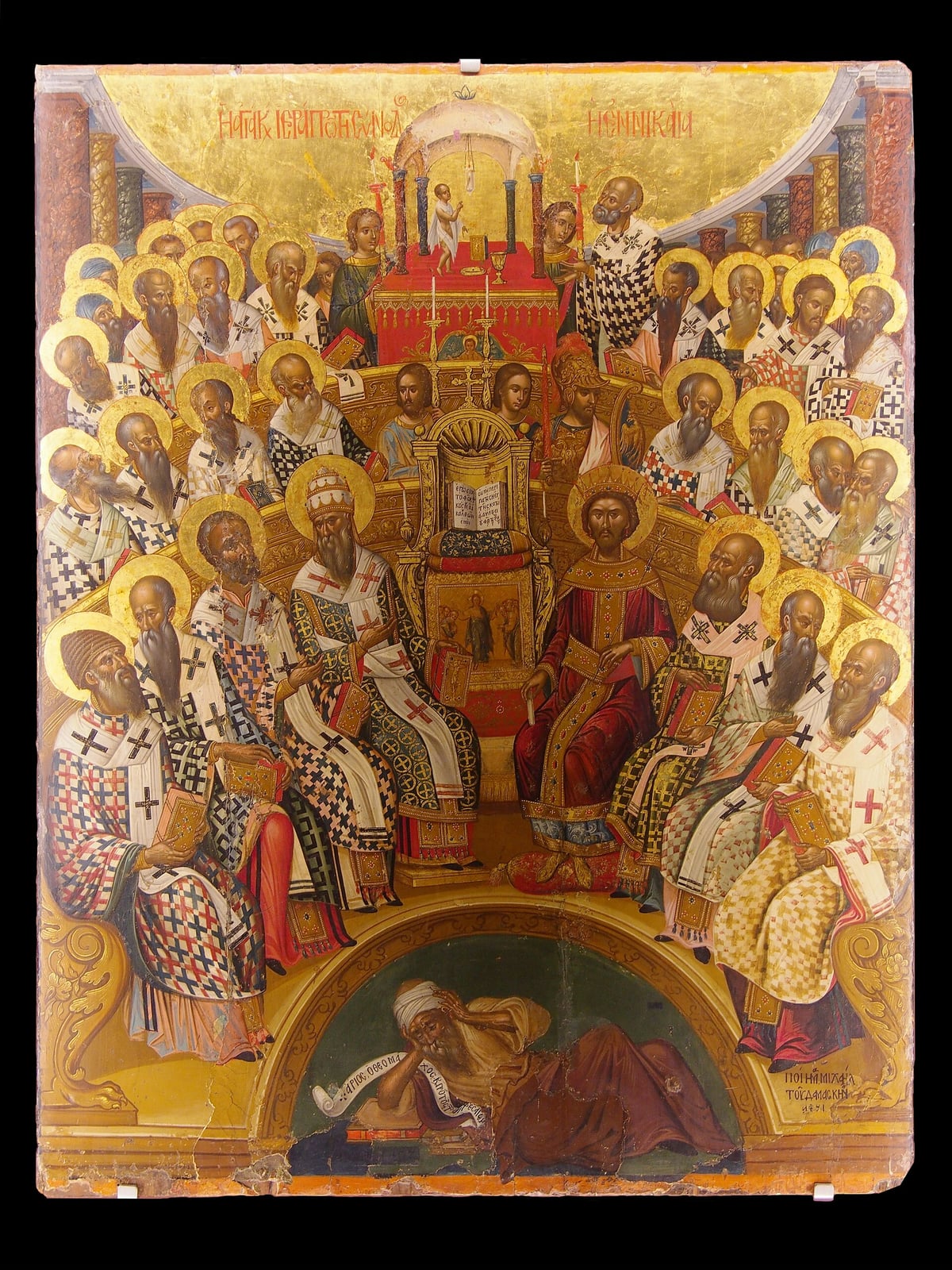
The roots of the controversy lay in the prolonged fallout from earlier theological assemblies. Although the First Council of Nicaea in 325 had affirmed the divinity of Christ against Arianism, questions regarding his humanity generated renewed debate decades later. An elderly archimandrite from Constantinople named Eutyches argued that after the Incarnation, Christ possessed only a single nature. This perspective was condemned at a local synod in 448 led by Bishop Flavian of Constantinople, but Eutyches found a powerful ally in Patriarch Dioscorus I of Alexandria. At the contentious Second Council of Ephesus in 449, Dioscorus rehabilitated Eutyches, deposed Flavian, and sidelined Western legates, prompting Pope Leo I to denounce that meeting as a synod of robbers.

Keep reading in Yester
Coming soon to the App Store
Keep following the story
Sources
Image: Vasily Surikov