Don Quixote Sends a Reader of Romances onto the Road
Cervantes turned the gap between books and lived experience into a new kind of fiction.
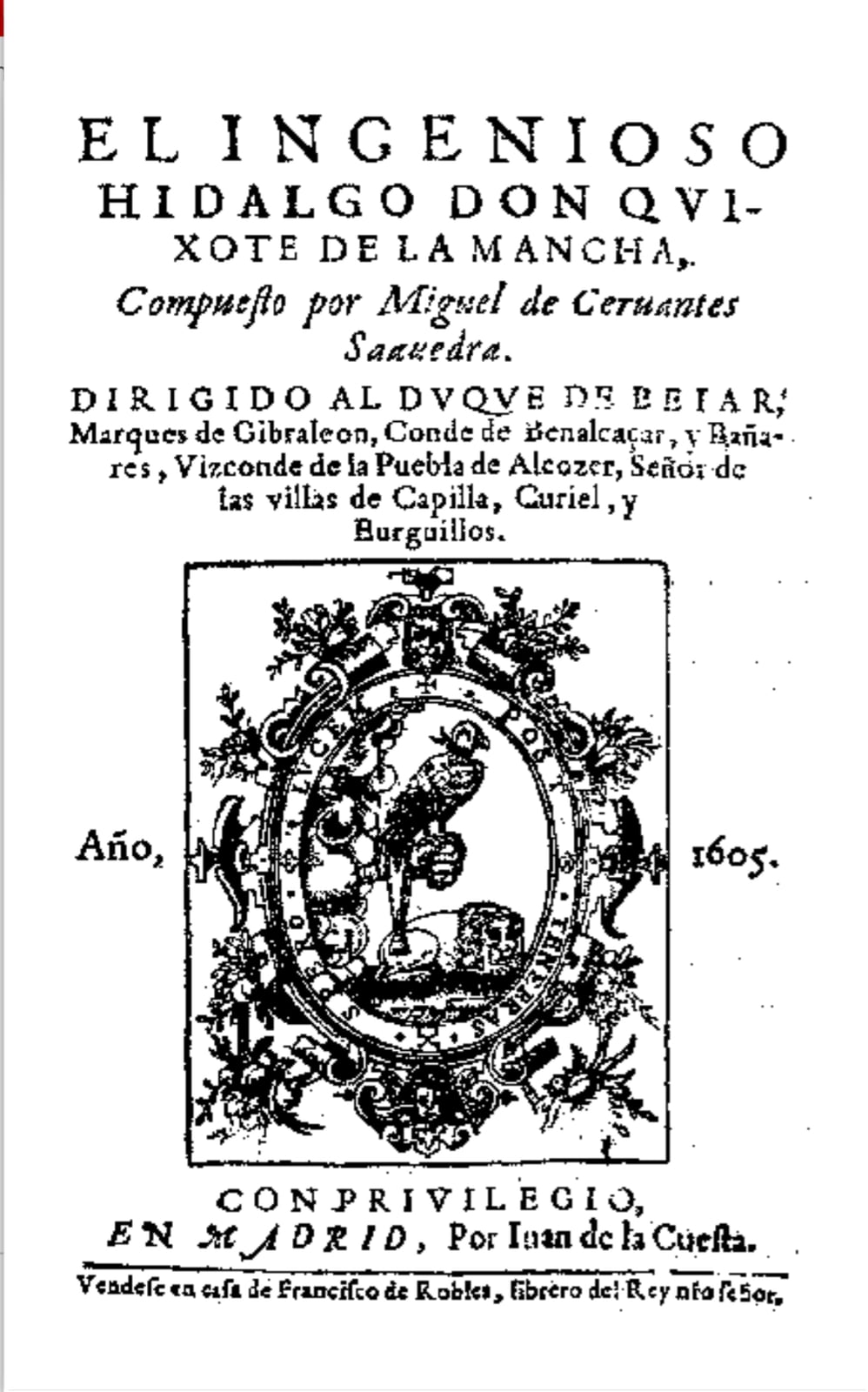
In January 1605, the Madrid bookseller Francisco de Robles published a novel titled El ingenioso hidalgo don Quixote de la Mancha. Written by Miguel de Cervantes, the work had been licensed the previous September after Cervantes sold the rights to Robles for an undisclosed sum. The protagonist, Alonso Quijano, is a rural hidalgo nearing fifty who lives a modest life in the region of La Mancha. Consumed by an obsession with chivalric romances such as Amadis de Gaula, Quijano loses his wits and resolves to revive knight-errantry, donning old plate armour, mounting an aging workhorse named Rocinante, and renaming himself Don Quixote.
Cervantes grounded this chivalric delusion in a collision with ordinary seventeenth-century life. Quixote selects Aldonza Lorenzo, a local farm woman known for salting pork, as his courtly lady, rechristening her Dulcinea del Toboso. Setting forth on his first sally, he mistakes a roadside inn for an enchanted castle and prostitutes for noble ladies. After holding a vigil over a horse trough and fighting off muleteers seeking to water their beasts, he persuades the innkeeper to dub him a knight in a mock ceremony. Subsequent attempts to enforce chivalric justice produce immediate catastrophe, notably when his intervention on behalf of a beaten servant results in the youth receiving a harsher beating the moment Quixote rides away.

Keep reading in Yester
Coming soon to the App Store
Keep following the story
Sources
Image: Juan de la Cuesta