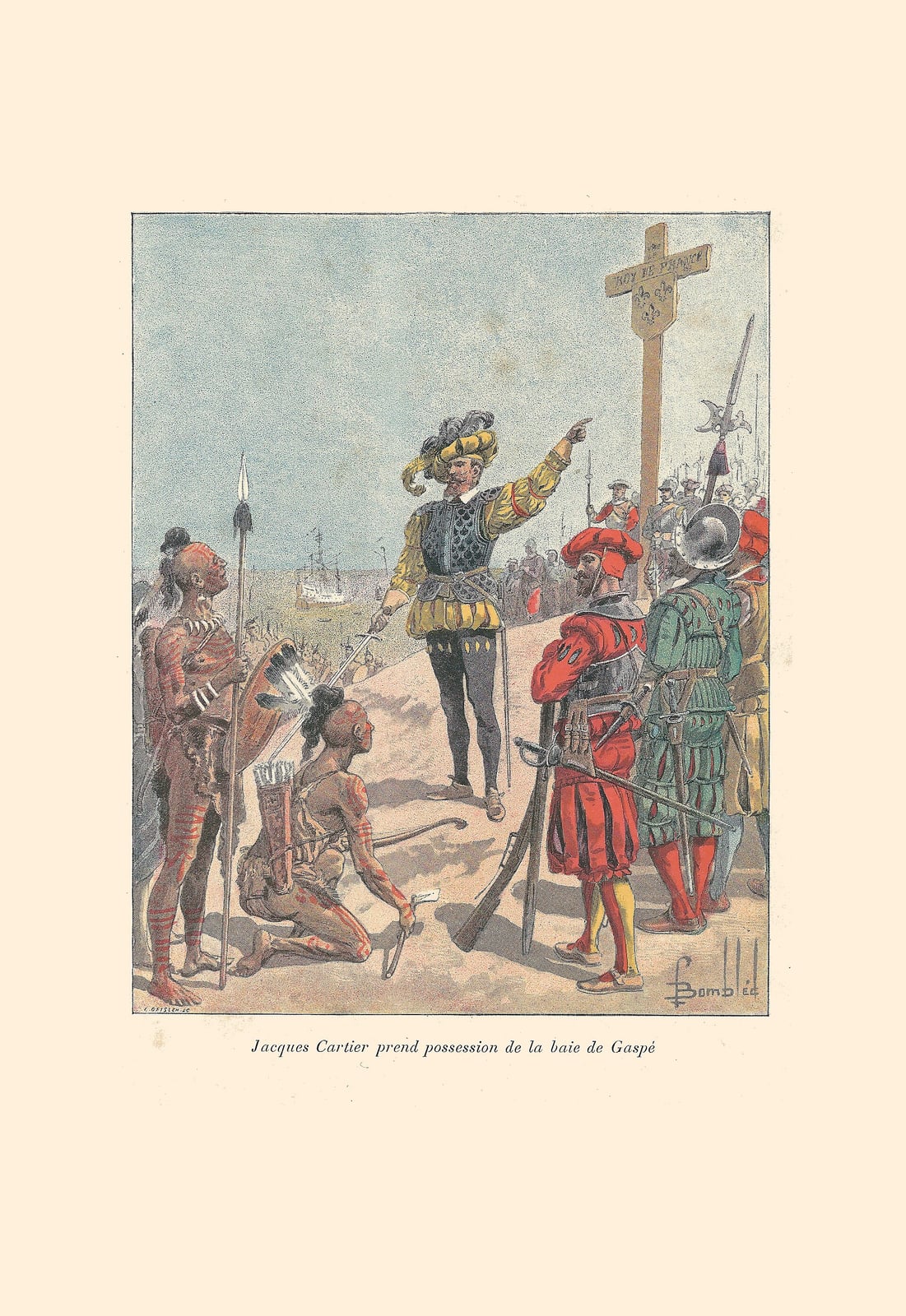
Jacques Cartier Plants a Cross at Gaspé
His voyages up the St Lawrence gave us the name Canada, from an Iroquoian word for village.
On 24 July 1534, the Breton mariner Jacques Cartier directed his crew to raise a ten-metre wooden cross on the shores of Gaspe Bay. Bearing the inscription "Long Live the King of France", the monument asserted sovereign possession of the territory in the name of King Francis I. Cartier had been dispatched from Saint-Malo earlier that spring under a royal commission to seek out precious metals and navigate a westward route toward the East Indies. The ritual claim at Gaspe signaled a direct challenge to the territorial monopolies established by rival European powers across the Atlantic.
The gesture drew an immediate reaction from a group of St. Lawrence Iroquoians present on the coast. Perceiving that the cross marked a claim over their surroundings, their leader, Donnacona, confronted the newcomers. Cartier resolved the tension through diplomacy and coercion, seizing two of Donnacona's sons. According to the French account, the chief consented to their departure on Cartier's promise to bring them back. Cartier departed for France later that summer, convinced he had reached the outer limits of Asia and eager to mount an interior expedition.

Keep reading in Yester
Coming soon to the App Store
Keep following the story
Sources
Image: Unknown author Unknown author (Bombléd)