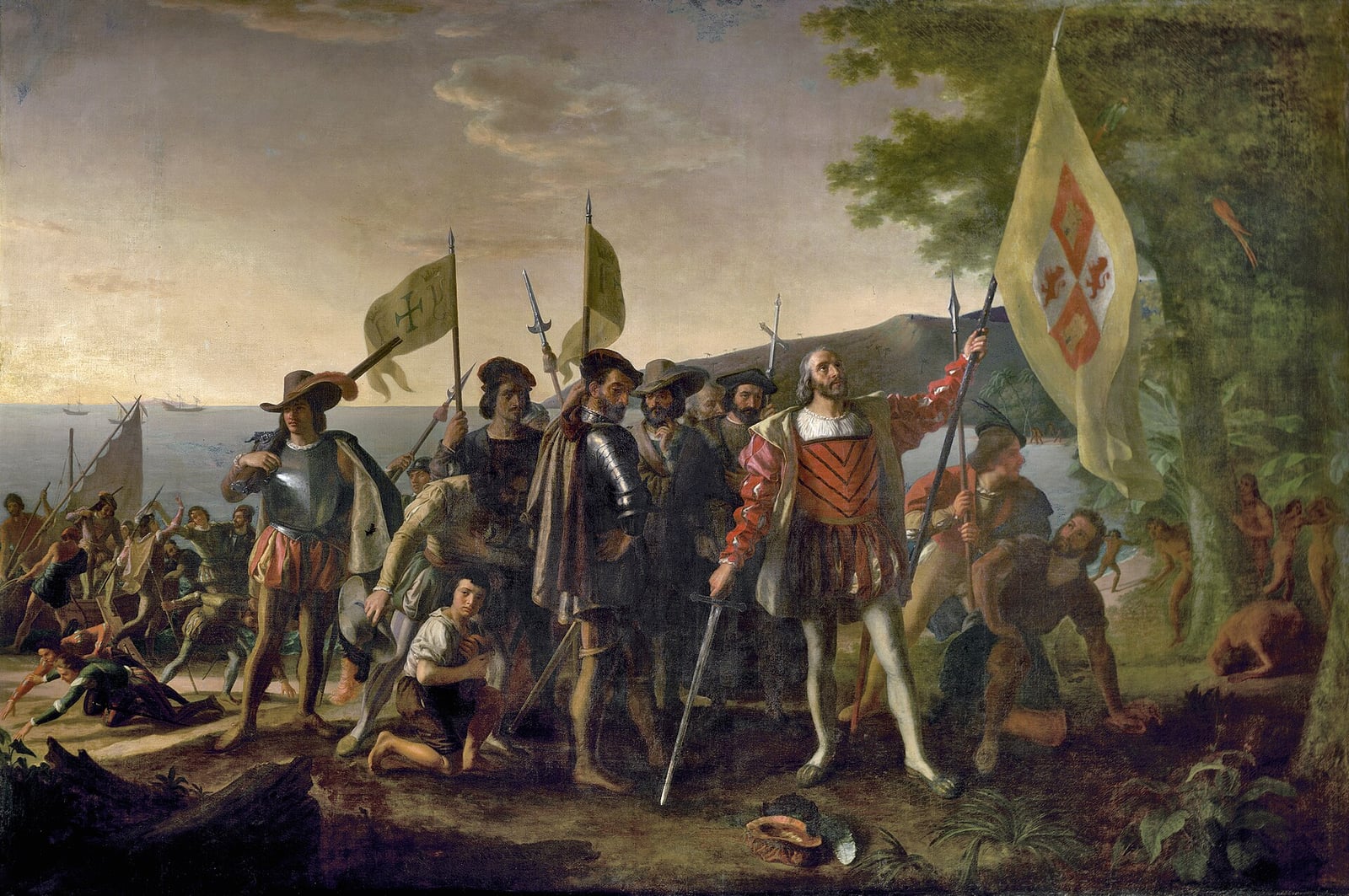
Columbus Reaches the Caribbean
A Spanish-backed voyage made landfall in the Bahamas.
In the late fifteenth century, European powers looked for oceanic passages to East Asia after the Ottoman capture of Constantinople disrupted established overland routes. Portugal concentrated its efforts on sailing around the African continent, an endeavor reinforced when Bartolomeu Dias rounded its southern tip. Christopher Columbus, a Genoese navigator, proposed an alternative venture to reach Asia by crossing the Atlantic Ocean to the west. Contemporary educated opinion across Europe recognized that the Earth was round, but scholarly councils in both Portugal and Spain rejected his proposal because Columbus severely underestimated the planet's circumference. While ancient geographers like Eratosthenes had measured the globe with reasonable accuracy, Columbus relied on flawed calculations that placed Japan only about 2,400 nautical miles west of the Canary Islands.
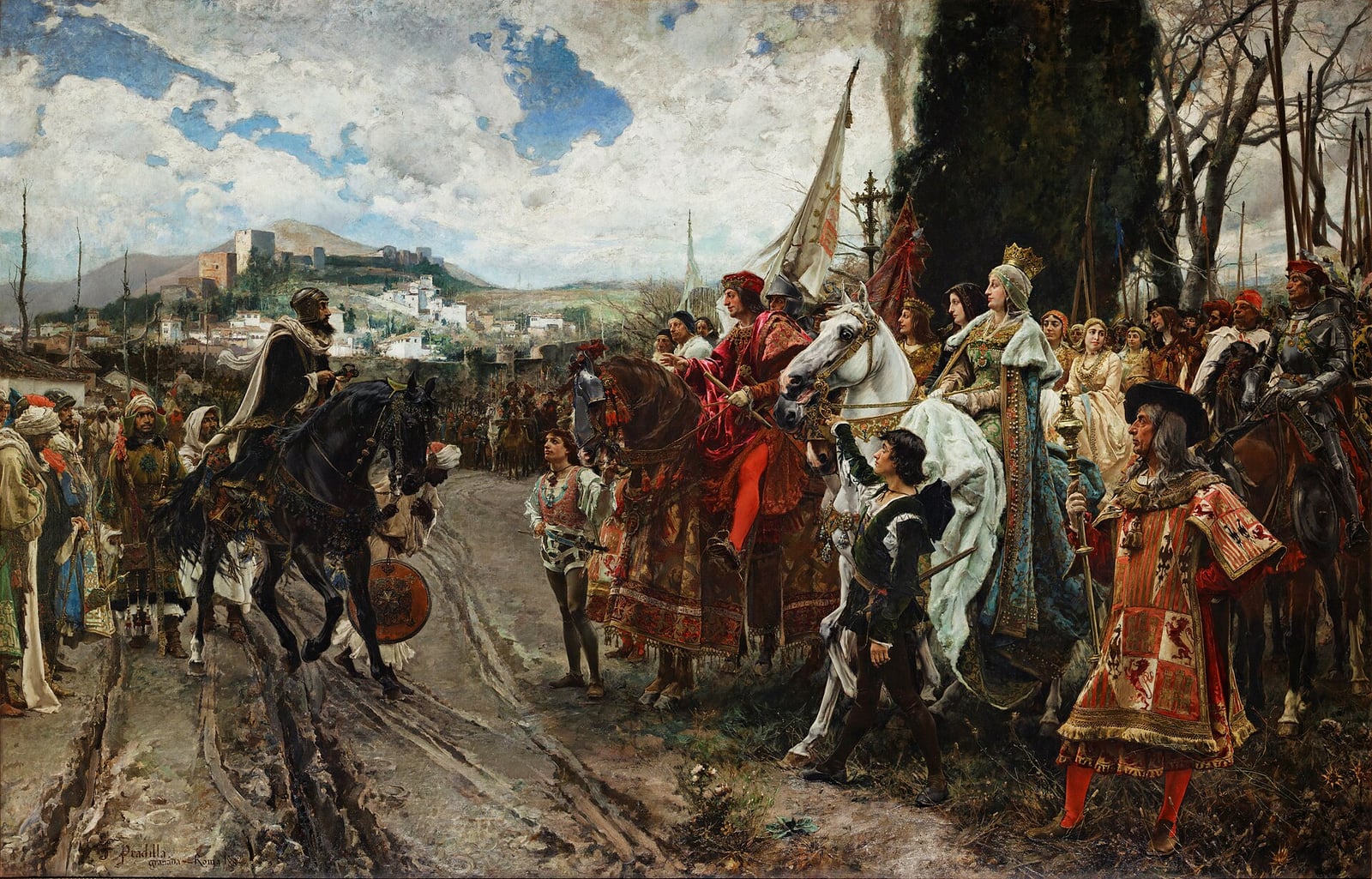
Following the conclusion of the Granada war in early 1492, King Ferdinand II of Aragon and Queen Isabella I of Castile agreed to finance Columbus's expedition. The monarchs sought new commerce to bypass Portuguese maritime dominance, which had been buttressed by papal decree. Through the Capitulations of Santa Fe, Columbus secured extensive hereditary titles and rights to governance and revenue from any territories claimed for the Crown. The port community of Palos de la Frontera provided two caravels under royal penalty, though local seafarers initially hesitated to join the unknown foreigner. Columbus gained essential local backing through a partnership with Martín Alonso Pinzón, an experienced shipowner who helped assemble the fleet and recruit capable Andalusian sailors.

Keep reading in Yester
Coming soon to the App Store
Keep following the story

Sources
Image: John Vanderlyn