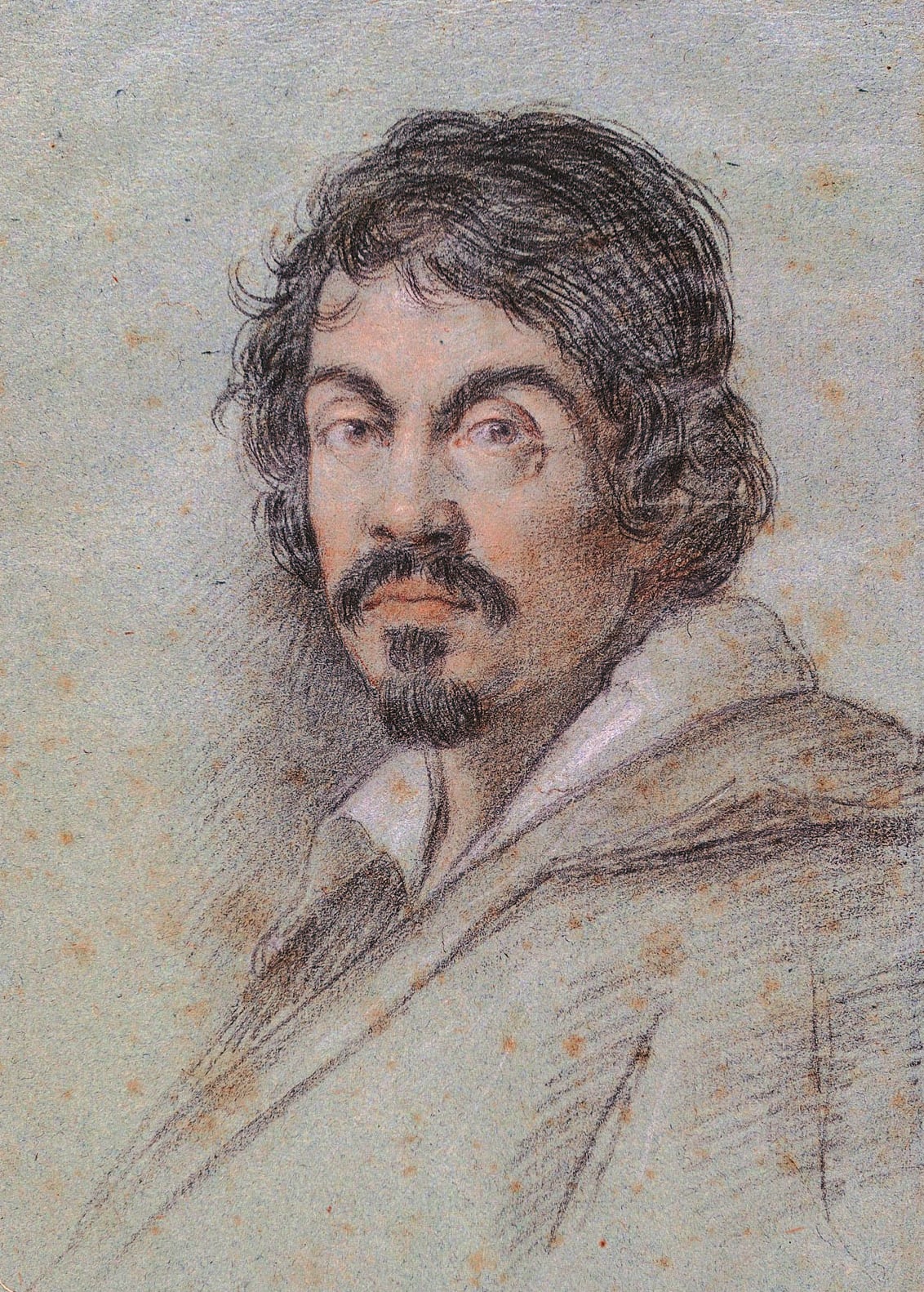
Caravaggio Brings Sacred Scenes into Harsh Light
Public commissions made an uncompromising painter’s use of bodies, gesture and darkness impossible to ignore.
In 1600, Michelangelo Merisi da Caravaggio delivered two large paintings for the Contarelli Chapel in the Roman church of San Luigi dei Francesi: The Martyrdom of Saint Matthew and The Calling of Saint Matthew. Caravaggio had arrived in Rome several years earlier in desperate poverty, moving through minor workshops and executing intimate genre scenes and still lifes for private patrons such as Cardinal Francesco Maria del Monte. The Contarelli Chapel represented his first major public commission. Its unveiling provoked immediate sensation and permanently transformed his status, bringing the painter elite patronage and intense professional scrutiny during the remainder of his years in the papal capital.
Caravaggio's visual method marked an open break with the prevailing Mannerist conventions of central Italy. Rather than working from preliminary compositional drawings, he preferred the regional practice of painting in oils directly from live models arranged before him, sometimes scoring guide marks straight into the canvas with the handle of his brush. He introduced an uncompromising naturalism that recorded physical flaws, aging flesh, and humble garments, refusing to idealize sacred figures. These models were illuminated by sharp, directional shafts of light set against deep, impenetrable shadows, a heightened form of chiaroscuro later termed tenebrism.

Keep reading in Yester
Coming soon to the App Store
Keep following the story
Sources
Image: Ottavio Leoni