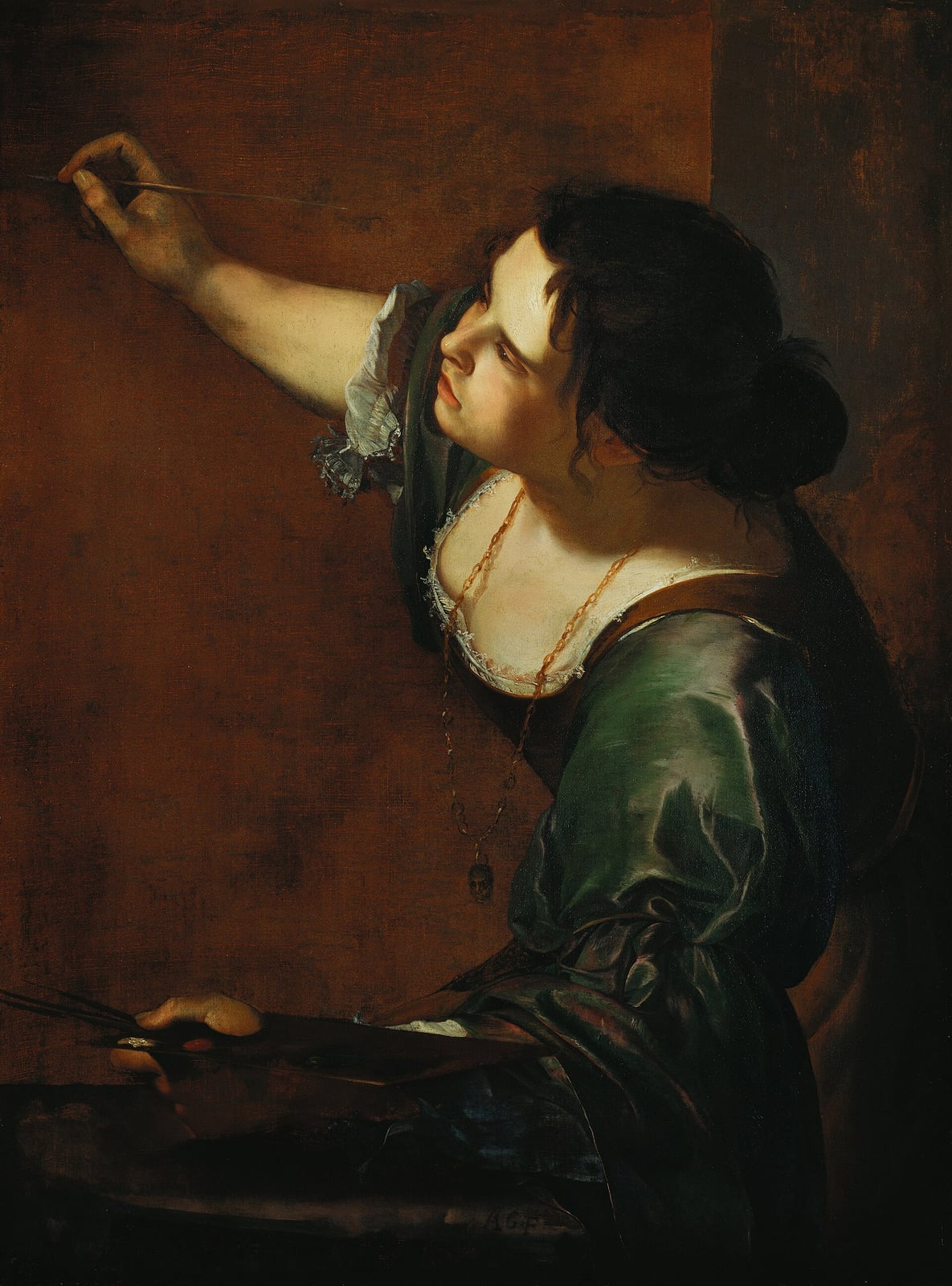
Artemisia Gentileschi Builds a Career in Baroque Painting
Patronage, technical skill and powerful female subjects shaped an artist’s career across several European courts.
Artemisia Gentileschi entered the professional art world through the Roman workshop of her father, the Tuscan painter Orazio Gentileschi. In early seventeenth-century Italy, institutional training through formal apprenticeships and guilds remained almost entirely inaccessible to women, leaving domestic education under relatives as the standard path for aspiring female painters. Gentileschi acquired foundational technical skills by preparing pigments and practicing painting beside her brothers, quickly showing an aptitude for Caravaggesque realism. By age seventeen, she completed Susanna and the Elders, demonstrating an early command of naturalism, dramatic tension, and Bolognese classicism that diverged from her father's comparatively idealized style.
Her early career in Rome was severely disrupted in 1611 when painter Agostino Tassi raped her in the family home. Orazio pressed charges nine months later when Tassi reneged on a promise to marry her. Because contemporary law primarily framed such assaults as damage to family honor and property rather than personal trauma, the subsequent seven-month public trial focused heavily on reputation and dowry assets. Gentileschi was subjected to judicial torture with thumbscrew cords to verify her sworn testimony. Tassi was convicted and sentenced to exile, although the penalty was never enforced. Following the trial, Gentileschi entered an arranged marriage with the Florentine artist Pierantonio Stiattesi and relocated to Florence.

Keep reading in Yester
Coming soon to the App Store
Keep following the story
Sources
Image: Artemisia Gentileschi