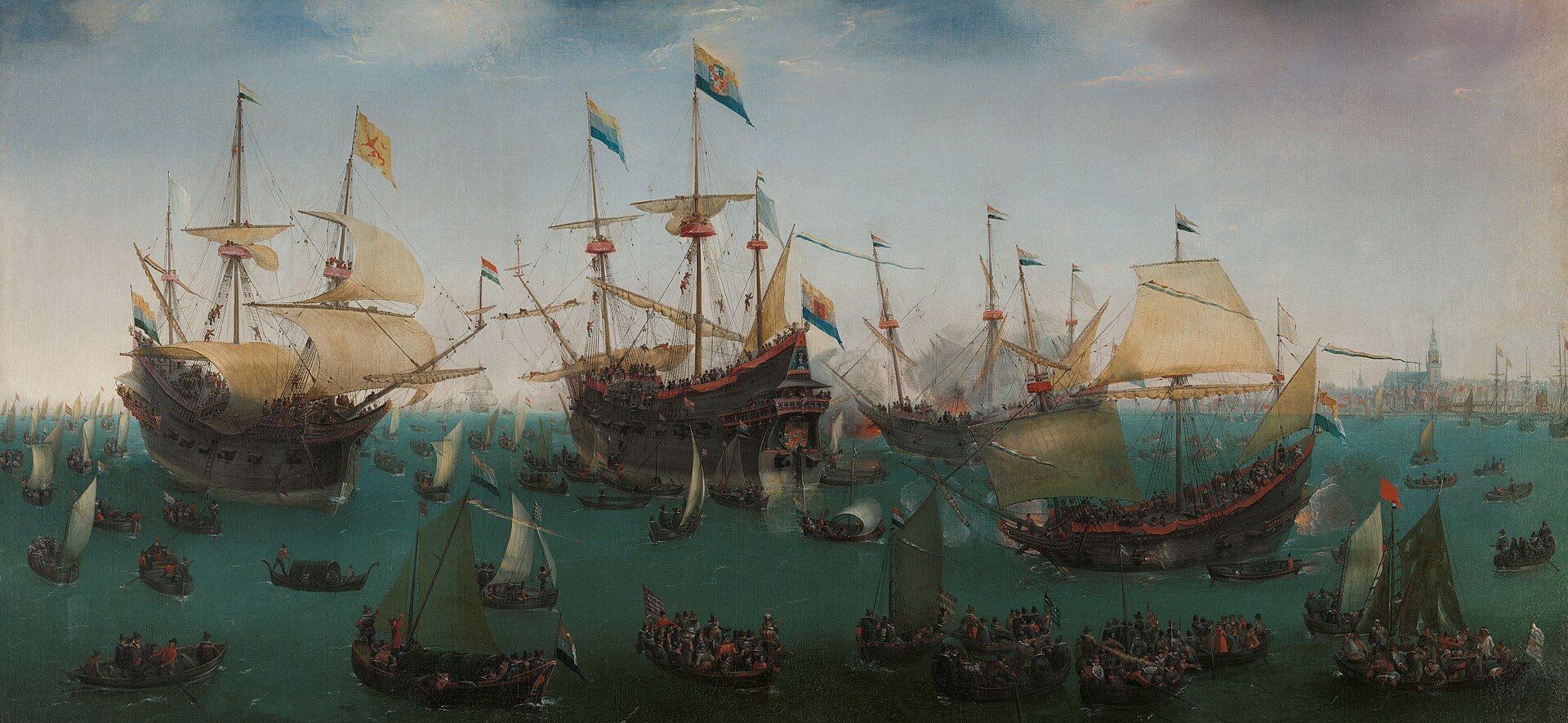
The Dutch East India Company Is Founded
A chartered company sold shares to the public and built a trading empire in Asia.
On 20 March 1602, the States General of the Netherlands consolidated several competing merchant partnerships into a single body known as the United East India Company, or VOC. Earlier ventures had operated under temporary agreements that wound up after each individual voyage, exposing backers to severe price swings and physical dangers at sea. By granting this unified enterprise a twenty-one-year monopoly over Dutch commercial navigation east of the Cape of Good Hope, the republic sought to curb domestic rivalries while countering Portuguese and English rivals in the lucrative Asian spice market.
The institutional architecture of the enterprise marked a fundamental turning point in corporate finance. With an initial subscription capital of about 6.4 million guilders, it allowed any citizen of the Dutch Republic to invest. Shares could be bought and sold on secondary markets, forming the foundation of the Amsterdam Stock Exchange. Direct oversight rested with the Heeren XVII, a council of seventeen delegates representing six regional chambers. However, the charter extended far beyond trade; it endowed the enterprise with sovereign authority to recruit soldiers, commission warships, erect fortresses, coin money, establish colonies, and conclude treaties with foreign monarchs.

Keep reading in Yester
Coming soon to the App Store
Keep following the story
Sources
Image: Hendrick Cornelisz Vroom