Jingdezhen’s Kilns Fire Blue-and-White for the World
Ming porcelain carried on Portuguese and Dutch ships set off a craze in Europe.
In the forested hills of northeastern Jiangxi province, the town of Jingdezhen rose to become the premier ceramic center of imperial China. Although the region possessed pottery traditions stretching back centuries, its fortune rested on abundant local geology. Surrounding hills provided rich deposits of pottery stone, neighboring pine forests supplied combustible fuel for firings, and local waterways fed into wider river networks heading north and south. These rivers allowed delicate items to survive journeys out of the interior, connecting a landlocked settlement to distant trading emporia across China and abroad.
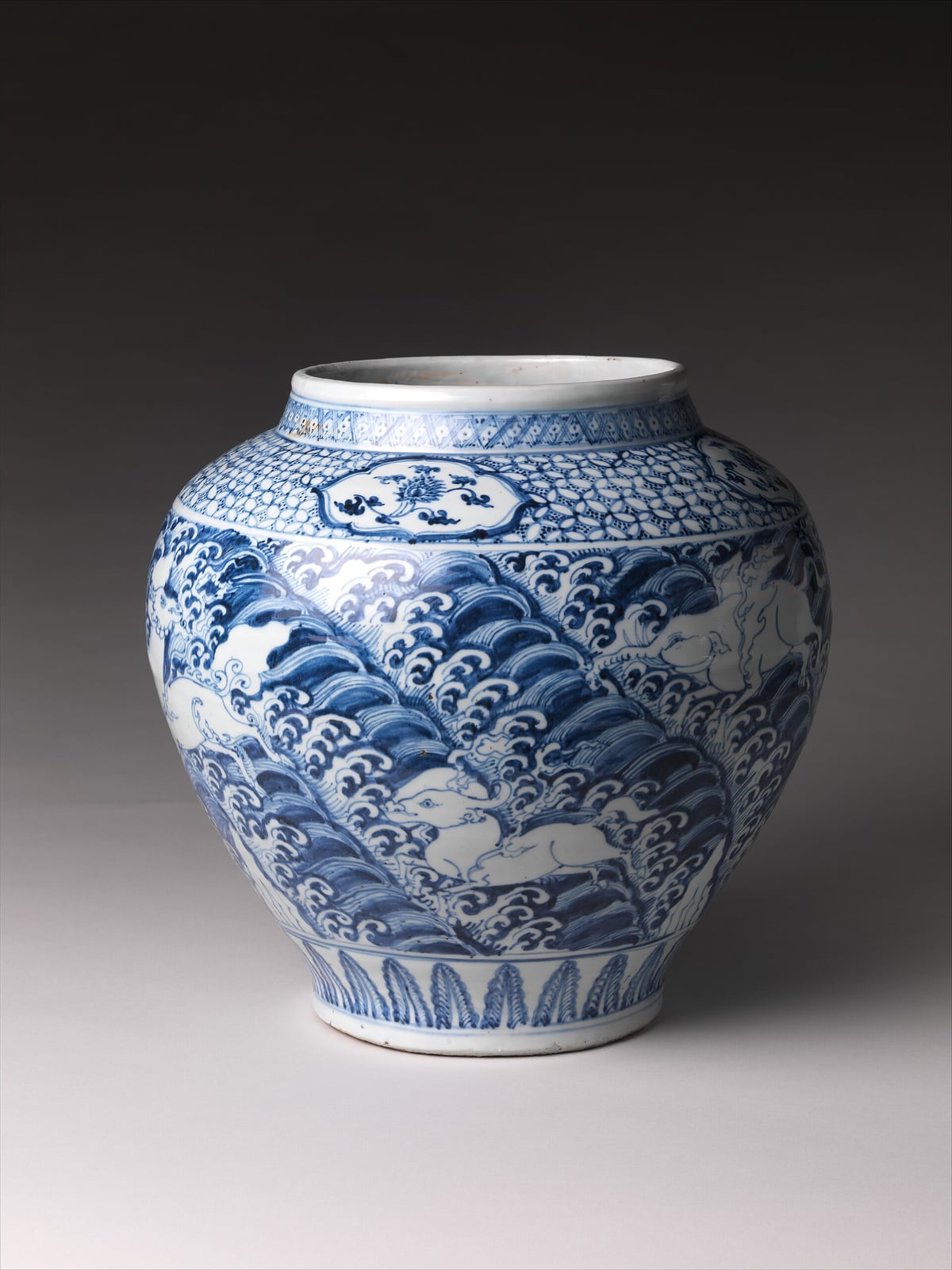
By the fourteenth century, under the Mongol Yuan dynasty, Jingdezhen developed underglaze blue porcelain using cobalt pigment imported from Persia. Mixed with mediums and painted directly onto dry ceramic bodies before glazing, this technique transformed Jingdezhen into an early industrial complex. While large serving dishes with elaborate decoration differed from traditional domestic taste, they answered culinary and visual practices in the Islamic world. Vast export consignments reached markets across Southeast Asia and the Middle East, assembling royal holdings such as the preserved treasures of the Ardabil Shrine in Persia and the Ottoman palace at Topkapi.

Keep reading in Yester
Coming soon to the App Store