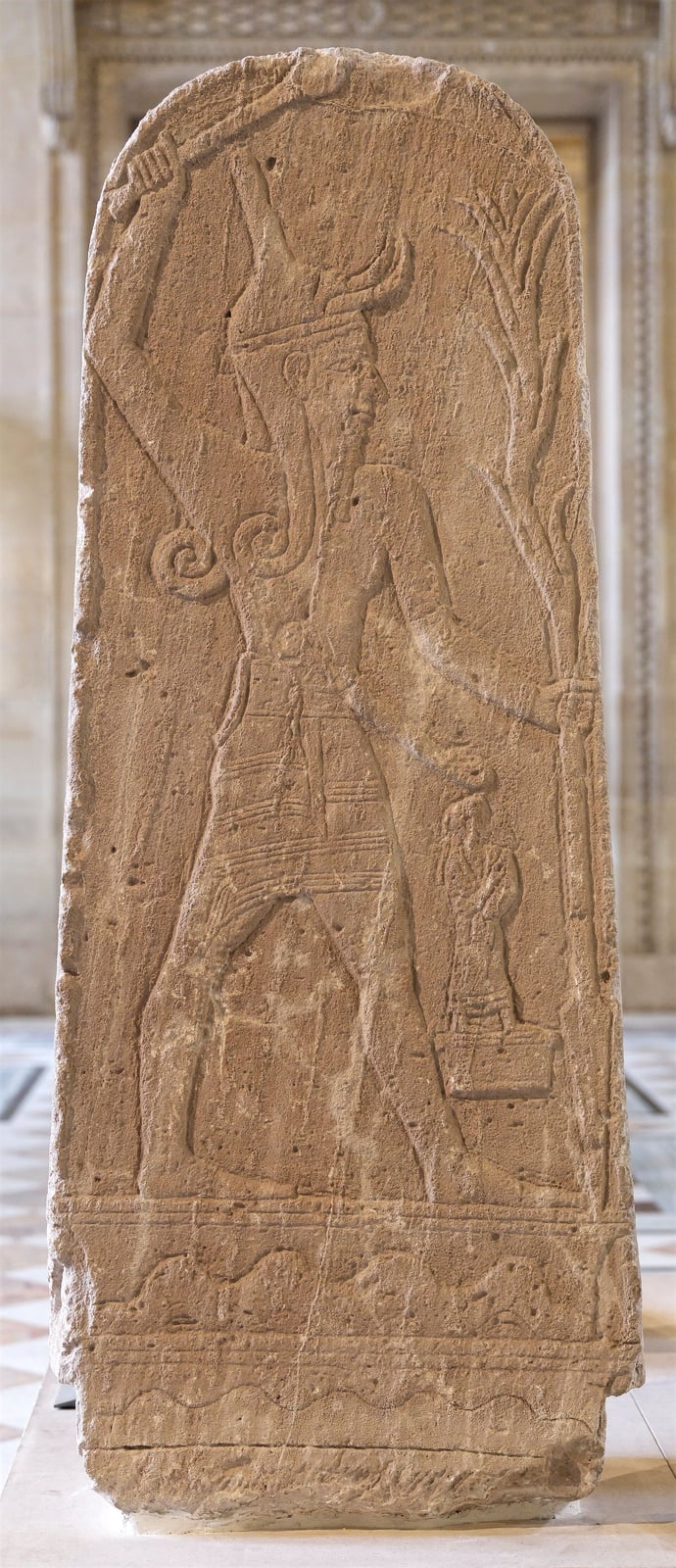
Ugarit Falls as the Bronze Age World Collapses
Palace cities from Greece to Syria fell within decades, and Ugarit was never rebuilt.
During the late thirteenth and early twelfth centuries BC, interconnected palace economies across the eastern Mediterranean experienced severe material disruptions. The coastal city-state of Ugarit, located in western Syria, was among the most prominent urban centres extinguished in this tumultuous era. Clay tablets excavated from the city, preserved after being baked in the fires that consumed it, record anxious diplomatic correspondence sent by its last ruler, Ammurapi. In these dispatches, Ammurapi reported that enemy ships were burning settlements along the coast, while his own military forces and naval fleet were stationed elsewhere, leaving his kingdom vulnerable to seaside raids.
Its first excavator, Claude Schaeffer, came to blame earthquakes and fire for its end, but many later archaeologists have read the evidence as a violent assault. Excavators uncovered dozens of arrowheads scattered throughout the residential quarters and streets, alongside bronze javelin heads, daggers, and fragments of armor. The presence of pottery from the Late Helladic IIIB phase, paired with the absence of later styles and the discovery of a sword inscribed with the name of Pharaoh Merneptah, points to a destruction taking place between the late thirteenth century and 1178 BC. Following this catastrophic sack, the once-flourishing trade hub was never rebuilt as a city.

Keep reading in Yester
Coming soon to the App Store
Keep following the story
Sources
- The Last Days of Ugarit, Claude F. A. Schaeffer (Biblical Archaeology Review 9:5, via Center for Online Judaic Studies)
- Environmental Roots of the Late Bronze Age Crisis, Kaniewski et al. (PLOS ONE, 2013)
- Severe multi-year drought coincident with Hittite collapse around 1198-1196 BC, Manning et al. (Nature, 2023)
- Late Bronze Age collapse
Image: Shonagon