A Bronze Age Ship Sinks off Uluburun
Its cargo of copper, tin and glass revealed Mediterranean trade.
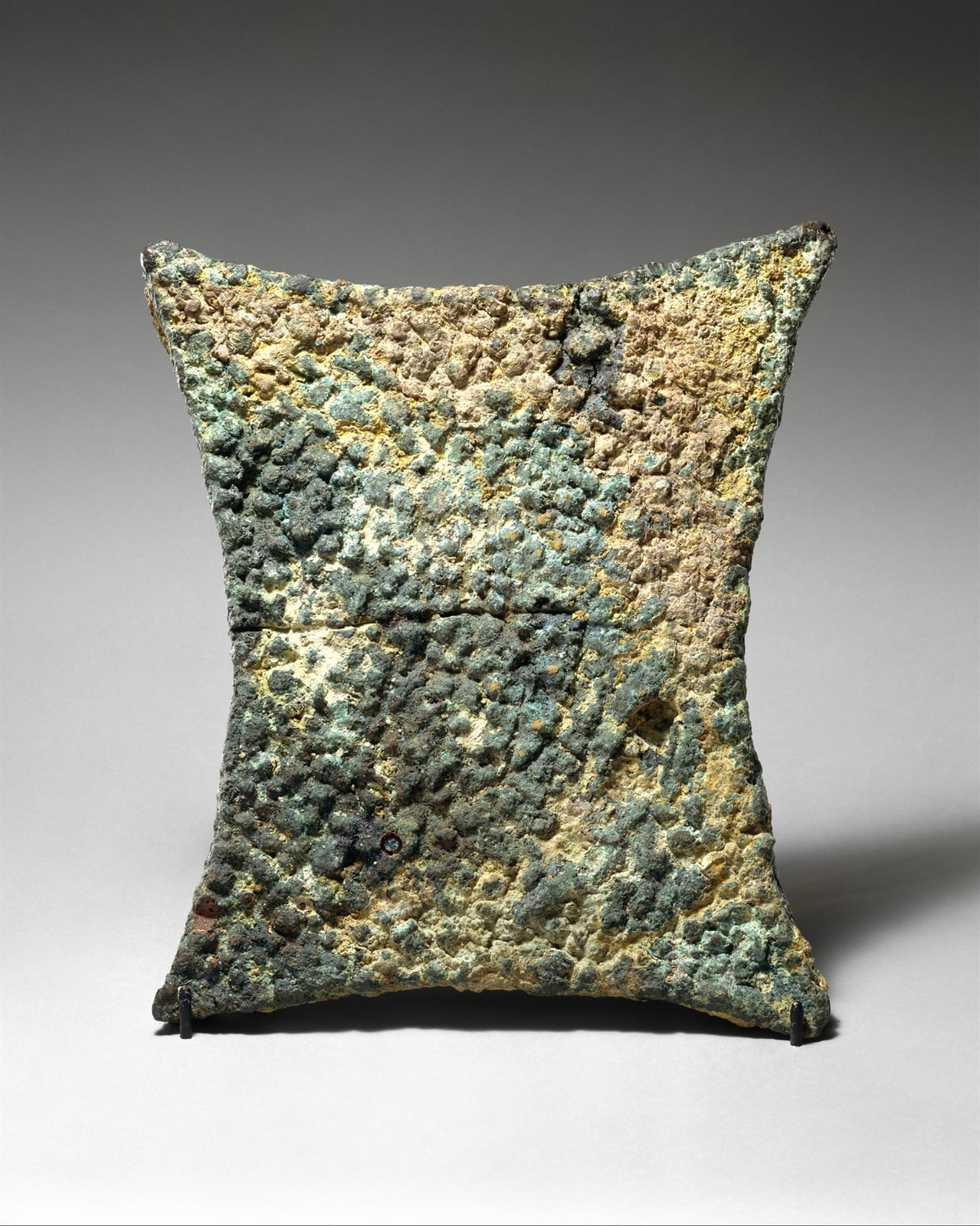
In the summer of 1982, a sponge diver named Mehmet Cakir noticed strange metal shapes resting on the seabed off the rocky promontory of Uluburun near Kas in southern Turkey. He sketched the objects as metal biscuits with ears, a description that local museum staff and nautical archaeologists recognized as Late Bronze Age oxhide ingots. An inspection dive shortly thereafter confirmed the presence of copper ingots lying about sixty metres off the cape's eastern face. The discovery initiated an intensive maritime archaeological project overseen by the Institute of Nautical Archaeology. Between 1984 and 1994, archaeologists directed by George Bass and later Cemal Pulak completed 22,413 dives to document and recover the hull and its cargo from a steep slope between about 42 and 61 metres below the surface.
The ship itself measured between fifteen and sixteen metres in length and was constructed using Lebanese cedar planks joined by oak mortise-and-tenon joints, a shell-first construction technique without internal frames. Its builders rested the structure on a rudimentary keel-plank. To keep the heavy freight from breaking the wooden bottom, the crew spread brushwood and sticks across the hull as dunnage, anchoring the vessel with twenty-four stone anchors of a style common to Syro-Canaanite and Cypriot sanctuaries. Scientific tests on the timbers and dunnage, including dendrochronology and radiocarbon analyses, place the loss of the vessel near the close of the fourteenth century BCE, a timeline corroborated by ceramic styles and an Egyptian gold scarab bearing the name of Queen Nefertiti.

Keep reading in Yester
Coming soon to the App Store