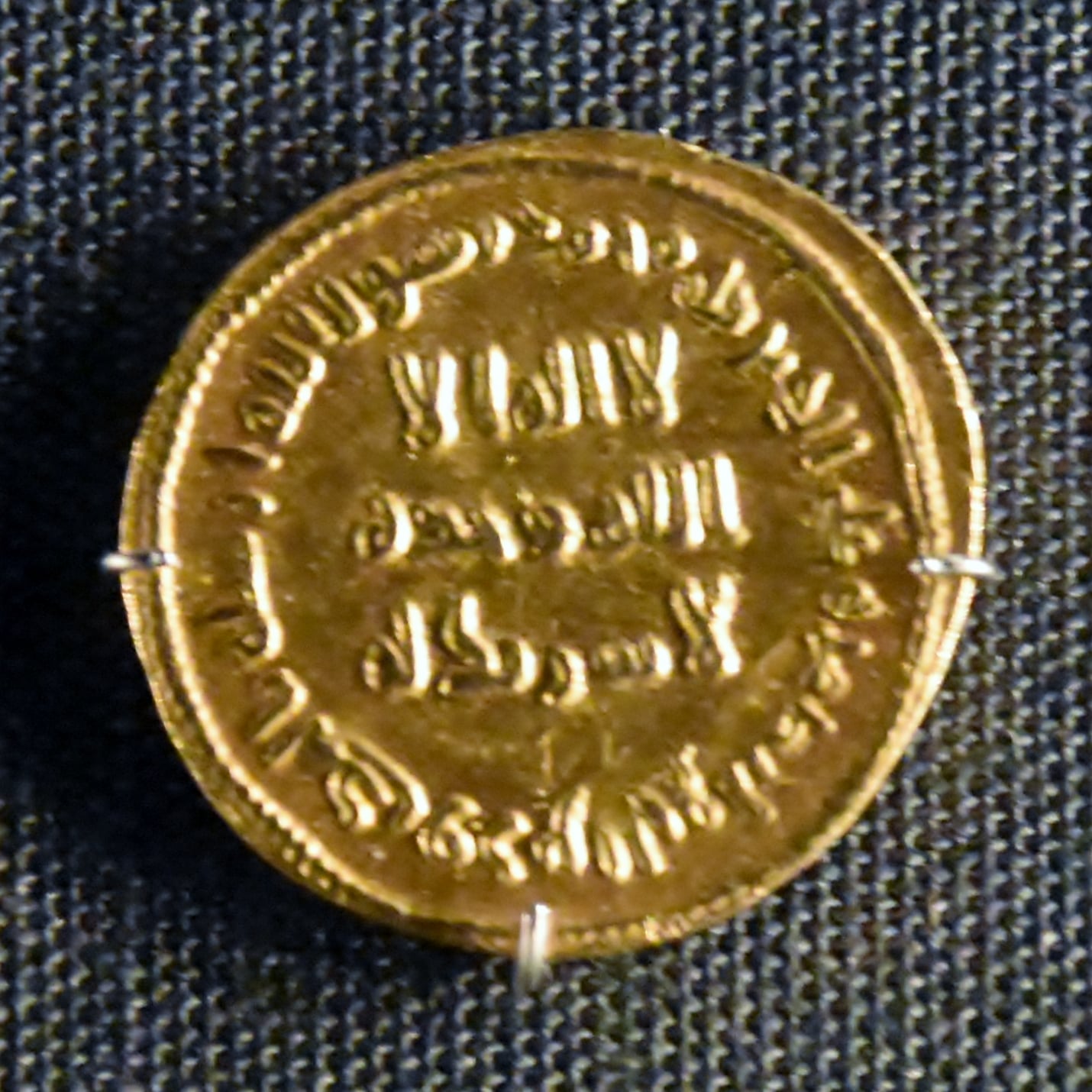
Abd al-Malik Strikes Coins with Words Instead of Images
The caliph’s new gold dinar replaced portraits with Arabic religious inscriptions.
When Abd al-Malik ibn Marwan succeeded his father as caliph in 685, the Umayyad state was on the brink of dissolution. The empire was engulfed in the civil conflict known as the Second Fitna, with rival claimant Abd Allah ibn al-Zubayr commanding allegiance across Arabia and Iraq. Abd al-Malik had grown up in Medina and absorbed administrative duties from an early age, but his accession initially left him in control of only Syria and Egypt. Internal dissent, regional factions, and Byzantine incursions threatened to erode even that limited dominion.
Pressured by external attacks, Abd al-Malik bought time on the northern frontier through a costly treaty with Byzantine emperor Justinian II in 689, pledging regular tributes of coin, horses, and enslaved persons while agreeing to share provincial revenues. He crushed a domestic revolt in Damascus led by his kinsman al-Ashdaq and secured the surrender of the Qaysi tribes along the Euphrates in 691. With Syria stabilized and his army reinforced, the caliph turned east. His forces defeated Mus'ab ibn al-Zubayr at the Battle of Maskin in 691, restoring Umayyad authority over Iraq.

Keep reading in Yester
Coming soon to the App Store
Keep following the story
Sources
Image: Richard Mortel from Riyadh, Saudi Arabia