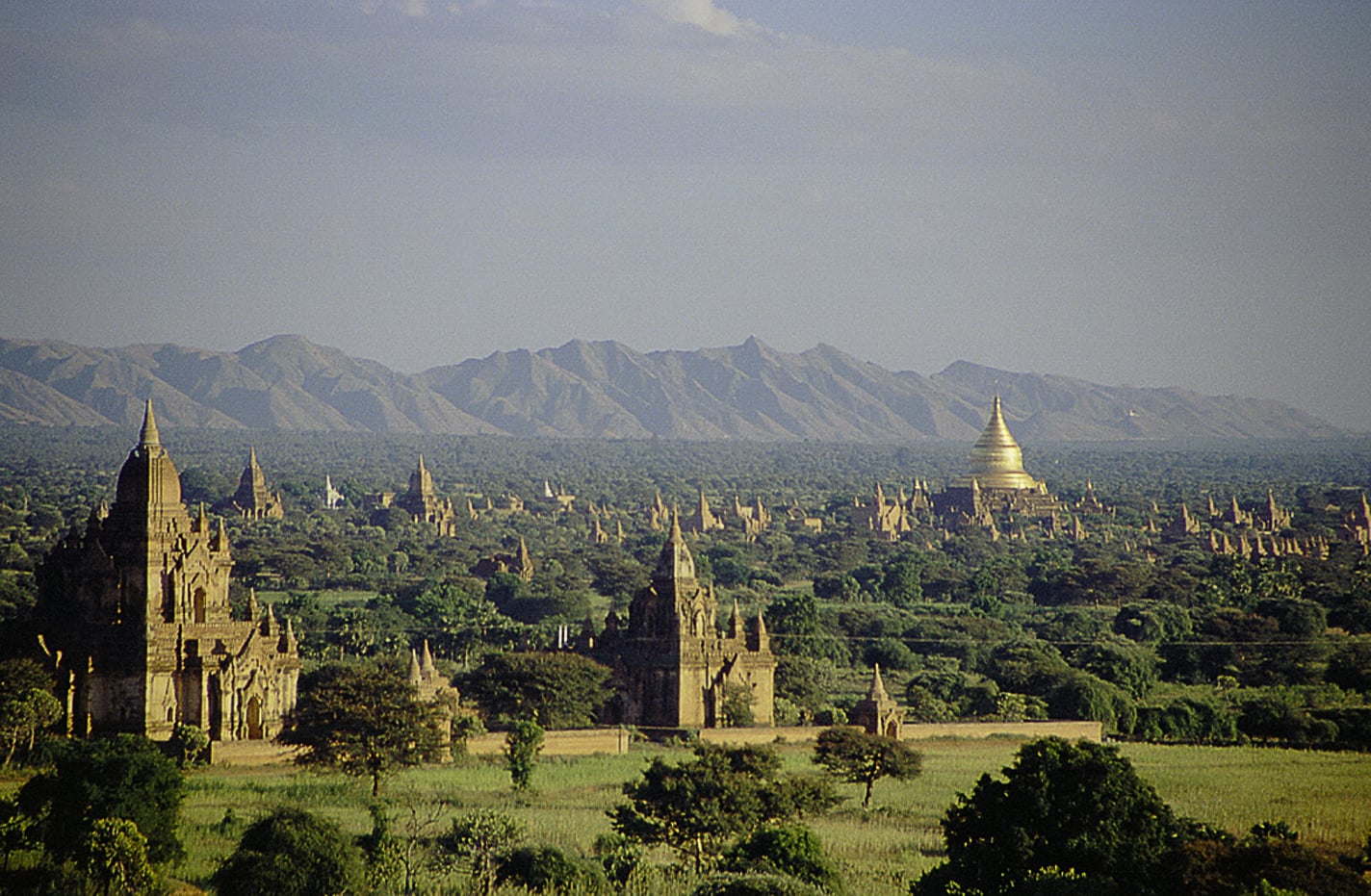
Bagan Covers a Plain with Temples
Religious patronage reshaped a river plain into a dense landscape of Buddhist monuments.
Across a semi-arid stretch of the Irrawaddy river basin, the ancient capital of Bagan accumulated an extraordinary concentration of brick architecture. Between the eleventh and thirteenth centuries, the Pagan Kingdom served as the political and economic core of Upper Burma. Within an area covering roughly forty square miles, royal rulers and wealthy subjects financed the construction of more than ten thousand religious edifices, including monasteries, solid stupas, and vaulted shrines. More than two thousand of these brick monuments still stand across the river plain.
The origin of the settlement remains an area of differing traditions. Burmese chronicles date the founding of Bagan to the second century, recording that King Pyinbya fortified the city in 849. Modern Western historians, however, interpret the center as an establishment of the mid-to-late ninth century, founded by Burmans arriving from the Nanzhao realm who gradually consolidated authority among neighboring Pyu communities. By the mid-eleventh century, the settlement had become the seat of an expanding kingdom that drew wealth and labor from across the region.

Keep reading in Yester
Coming soon to the App Store
Keep following the story
Sources
Image: Corto Maltese 1999