The Bayeux Tapestry Embroiders a Conquest
A long embroidered narrative presents the Norman account of 1066.
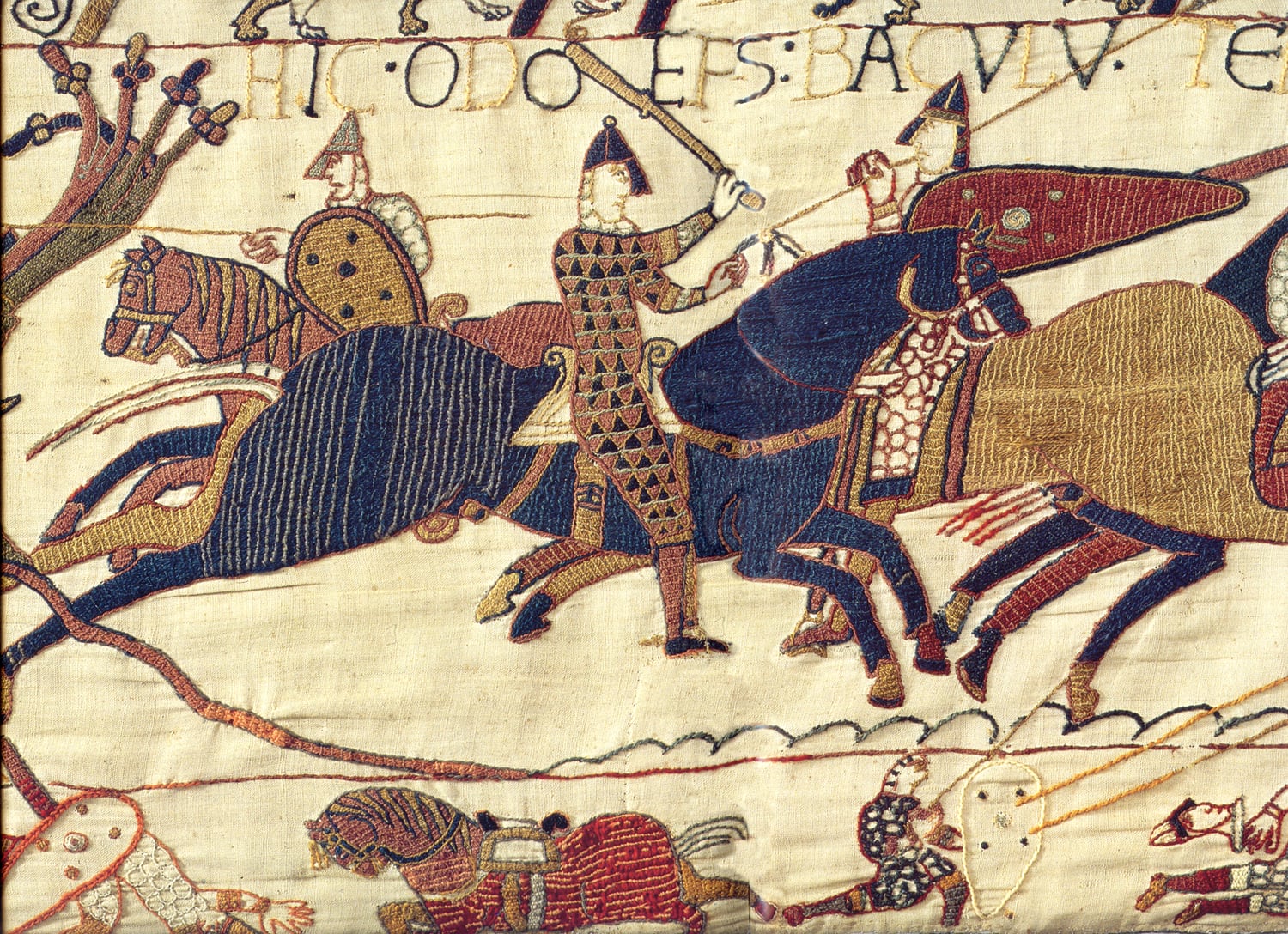
The Bayeux Tapestry is a vast embroidered cloth measuring over sixty-eight metres in length and roughly fifty centimetres in height, recording the drama of the Norman Conquest of England. Technically an embroidery rather than a woven tapestry, the work consists of wool thread stitched onto a plain linen background using stem stitching for lettering and contours alongside laid couching work to fill solid forms. Across a long sequence of scenes accompanied by Latin inscriptions, it presents hundreds of human figures, horses, vessels, and architectural structures. Its visual chronicle opens in 1064 during the late reign of Edward the Confessor and culminates in the defeat and death of Harold Godwinson at the Battle of Hastings in 1066.
Although legendary accounts once credited William the Conqueror's wife, Queen Matilda, with commissioning the textile, modern scholars generally point to Bishop Odo of Bayeux, William's half-brother. Odo held vast estates in Kent following the conquest, and his prominence in the later scenes reinforces this attribution. Three of the very few named figures on the embroidery are known to have been associated with him. The physical stitching was most probably executed by English needleworkers, likely in Canterbury, where monastic scriptoriums produced illuminated manuscripts sharing distinct stylistic traits with the textile's compositions.

Keep reading in Yester
Coming soon to the App Store
Keep following the story

Sources
- Bayeux Tapestry (Encyclopaedia Britannica)
- Discover the Bayeux Tapestry (Bayeux Museum)
- After 900 years, the Bayeux Tapestry returns to England and goes on display in London (NPR via Michigan Public)
- The significance of Halley's Comet in the Bayeux Tapestry, Lewis and Portegies Zwart (arXiv)
- Stigand (Encyclopaedia Britannica)
- Ealdred (Encyclopaedia Britannica)
- Bayeux Tapestry