A Laboratory Lands on Mars
Viking 1 delivered a working laboratory to Mars. Its experiments made the search for life more concrete, and more complicated.
The first picture did not need to be beautiful. A patch of stones and soil beside a spacecraft foot was enough to show that a machine had reached the surface and was working. On July 20, 1976, Viking 1 landed in Chryse Planitia on Mars. Rather than making a fleeting visit, it began operating as a laboratory on a planet whose surface no successful long-lived mission had explored before.
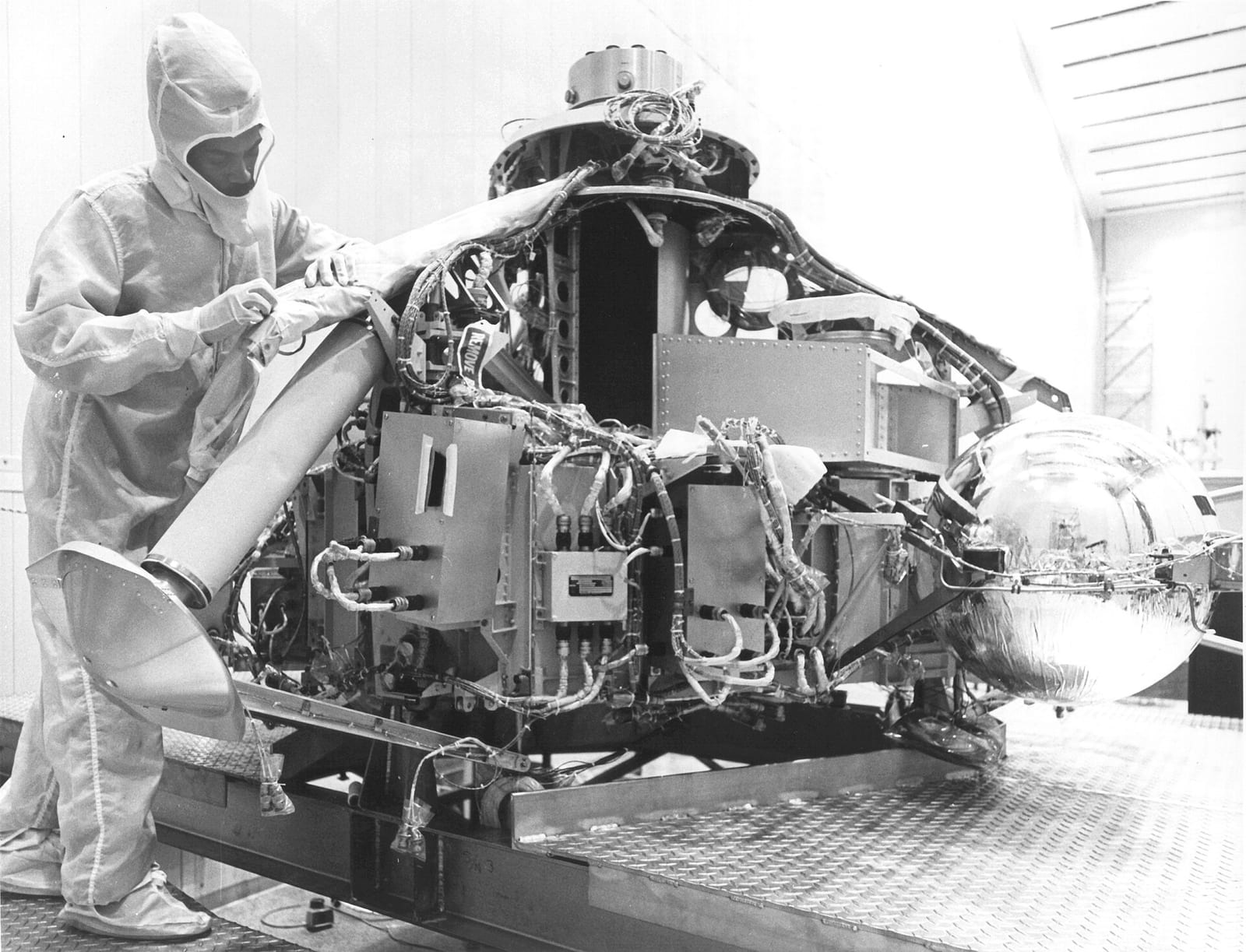
Viking consisted of an orbiter and a lander that traveled together before separating at Mars. The orbiter was not simply a delivery vehicle. Its photographs helped planners assess the terrain below, where a dangerous slope or an unexpected concentration of rocks could end the mission. The original ambition to land on July 4 gave way to a more careful search. Choosing where to arrive mattered more than meeting an anniversary.

Keep reading in Yester
Coming soon to the App Store
Keep following the story

Sources
Image: NASA