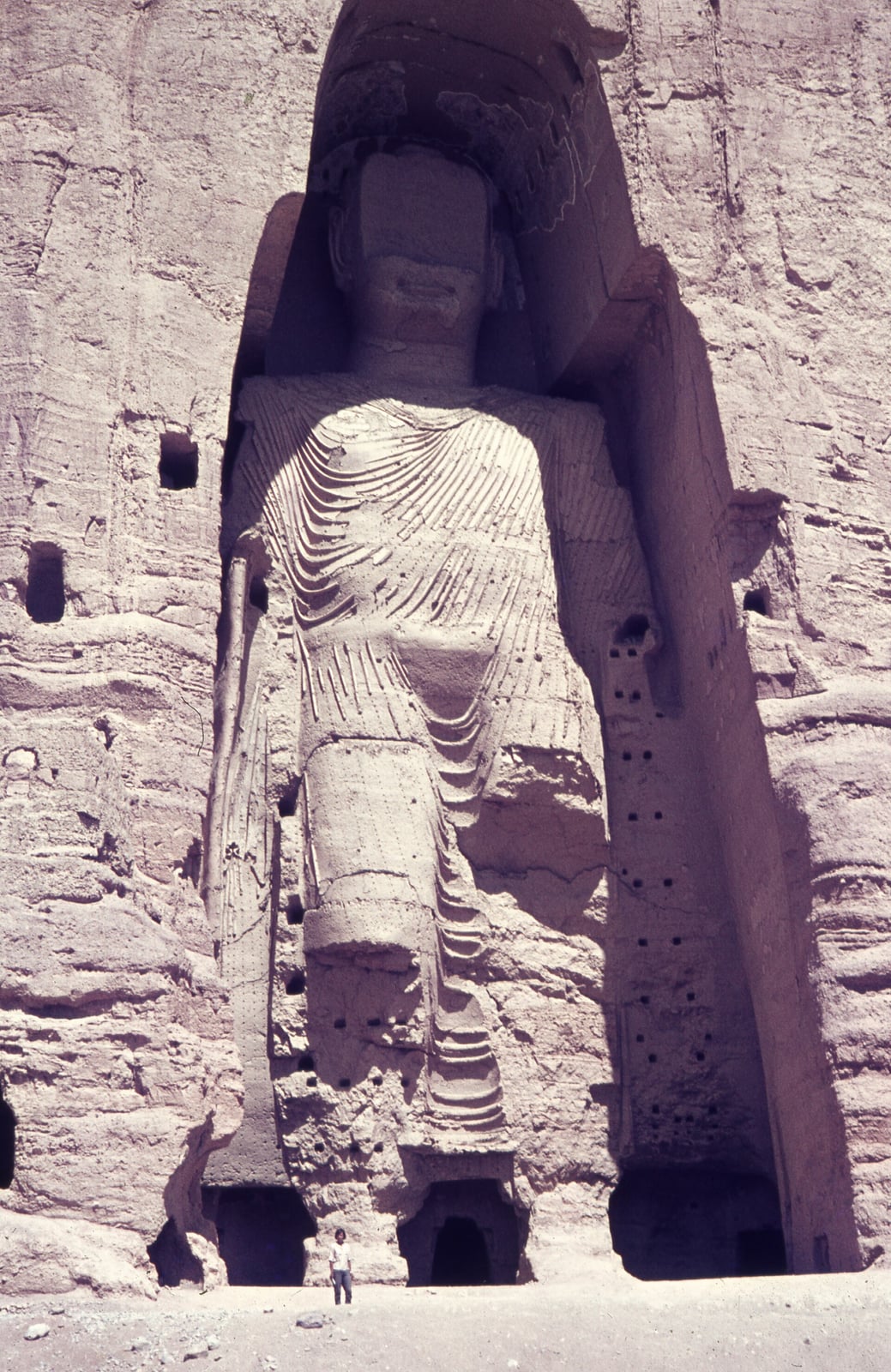
The Taliban Destroy the Buddhas of Bamiyan
Two giant statues carved into a cliff were blown up despite international appeals.
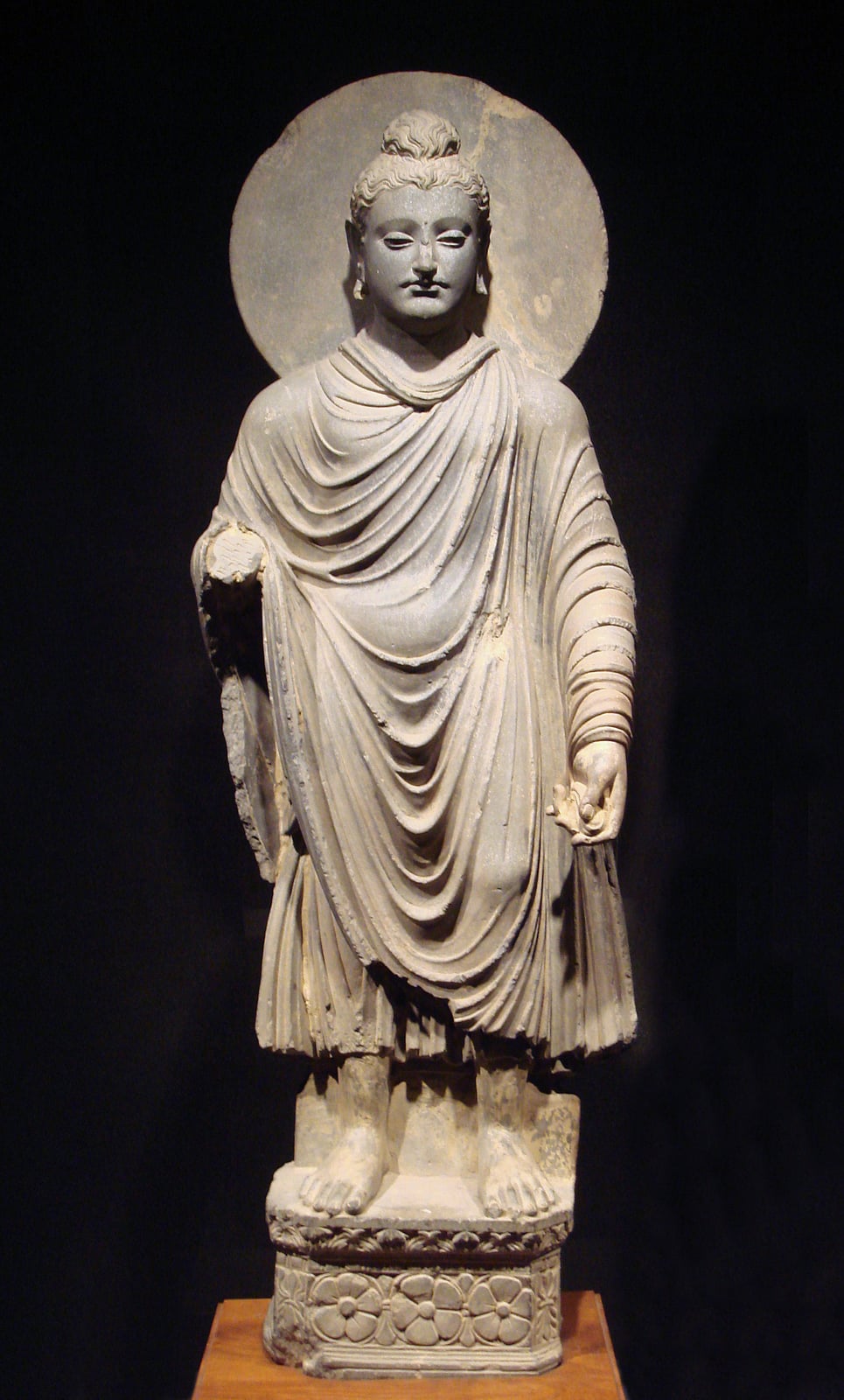
Carved directly into the sandstone cliffs of the Bamiyan Valley, two monumental standing reliefs towered over central Afghanistan for nearly fifteen centuries. The smaller Eastern Buddha, measuring 38 meters high, dates to around 570 CE, while the 55-meter Western Buddha was completed around 618 CE. Both were created when Bamiyan was an important Buddhist center on the Silk Road, combining classic Gandharan Buddhist aesthetics with diverse regional traditions. The figures were shaped from the bedrock and coated with straw-reinforced mud stucco, which was then painted. Monks resided in adjoining cliffside caves embellished with vibrant murals, transforming the valley into an internationally recognized sanctuary of religious learning and artistic innovation.
The statues endured major political and religious upheavals across centuries. Although early Muslim incursions swept through the region during the eighth century and the Ghaznavid dynasty established firm control by 977 CE, the colossal rock carvings survived largely intact. When Genghis Khan besieged the valley in 1221, his forces decimated the local population but spared the figures. In the seventeenth century, Mughal emperor Aurangzeb turned artillery against the sculptures, yet his barrage caused only superficial damage. Despite weathering and early iconoclastic assaults, the Buddhas remained recognizable cultural landmarks and the largest surviving examples of standing Buddha figures in the world.

Keep reading in Yester
Coming soon to the App Store
Keep following the story
Sources
- Cultural Landscape and Archaeological Remains of the Bamiyan Valley (UNESCO World Heritage Centre)
- Taliban blow apart 2,000 years of Buddhist history (The Guardian)
- Taliban Describe Cultural Terrorism (Archaeology, Archaeological Institute of America)
- The Death of the Buddhas of Bamiyan (Middle East Institute)
- The reconstruction of the Great Buddha of Bamiyan, Afghanistan (ICOMOS open archive)
- Earliest Oil Paintings Discovered (Live Science)
- Buddhas of Bamiyan
Image: Brainard, Blair