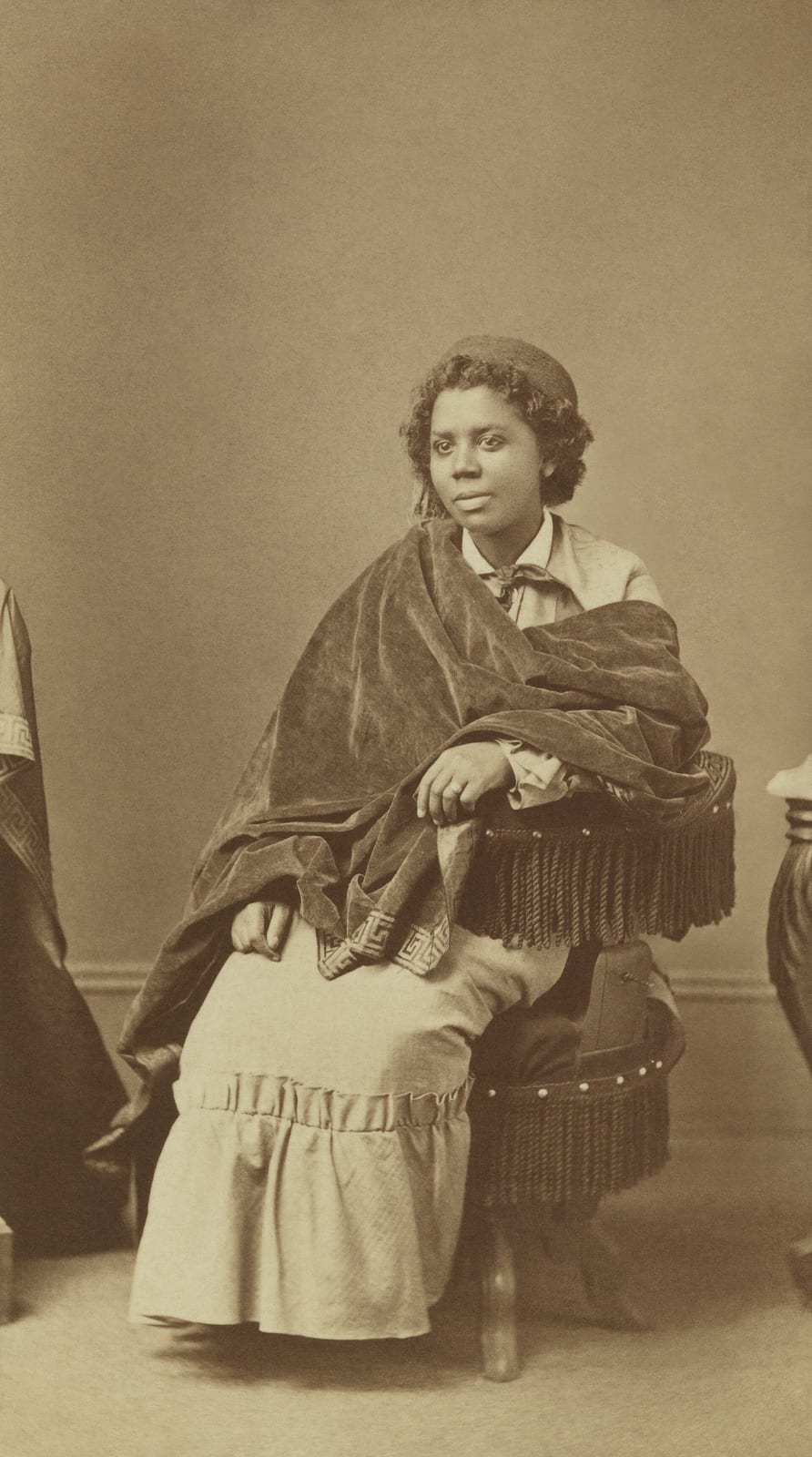
Edmonia Lewis Carves Freedom in Marble
A sculptor working across the Atlantic addressed emancipation while negotiating assumptions about race, gender and artistic labor.
In 1867, Mary Edmonia Lewis completed Forever Free, a white marble sculpture commemorating the end of slavery in the United States. Working from a studio near the Piazza Barberini in Rome, Lewis represented an unshackled Black man standing upright with his arm lifted, accompanied by a kneeling woman whose hands met in prayer. While popular imagery of the period routinely showed formerly enslaved figures remaining prone or bound, Lewis broke with established conventions by showing the man standing on his own feet. The title directly invoked the promise of emancipation, marking one of her most distinct contributions to neoclassical sculpture.
Lewis had moved to Italy in the mid-1860s, seeking an artistic and social climate outside the pervasive racial hostility of the United States. Born in upstate New York to a Mississauga Ojibwe mother of African-American descent and an Afro-Haitian father, she had studied at Oberlin College before establishing herself in Boston. Her departure across the Atlantic was funded primarily by selling plaster casts of a portrait bust of Colonel Robert Gould Shaw, commander of the 54th Massachusetts Infantry. Upon reaching Rome, she joined an expatriate artistic community and took up workspace once used by the Italian sculptor Antonio Canova.

Keep reading in Yester
Coming soon to the App Store
Keep following the story
Sources
Image: Henry Rocher / Adam Cuerden