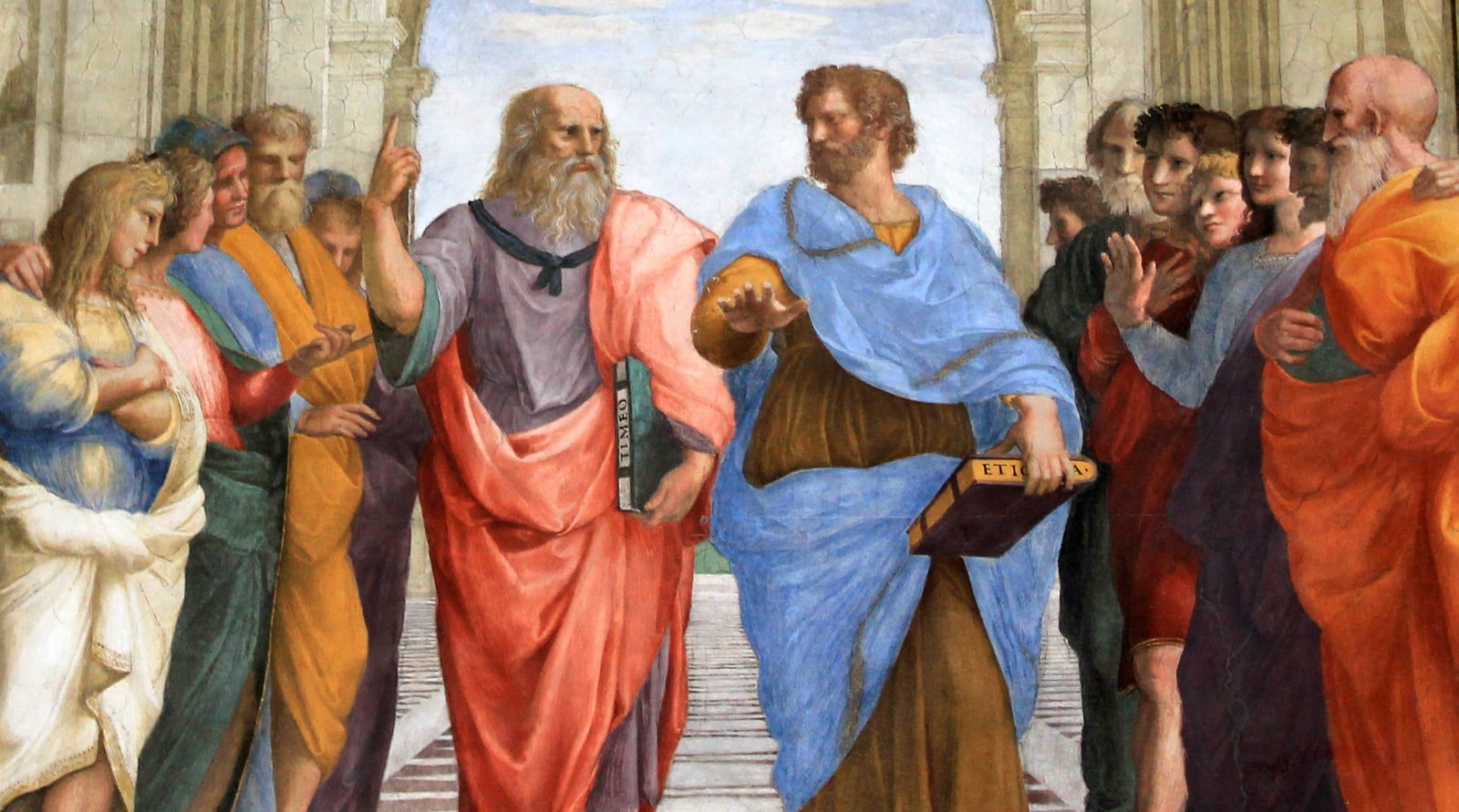
Aristotle Teaches at the Lyceum
Lectures in a covered walkway ranged from logic to living things.
In 335 BCE, around the age of fifty, Aristotle returned to Athens following years abroad in Asia and the Macedonian court. Athens had recently fallen under Macedonian domination, creating a complex political backdrop for the philosopher's homecoming. Rather than returning to the academic circle once directed by his former mentor Plato, Aristotle chose to establish a new center of study on the eastern outskirts of the city. He leased space in an existing public precinct known as the Lyceum, a sanctuary dedicated to Apollo Lyceus that had long served Athenian civic life.
The Lyceum was already steeped in history by the fourth century BCE. Situated between Mount Lykabettus and the Ilissus River, its forested grounds and open spaces accommodated a public gymnasium, a wrestling palaistra, and various walkways. Before the Pnyx became the primary meeting place for the citizen assembly, the Lyceum had hosted political gatherings, military drills, and religious cult ceremonies. Well-known teachers of the fifth and fourth centuries BCE, including Prodicus, Protagoras, Isocrates, and Socrates, had also gathered there to debate rhetoric and philosophy, making it a familiar location for intellectual exchange.

Keep reading in Yester
Coming soon to the App Store
Keep following the story
Sources
- Aristotle (Stanford Encyclopedia of Philosophy)
- The Lyceum (Internet Encyclopedia of Philosophy)
- Aristotle (Internet Encyclopedia of Philosophy)
- Diogenes Laertius, Lives of Eminent Philosophers, Book 5: Aristotle (Perseus Digital Library)
- Aulus Gellius, Attic Nights 20.4-5 (Perseids, Tufts University)
- Pliny the Elder, Natural History 8.17 (Perseus Digital Library)
- The Accidental Discovery of Aristotle's Paradigm-Shifting School (Nautilus)
- Lyceum (classical)
Image: Raphael