Turkey Switches to a Latin Alphabet
A rapid script reform reshaped literacy and print in the new republic.
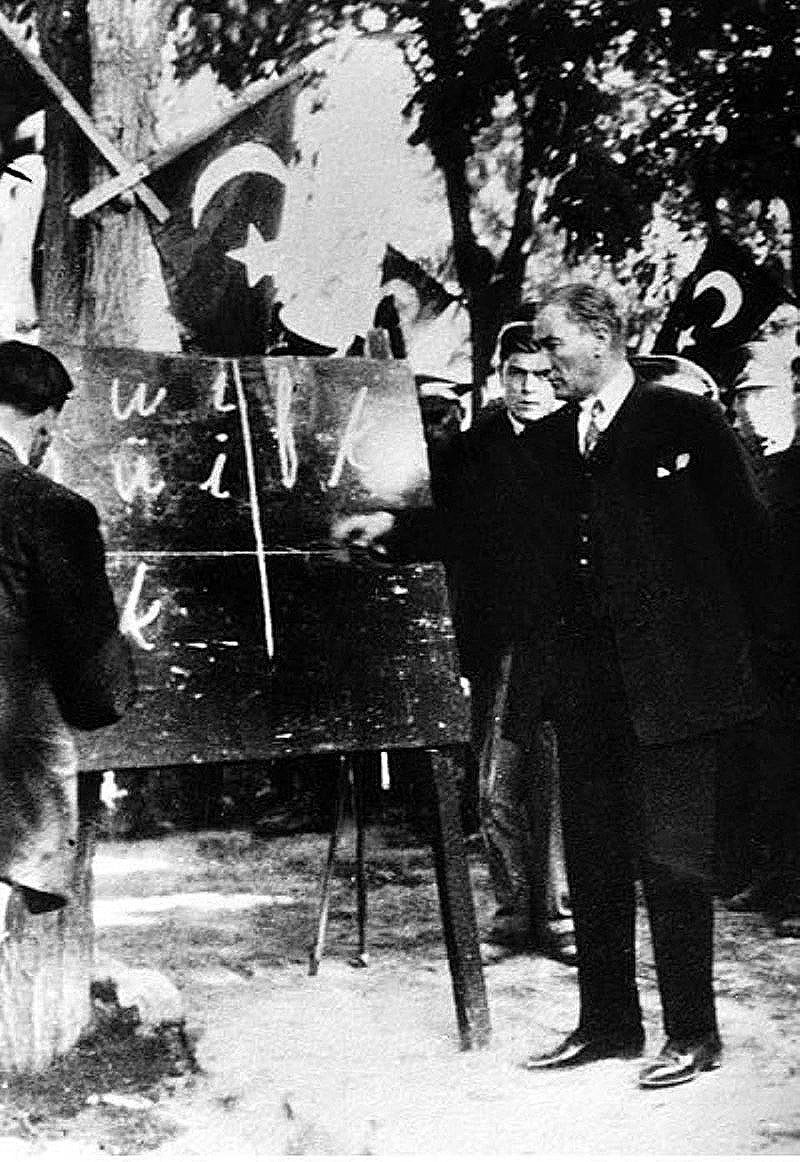
On 1 November 1928, the Grand National Assembly of Turkey approved Law Number 1353, titled Acceptance and Application of Turkish Letters. When it was published in the Official Gazette on 3 November, the statute began replacing the Arabic script, which had been used to write Turkish for centuries, setting deadlines that required the new letters in state business from 1 January 1929 and allowed some older forms until 1930. In its place, the state enacted a new writing system based on the Latin alphabet, modified with distinct characters such as dotted and undotted versions of the letter I, as well as Ç, Ö, Ü, Ş, and Ğ, while assigning specific phonetic values like the English J sound to the letter C.
Arguments for such a transformation had a long history. Critics had long held that the Arabic script, well suited to Arabic, fit Turkish poorly. Because Turkish possessed vowel sounds that Arabic characters failed to distinguish consistently, a single letter could stand for several different sounds, while the script retained separate letters for consonants that Turkish speakers pronounced identically. Proponents argued that this mismatch created unnecessary barriers to mass literacy and public instruction.

Keep reading in Yester
Coming soon to the App Store
Keep following the story
Sources
- Loi no 1353 sur l'adoption et l'implantation des lettres turques (Universite Laval, CEFAN)
- Harf Inkilabi (Turkish Ministry of National Education)
- 1928 chronology (Turkish Ministry of Culture and Tourism)
- Mustafa Kemal Atatürk introduces the new Turkish alphabet (European History Online, Leibniz Institute of European History)
- Learning to Read (Again): The Social Experiences of Turkey's 1928 Alphabet Reform, Hale Yılmaz (International Journal of Middle East Studies, Cambridge University Press)
- Going by letters of the law, Turkey fines Kurds (Reuters via NBC News)
- Turkish top court finds no violation in banning letter 'w' from Kurdish names (Duvar English)
- Turkish alphabet reform
Image: Presidency of the Republic of Turkey