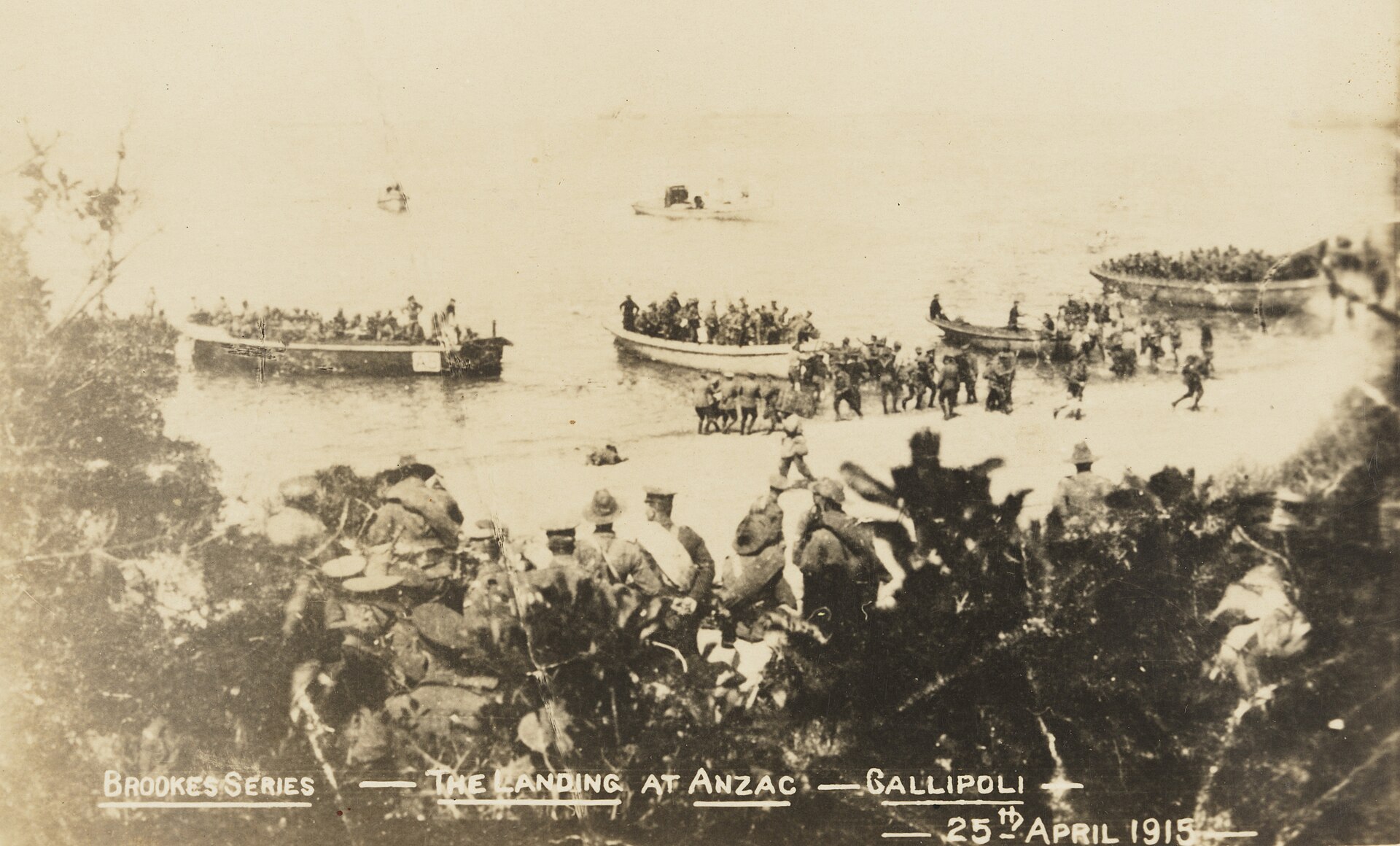
The Allied Landings at Gallipoli Fail
A costly campaign shaped national memory in Australia, New Zealand and Turkey.
In February 1915, an Anglo-French naval squadron opened fire on Ottoman coastal batteries guarding the entrance to the Dardanelles. Entente strategists, championed notably by First Lord of the Admiralty Winston Churchill, sought to force the narrow strait using older battleships, reach the capital at Constantinople, and compel the Ottoman Empire to capitulate. Victory promised to relieve pressure on Russia, Britain's ally, and to open a supply route to it through the straits and the Black Sea.
The naval offensive faltered decisively on 18 March 1915. When the Allied battleships mounted a coordinated thrust toward the narrowest section of the strait, submerged mines laid by the Ottoman minelayer Nusret and concentrated artillery from shore batteries wreaked havoc. Three Allied battleships, Bouvet, Irresistible and Ocean, were lost, others including the battlecruiser Inflexible were badly damaged, and civilian minesweepers retreated under sustained fire. Concluding that warships could not breach the waterway without capturing the surrounding high ground, Allied commanders suspended purely naval operations and turned toward a full-scale amphibious assault on the Gallipoli peninsula.

Keep reading in Yester
Coming soon to the App Store
Keep following the story

Sources
- What You Need To Know About The Gallipoli Campaign In WW1 (Imperial War Museums)
- What went wrong at Gallipoli? (Imperial War Museums)
- Gallipoli campaign (National Army Museum)
- Gallipoli (Australian War Memorial)
- From the Dardanelles to Hormuz, why a ship is still a fool to fight a fort (Newcastle Herald)
- Gallipoli campaign
Image: Published by Brookes