Samudragupta Adds His Conquests to Ashoka’s Pillar
A Gupta court poet carved a king’s victories onto a column already 600 years old.
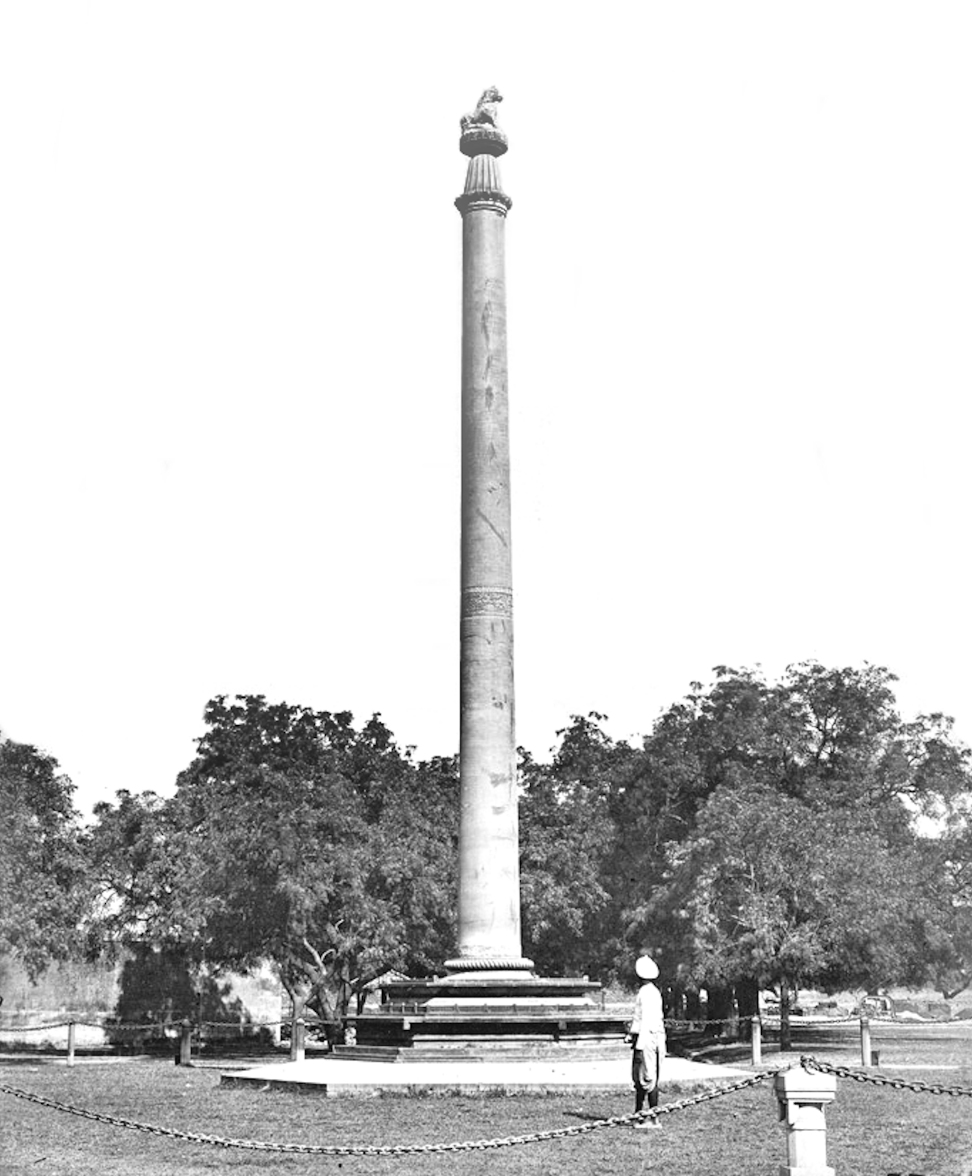
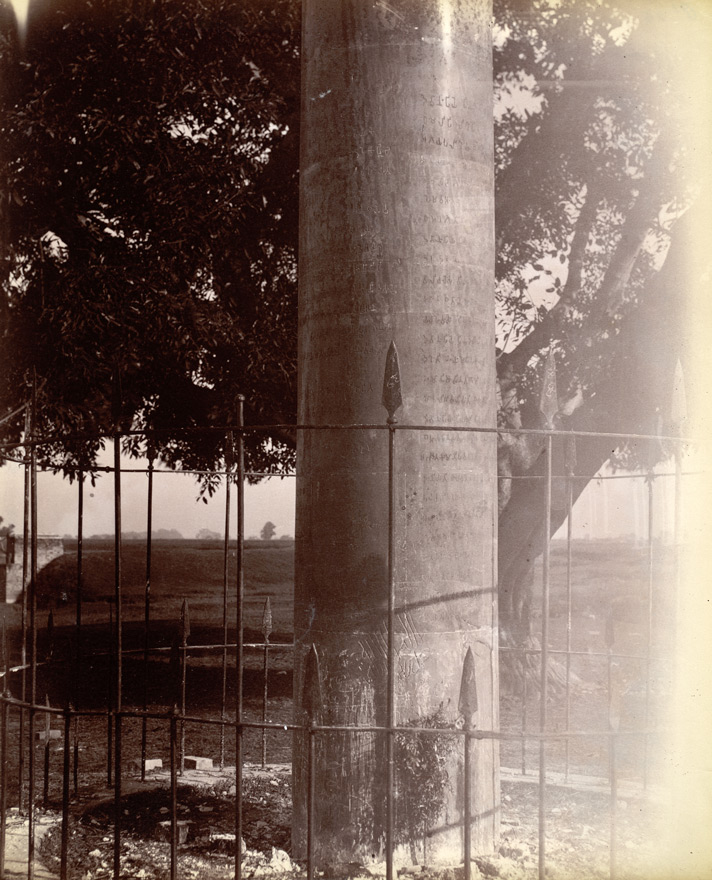
Standing inside the historic fort at Prayagraj, the polished sandstone monument known as the Allahabad Pillar presents a layered record of north Indian political history. Rising thirty-five feet high, the single shaft originally bore the imperial commands of the Mauryan emperor Ashoka, carved around its circumference in the third century BCE. Approximately six centuries later, during the fourth century CE, the Gupta emperor Samudragupta appropriated this ancient monument, commissioning an elaborate panegyric immediately beneath the older inscriptions to celebrate his own military and cultural achievements.
This later text, frequently termed the Prayag Prashasti, was composed by the court poet and high official Harishena. Written in classical Sanskrit using the refined Gupta script, the inscription functions as a royal eulogy that chronicles Samudragupta's lineage, battlefield prowess, and administrative reach. Lines of verse celebrate the monarch's poetic talent, musical skill, and generosity, portraying him as an exceptional ruler favored by his father to protect the earth. Alongside these artistic accomplishments, the eulogy catalogs an extensive series of military campaigns across the subcontinent.

Keep reading in Yester
Coming soon to the App Store
Keep following the story
Sources
Image: Unknown author Unknown author