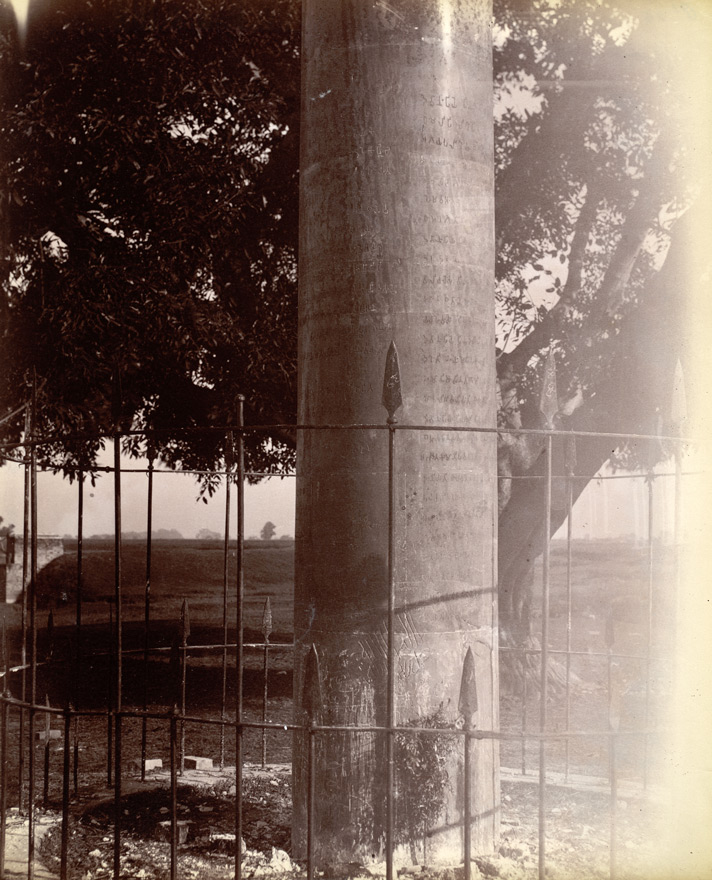
Ashoka Writes His Rule into Stone
Rock and pillar inscriptions reveal an emperor presenting a moral vision of government after war.
During the third century BCE, the Mauryan emperor Ashoka ordered dozens of public proclamations carved across cliffs, boulders, and polished stone columns throughout his vast realm. Ruling most of the Indian subcontinent between 268 and 232 BCE, he used these inscriptions to articulate a comprehensive imperial code following his remorse over the violent conquest of Kalinga. Scattered across territories that now form parts of India, Pakistan, Afghanistan, and Nepal, these surviving carvings represent the earliest datable written texts from the subcontinent after the fall of the ancient Indus settlements.
Known collectively as the Edicts of Ashoka, the records served as public proclamations designed to be read by subjects and travelers. To ensure broad comprehension across culturally diverse provinces, the administration adapted both its languages and scripts. In central and eastern India, scribes rendered local varieties of Prakrit in the Brahmi script. In the northwestern frontier regions, Prakrit was recorded in Kharoshthi script alongside inscriptions composed in Greek and Aramaic. In the far southern territories, however, imperial engravers carved northern Prakrit in Brahmi rather than the local Dravidian tongues, an approach interpreted by some historians as an assertion of centralized authority over newly absorbed lands.

Keep reading in Yester
Coming soon to the App Store
Keep following the story
Sources
Image: Sir Benjamin Simpson