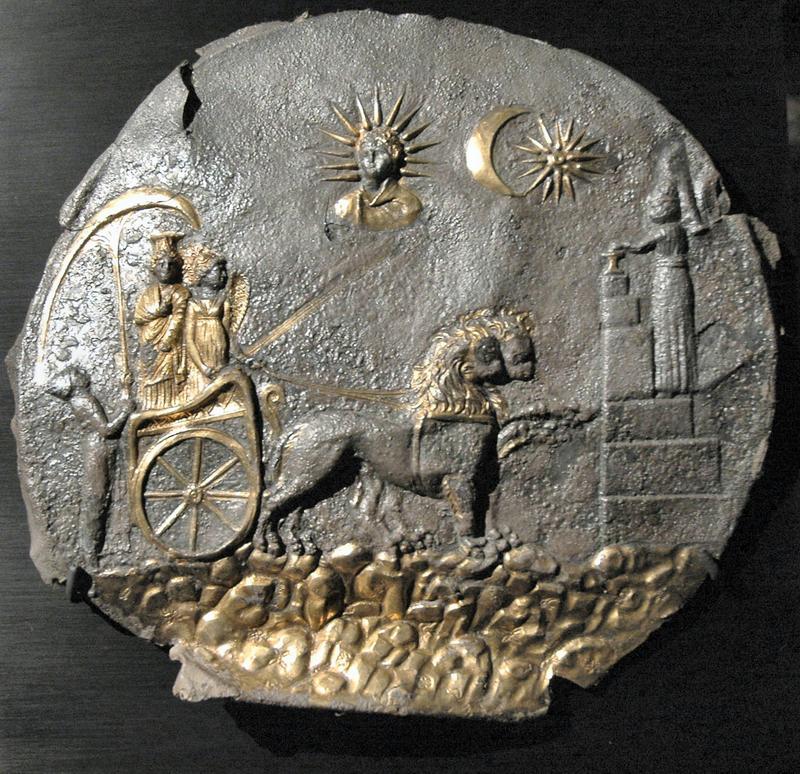
A Greek City Rises on the Oxus at Ai-Khanoum
Settlers far from Greece built a theater and gymnasium and carved Delphic maxims in stone.
At the meeting point of the Oxus and Kokcha rivers in northeastern Afghanistan, early Hellenistic rulers established an expansive fortified settlement today known as Ai-Khanoum. Although older accounts often attributed the foundation directly to Alexander the Great as Alexandria Oxiana, modern archaeologists consider that identification unlikely, finding no inscriptions or distinct artworks connecting him to the site. Instead, ceramic evidence and structural remains indicate that the city was planned and developed between 300 and 285 BC under the first Seleucid monarchs, Seleucus I Nicator and his son Antiochus I Soter, who sought a durable military and economic base in eastern Bactria.
The city occupied a fertile agricultural plain bordered by river cliffs and a sixty-meter-high acropolis. While not situated upon a major long-distance transit road, it guarded chokepoints along river valleys and gave the Seleucid administration access to the mineral resources of Badakshan, including rich deposits of lapis lazuli. The urban plan was divided into an elevated citadel and an extensive lower town. Immense ramparts of solid unbaked mud brick, reinforced with defensive towers and deep ditches, shielded the settlement from external assault, while an internal canal diverted fresh water through the northern gate into the core of the city.

Keep reading in Yester
Coming soon to the App Store
Keep following the story
Sources
Image: Marco Prins