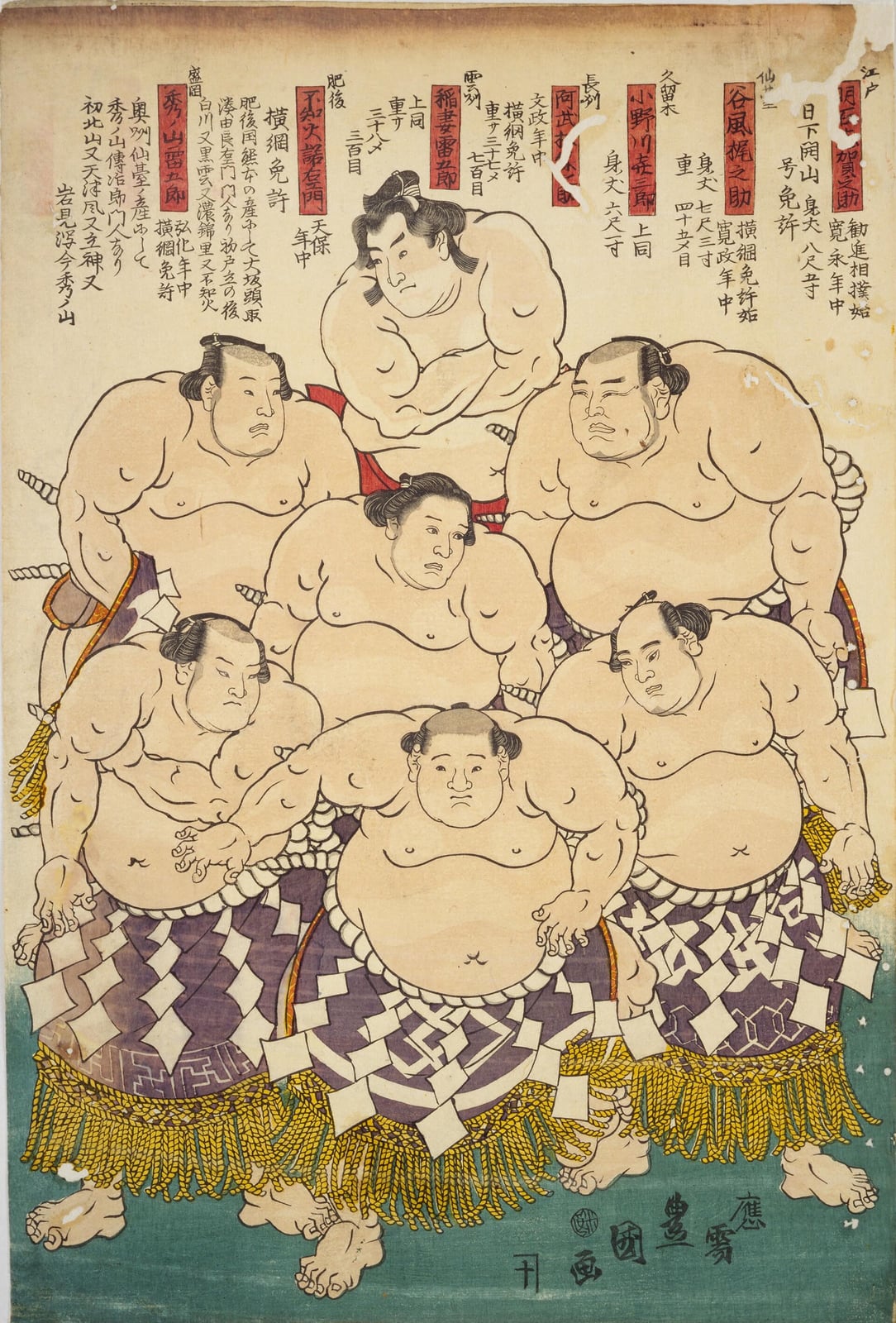
Sumo Wrestlers Receive the First Yokozuna Licences
Two champions were licensed to perform the yokozuna ring ceremony.
By November 1789, the prominent Yoshida family granted formal licences to Tanikaze Kajinosuke and Onogawa Kisaburo, marking the start of dependable record-keeping for the yokozuna title. At the time, sumo was deeply embedded in urban Japanese culture, but the status of yokozuna was not yet treated as an independent competitive rank. Instead, the licence functioned as an elite dispensation given to top-level ozeki, allowing them to wear a thick ceremonial braided rope around the waist and carry out a distinctive ring-entering ritual known as the dohyo-iri.
Earlier tales had attributed the origin of the rope to much older figures. One traditional legend claimed that a ninth-century wrestler named Hajikami tied a rope around himself as a handicap to challenge opponents. Another story asserted that Akashi Shiganosuke tied a rope about his waist in 1630 as a sign of deference when visiting the emperor, later receiving the title posthumously. Neither account possesses solid supporting historical evidence, and scholars cannot even confirm whether Akashi was a genuine historical figure.

Keep reading in Yester
Coming soon to the App Store
Keep following the story
Sources
Image: Utagawa Kunisada