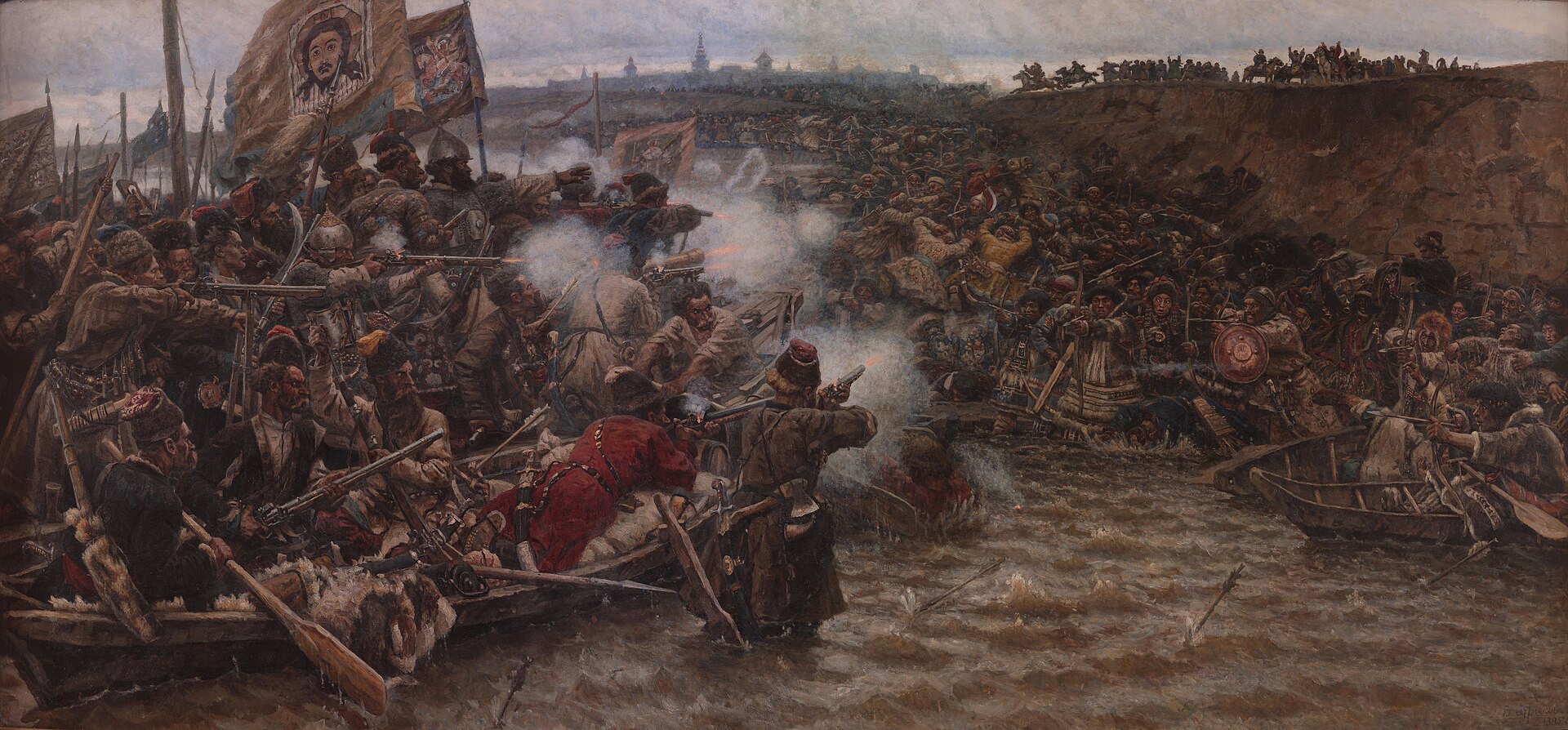
Yermak’s Cossacks Take the Capital of the Sibir Khanate
A small band hired by the Stroganov merchants opened Siberia to Russian conquest.
In October 1582, a modest force of river Cossacks and hired troops commanded by the ataman Yermak Timofeyevich defeated the defenders of the Sibir Khanate at Chuvash Cape and occupied Qashliq, the realm's capital on the Irtysh River. This engagement delivered a critical blow to Kuchum Khan, a Muslim ruler whose dynasty held sway over diverse western Siberian communities. The victory opened the waterways beyond the Ural Mountains to Muscovite penetration, transforming a regional dispute over trade routes and frontier raids into a sustained imperial drive across northern Asia.
Russian interest in the Siberian interior had intensified following the fall of the Khanate of Kazan in 1552, which gave Moscow control over the middle Volga. Tsar Ivan the Terrible subsequently granted expansive privileges to the Stroganov family, affluent merchants who had built salt and trading settlements along the Kama and Chusovaya rivers. Though the tsar originally authorized the Stroganovs to develop borderlands along the Tobol and Irtysh rivers, escalating hostility from Kuchum Khan caused imperial authorities to reconsider. Wary of exhausting Russian resources while occupied in the Livonian War, the tsar ordered a defensive posture, but the merchants proceeded to recruit experienced irregular fighters.

Keep reading in Yester
Coming soon to the App Store
Keep following the story
Sources
Image: Vasily Surikov